Why Staying Social Supports Healthy Aging
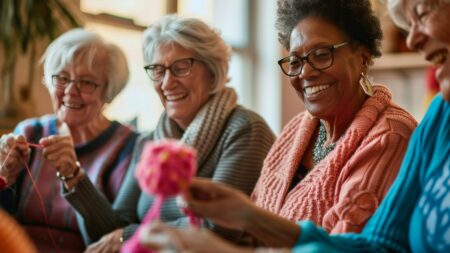
“I can’t wait to finish my son’s hat so I can start on my son-in-law’s,” says Regina, a 93-year-old resident of The Preston at Rockville. Each week, she joins friends in the community’s knitting group, chatting, laughing, and creating handmade gifts for loved ones. “It keeps my hands and my mind busy,” she says with a smile.
For Regina, staying social doesn’t mean attending large gatherings or leading long conversations; it’s about the comfort of quiet connection, like sitting side by side with others in the knitting group.
The simple act of being around others has profound benefits. Research shows that social engagement is one of the most critical factors in healthy aging. According to a recent World Health Organization report, loneliness causes more than 870,000 deaths each year worldwide, while strong social connections promote longer, healthier lives. In fact, people who stay socially active tend to experience lower rates of depression, heart disease, and cognitive decline.
A 2025 study from the Journal of the Alzheimer’s Association found that older adults who regularly engage with friends, neighbors, or social groups have a 38% lower risk of developing dementia and can delay its onset by as much as five years. That’s because social interaction keeps the brain active, challenging us to think, listen, remember, and respond in ways that strengthen neural connections over time.
But socializing doesn’t have to mean being the life of the party. It can be as simple as joining a knitting circle, playing bingo, chatting over dinner, or attending a community event. These small, consistent moments of connection can lift mood, improve memory, and even boost immune health. At The Preston at Rockville, residents like Regina have plenty of opportunities to stay engaged, whether it’s art workshops, fitness classes, social hours, or friendly games. She noted that there’s always something to do and someone to talk to, which helps create a true sense of belonging.
Experts agree that meaningful relationships can help older adults stay both mentally sharp and emotionally fulfilled. According to the World Health Organization’s Commission on Social Connection, social ties not only enhance quality of life but also strengthen communities, making them safer, healthier, and more resilient.
Staying connected to others is a core part of maintaining overall health and longevity.
For Regina, science reinforces what she’s experienced firsthand: being surrounded by caring people brings joy, purpose, and a sense of youthfulness that no study can fully capture.
The Preston at Rockville is proud to foster that sense of community every day, through friendships, shared experiences, and a warm, welcoming environment where residents can thrive together.