Winter Nutrition for the Birds

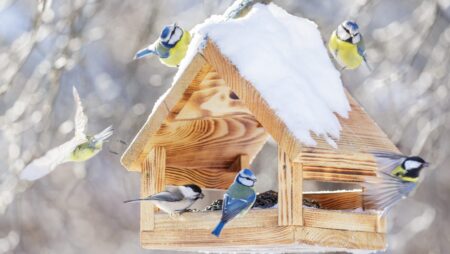
Bird feeders are an important food source for the birds during the cold winter months! Some species of birds will turn to bird feeders as a critical food source when winter has depleted their primary sources of nutrition. If a winter storm is long, a feeding station can mean the difference between life or death for the birds. The average bird in a moderate environment will forage for about five hours per day to meet its energy requirements. However, during the winter, they have to forage longer hours for their much-needed source of energy.
Studies show that birds don’t become dependent on bird feeders and still rely on nature’s bounty as their primary food source. Our Black-capped Chickadees use bird feeders to provide only 20 to 25% of their nutritional needs, depending mostly on Mother Nature to provide the rest, even during winter.
During cold weather, chickadees have been found to need twenty times more food than they do in warm weather. When the temperature falls below freezing, chickadees with access to feeders have about twice the survival rate than those without. Chickadees have excellent survival tactics for the colder winter weather. They cache foods, meaning they’ll hide and save food for later, and to conserve their energy, they’ll find well-insulated roosting cavities.
Offering a variety of different foods will attract a variety of different birds! Suet is a winter favorite, but Cardinals will search for bird feeders with black oil sunflower seeds, while a Black-crested titmouse will make a quick-stop for peanuts. Robins will arrive in flocks in search of worms in your yard, and your berry trees will be coated in Cedar Waxwings!
Fats are the most concentrated energy source that a bird can ingest. You will find that high-fat foods can provide birds with the needed energy, stamina and nutrition that is essential during the winter. For high fat and high protein foods that will help meet the birds’ energy needs, we recommend offering a variety of seeds, nuts and suet products at your feeding stations! The “No Mess” varieties (bird seed without shells) are our favorite to recommend in the winter months so that birds can save the energy it takes to break open a shell and use that energy to stay warm.
Offering a clean and consistent water source is just as vital as offering food during the winter months! Every bit of help that we can offer the birds during winter months makes a difference for their survival.