Winter Ready: Essential Plumbing Tips Every Homeowner Should Know
Winter in Virginia may not always come with heavy snowstorms, but cold snaps, freezing rain, and temperature swings can take a real toll on your home’s plumbing system. January is often the month when hidden issues become sudden emergencies: burst pipes, backed-up drains, and failing water heaters all seem to strike when temperatures drop.
The good news? With a little preventative care, you can protect your home, avoid costly repairs, and keep your plumbing system running smoothly all winter long.
Protect Vulnerable Pipes
One of the biggest risks during cold weather is freezing pipes. When water freezes, it expands—sometimes enough to burst even durable plumbing lines.
To reduce this risk:
- Insulate exposed pipes in attics, crawl spaces, garages, and under sinks.
- Seal gaps and drafts near plumbing entry points, especially around hose bibs or foundation cracks.
- Let faucets drip slightly during extremely cold nights to keep water moving.
If you travel this time of year, don’t turn the heat off completely. Keeping your home above 55°F helps prevent freeze damage.
Know Where Your Main Water Shut-Off Valve Is
This might be the most valuable winter plumbing advice I can give: if a pipe bursts, shutting off the water quickly can prevent thousands of dollars in damage.
If you’re not sure where your main shut-off valve is, or if it’s stuck, now is the time to locate and test it.
Disconnect and Winterize Outdoor Fixtures
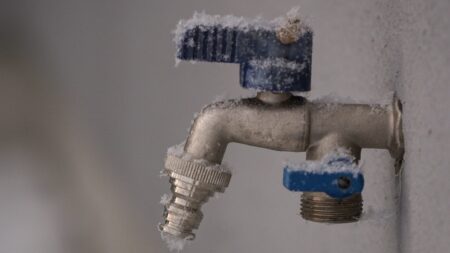
Garden hoses left connected can trap water and freeze the faucet and pipe leading into your home.
Before freezing temps settle in:
- Disconnect and drain all hoses
- Install insulated faucet covers or a frost free hose bib.
- If you have an irrigation system, have it professionally winterized
These simple steps protect some of the most common sources of winter leaks.
Show Your Water Heater Some Love
Winter means your water heater works harder; cold incoming water and increased hot water usage put stress on the system.
A few quick checks help keep it running efficiently:
- Flush sediment from the tank (if applicable)
- Test the pressure relief valve
- Set the temperature to 120°F for efficiency and safety
If your water heater is more than 10 years old, winter is a good time to schedule an inspection, you don’t want it failing during cold weather.
Pay Attention to Slow Drains
Cold weather can thicken grease, oils, and soap residue already in your pipes. Slow draining sinks or tubs are early signs of a potential clog.
Avoid chemical drain cleaners as they can damage your pipes, especially older ones. Instead, call a professional if you notice persistent drainage issues.
A little winter preparedness goes a long way. Taking preventative steps now can help protect your home, your budget, and your peace of mind throughout the season. If you’re unsure where to start or need help winterizing your system, 360 Plumbing Service is here to help—whether it’s routine maintenance or an unexpected emergency.
Stay warm, stay safe, and keep your home protected this winter.