Winterizing Your Trees: The Bartlett Tree Research Laboratories
Although it’s the middle of Winter, your outdoor plants and trees may need your assistance to make it safely to spring. The following information is included in a Bartlett Tree Research Laboratory technical report written by Drs. Bruce R. Fraedrich, E. Thomas Smiley and Kelby L. Fite.
Deer browse can cause severe injury to foliage and twigs of landscape plants, especially in snowy winters. Exposed stems of small-diameter trees can be damaged or destroyed by “buck rub,” the scraping of antlers against the trunk. The lower stem and root collar of plants can be damaged and even girdled by rabbits and rodents that eat the bark tissues in winters. Plants that have stems girdled by animals often wilt and die suddenly in late spring or early summer after new growth begins.
Judicious selection of plant species and planting sites is essential in preventing winter injury. Susceptible evergreens should not be planted on poorly drained sites or on open, windswept areas. Maintaining the vigor of ornamentals through prescription fertilization, pruning and watering during dry periods is helpful in preventing this disorder. Ensuring that evergreens are well watered in late fall is particularly important. Heavy mulches placed around susceptible species retard soil moisture loss and restrict soil freezing. Windbreaks, either temporarily constructed with burlap or permanently supplied by living trees and shrubs, will reduce the effects of drying winds. Netting or deer repellent applications can help prevent browsing. Fencing might be required to prevent buck rubbing of small trees.
Plants should be inspected in late winter or early spring for symptoms of winter injuries. Large trees should be inspected carefully for broken and cracked branches, frost cracks in the stem and other potentially damaging or hazardous conditions. Plants stressed by winter injuries are more susceptible to secondary insect and disease pests. Continued monitoring through the spring and summer months is also recommended to detect and treat pests.
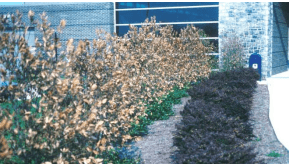
Avoid heavy pruning on limbs exhibiting brown foliage in late winter. In some instances, these plants will push out new growth from limbs showing winter injuries. Prune out dead twigs and branches after the plant has resumed growth in spring.
Broken, cracked and hanging branches must be removed. Remove damaged portions of the limb at the junction of a large lateral branch. The crown might require structural pruning to provide balance and symmetry following extensive storm damage. Steel cables might be necessary in the crown to support cracked or weakened limbs.
To reduce injury from de-icing salt, remove salt-laden snow from around the trunk prior to the spring thaw. To determine actual salt levels, soil should be analyzed as soon as it thaws. If high salt levels are anticipated, pelletized gypsum can be applied prior to winter. If heavy spring rains do not occur, the affected area should be irrigated heavily to leach the salt. If irrigation water runs off rather than soaking in, reduce the time of each irrigation period and check soil drainage. If drainage is inadequate, modification might be necessary.
Cracks in stems and branches usually close without any intervention. Monitor frost cracks closely during the early spring to determine if the cracks close.
Plants should be monitored closely for pests that can cause leaf injury and defoliation. Foliage injuries reduce energy production and further stress plants. Monitor plants frequently for borers, bark beetles, canker and root diseases that affect trees stressed by winter injuries. Apply appropriate treatments to prevent further damage.
Founded in 1926, The Bartlett Tree Research Laboratories is the research wing of Bartlett Tree Experts. Scientists here develop guidelines for all of the Company’s services. The Lab also houses a state-of-the-art plant diagnostic clinic and provides vital technical support to Bartlett arborists and field staff for the benefit of our clients.
You can find free resources here: https://www.bartlett.com. Or phone Sam Dilettoso at 303-565-6541 if you’d like to schedule a consultation.