A Common, But Relatively Unknown Visual Processing Disorder
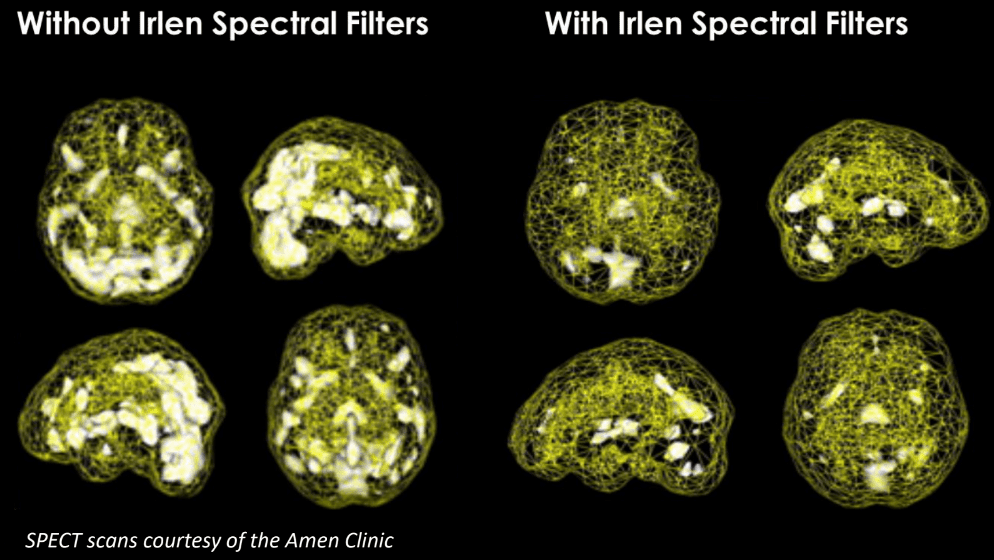
Approximately 12–14% of the general population is estimated to experience symptoms associated with Irlen Syndrome, yet many people have never heard of it. Irlen Syndrome is described as a visual processing difficulty in which the brain struggles to handle certain wavelengths of light. For individuals with this condition, light—especially bright or fluorescent lighting—can act as a stressor on the brain. This stress may lead to overactivity in certain brain areas, making it harder to process visual information effectively. As a result, people can experience a wide range of visual, physical, cognitive, emotional, and neurological symptoms, including light sensitivity, reading or learning difficulties, problems with attention or concentration, depth-perception issues, distortions in print or the environment, and eye strain or fatigue.
Irlen Syndrome is believed to have a hereditary component and can affect males and females equally. Some individuals may also develop symptoms after illness, medical procedures, concussion, or traumatic brain injury. Like Autism, Irlen Syndrome is considered a spectrum condition, with symptoms ranging from mild to severe. Someone on the mild end may be able to read or complete visually demanding tasks for 40–60 minutes before symptoms appear, often performing well academically except when sustained visual endurance is required. Those with more severe symptoms may struggle within 10 minutes of starting to read, with symptoms worsening the longer they continue or the brighter the lighting is. A child who frequently needs breaks during homework or takes longer than expected to complete assignments may be experiencing Irlen-related difficulties.
Fortunately, addressing Irlen symptoms is a simple and noninvasive process. The first step is to visit the Irlen website to take a self-test that can help you identify whether your symptoms are consistent with Irlen Syndrome. A higher number of “yes” responses suggests a greater likelihood and possibly greater severity. The next step is an evaluation with a certified Irlen Screener or Diagnostician, who can determine which color overlay provides the most support during reading or computer use. This screening typically takes about an hour, and overlays provide a straightforward, accessible first layer of support. The final step is being fitted for individualized Irlen Spectral Filters, worn as glasses. If you already wear prescription lenses, they can be made with both your prescription and your customized Irlen tint. While overlays help primarily with reading and screen use, Irlen Spectral Filters address all visual input, offering more comprehensive relief.
Irlen Syndrome may be a new concept, but the idea of using tinted lenses to reduce visual discomfort is not. Many companies now offer tinted glasses for light sensitivity, migraines, and headaches. The key difference is that Irlen Spectral Filters are customized to each individual’s brain, rather than offering a one-size-fits-all solution. Since no two brains are alike, personalized filters can make a meaningful difference for those who benefit from them.
I became an Irlen Diagnostician because all four of my children have Irlen Syndrome, and I have seen firsthand the remarkable improvements they’ve experienced with their filters. That personal impact is what drives me to advocate for others. Find our more at: www.Irlen.com
One of my clients shared this reflection:
“The biggest difference I have noticed is that I no longer struggle to read after a small period of time. I have more energy to read as well. Another difference I noticed is that I do not get irritated as easily. I no longer think about how hard it is to interpret the text I am reading. Last but not least, I am also able to read much more smoothly. I barely misread or skip lines when reading.” — Deandra K.