Spring-blooming flower bulbs are typically planted in the fall. These bulbs include daffodils, tulips, and fragrant hyacinths, among others. If you didn’t plant bulbs last fall—or don’t have bulbs that have naturalized in your landscape and return each spring—there is still hope. Many varieties of daffodils, tulips, and hyacinths can be forced to bloom indoors for early enjoyment.
These bulbs all require a period of chilling in order to bloom. Fortunately, there are companies that specialize in this type of horticultural work and have perfected the art of forcing bulbs for indoor enjoyment. FYI, one of the largest producers of forced bulbs is a woman-owned company in Canada that supplies many local grocery stores with forced bulbs from February through early spring.
One of my favorites is the miniature yellow daffodil ‘Tête-à-Tête,’ a French phrase meaning “face to face.” When planted outdoors, these daffodils are among the first spring flowers to bloom—sometimes even when there is still snow on the ground. One of the nice characteristics of spring-blooming forced bulbs is that they are a relatively inexpensive pleasure. And if you’re a gardener, you can save the bulbs and plant them outdoors; with a little luck, they will bloom again the following spring.
I planted a small pot of forced ‘Tête-à-Tête’ daffodils that I had enjoyed indoors outside near my foundation once the ground thawed, and they have returned every spring for over twenty years. It’s important to plant bulbs in well-drained soil—don’t plant them at the base of a downspout, for example, where standing water can rot the bulbs.
There are a few “tricks” to improve the chances that forced bulbs will have enough stored energy to bloom again next season. When the flowers are finished, pinch off the faded blooms and allow the leaves to continue growing to “feed” the bulb. Keep the soil moist, but not saturated. That said, many non-gardeners simply recycle the plant and soil once the flowers fade—and that’s okay too. Forced bulbs typically bloom for about two weeks. Enjoy them, smile, and then ask your floral provider for more. Don’t feel bad when the blooms fade.
Tulips are another favorite of mine. I love the reds, pinks, purples, and oranges. I’m part Dutch, and my mother’s maiden name was Lafeber. ‘Madame Lafeber’ is an orange tulip and the national tulip of the Netherlands. While the spelling isn’t exactly the same, it’s close enough to share the story.
One of the clever techniques growers use with forced tulips is extending bloom time in pots. Bulbs are planted at varying depths so each one emerges and blooms a day or so after the next. When planting outdoors, people often say to plant bulbs with the pointy end up. While that’s good advice, I once heard from a gardener who plants thousands of bulbs each year that he simply tosses the bulbs into the planting hole. The bulbs that land on their sides emerge just a day or two later than those planted upright.
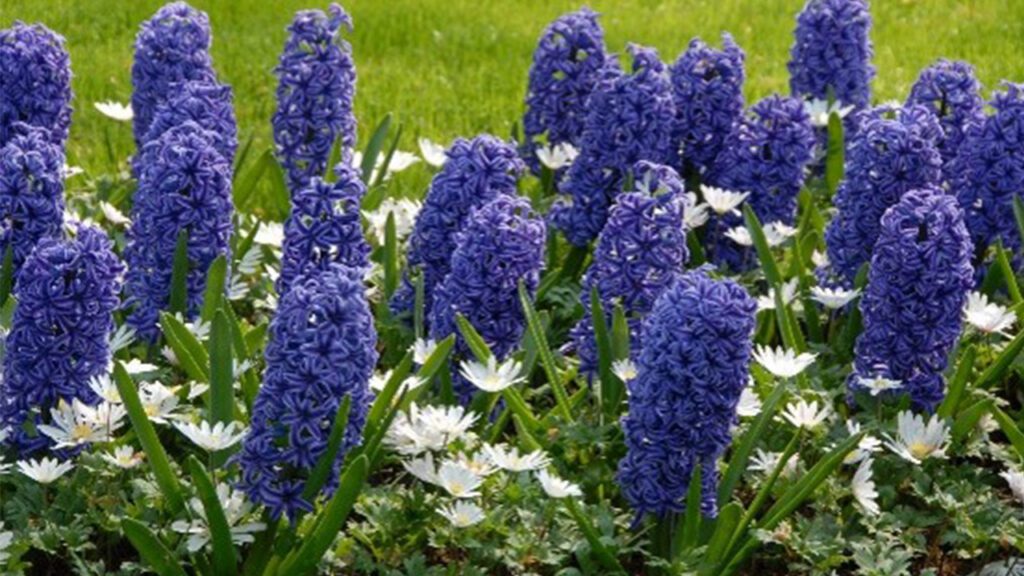
Hyacinths may be the most fragrant of the spring bulbs. While daffodils and tulips have only a light scent, a blooming hyacinth can easily fill an entire room with fragrance. Most are pink, purple, or white. A single hyacinth in a four-inch pot is lovely, but I prefer the larger eight-inch pots with three bulbs for a bigger show of color and scent.
As spring approaches, the availability of forced bulbs increases—and that’s when you know spring is near. I give away a lot of plants and flowers. Giving flowers in person is one of my favorite things to do because they almost always bring a smile. I like to give two pots or two bunches—one for the recipient and one for them to give to someone else. A young woman once told me that receiving flowers unexpectedly is the best kind of gift.
When I visit one of my favorite floral departments and see forced bulbs, I sometimes buy an entire box. Most floral departments will place the plants in protective plastic sleeves and tie them with a colorful ribbon at no additional charge. People often ask who all the flowers are for. Sometimes I have specific people in mind; other times, I give them to someone who might simply need a smile. It’s amazing how often people say that a flower made their day—and then pass the second one along. I think I get as much joy from giving as the recipients do.
For a little extra fun, green oxalis—often found in floral departments around Saint Patrick’s Day—are easy to grow and delightful. Oxalis have three-lobed leaves that close at night and open in the morning. Just for fun, give an oxalis plant and ask the new owner to look for a four-leaf clover for good luck. If they find one, tell them they’ve found the “pot of gold.” FYI, ‘Tête-à-Tête’ daffodils are often sold in yellow pots—another pot of gold!
Enjoy the spring-blooming bulbs found in your local floral department, or plan ahead and plant bulbs this fall for flowers next spring.
Any content, resident submissions, guest columns, advertisements, and advertorials are not necessarily endorsed by or represent the views of Best Version Media LLC (BVM) or any municipality, homeowners associations, businesses, or organizations that this publication serves. BVM is not responsible for the reliability, suitability, or timeliness of any content submitted, inclusive of materials generated or composed through artificial intelligence (AI). All content submitted is done so at the sole discretion of the submitting party.