Let’s Talk Massage: A Guide to Enhancing Your Horse’s Mobility, Comfort, and Well-Being
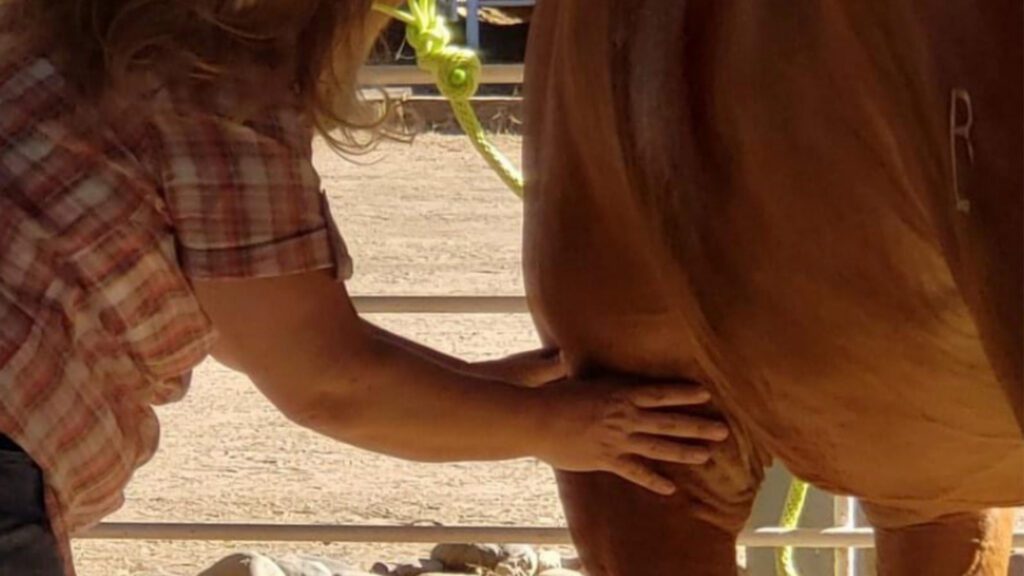
Did you know that massage has been practiced for thousands of years, and ancient medical texts describe it as useful for healing, restoring energy balance, promoting longevity, and supporting spiritual wellness?
Humans and dogs have 600 skeletal muscles, cattle have about 650, while horses have the most at approximately 700. This article focuses on horses and how massage benefits their muscles, supporting their large bodies, powerful necks, complex limbs, and back musculature required to carry their rider, pull a wagon, and perform cattle work. Muscles are used for movements as small as a twitch when a fly lands to large movements such as galloping.
Massage has physical, mental, and emotional benefits.
Physically
- Massage reduces muscle tension and pain by increasing blood flow, supporting relaxation and recovery, and clearing metabolic waste.
- Massage improves circulation. It delivers oxygen and nutrients while reducing swelling, which increases blood and lymph flow.
- Massage enhances mobility and flexibility. Loosening tight muscles and connective tissue (fascia) can greatly improve range of motion and posture.
- Massage supports recovery. After exercise or injury, massage can accelerate healing by reducing soreness and inflammation. Massage can also break up scar tissue and prevent hair follicles from changing color (white).
Mentally and Emotionally
- Massage decreases anxiety and stress, improves mood, and focus. Physical touch can calm the mind and help the horse shift from “fight-or-flight” into “rest-and-repair.” The horse will be calmer and more emotionally balanced after a massage.
Nervous System Effects
- Massage activates the relaxation response. Massage stimulates the parasympathetic nervous system, lowering heart rate and blood pressure.
- Massage reduces stress hormones. Cortisol levels often decrease, while serotonin and dopamine increase, helping the horse feel better.
- Massage improves sleep/rest. Relaxation and reduced pain make it easier to fall asleep and sleep more deeply.
The second most popular question I receive is, “How often should I get my horse massaged?” There isn’t one easy answer. Many factors play into the answer. Here are some questions for you to consider.
- How old is my horse, and does that matter? Age doesn’t matter. Here are some scenarios:
- Older horses may need massages monthly to keep their mobility up and arthritis at bay.
- Young horses in training may need massages weekly to assist with muscle building and injury prevention.
- Horses ages 8-20 who are ridden leisurely may just need maintenance massages quarterly.
- What is your horse used for? As with some of the scenarios above, leisurely use vs. competitive timed events vs. training vs. endurance makes a huge difference in your wellness and maintenance program.
The most popular question I receive after working on someone’s horse is: Can you give me a massage? Good news, I am expanding my education to include the rider! In addition to my equine and canine certifications, I will graduate in June 2026 from the Arizona School of Medical Massage and Wellness, with the goal of full licensure by August. My next step is to continue toward becoming a Certified Medical Massage Practitioner.
If you would like assistance in creating your equine wellness plan, contact me at (928) 258-0625 or workinghorsemassage@gmail.com.