Life After Vision Loss: Low Vision Solutions Help Patients Do More
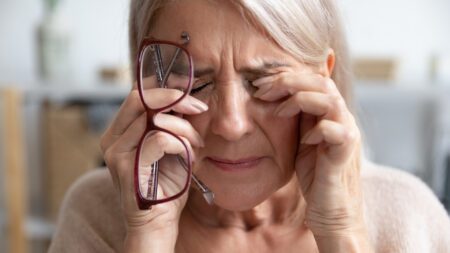
Have you ever been told by your eye doctor that there’s nothing more they can do to improve your vision? For many people with macular degeneration, glaucoma, diabetic retinopathy, retinitis pigmentosa, and other eye conditions, this is an all-too-familiar reality. Disease damages the internal workings of the eye, meaning there comes a point when regular glasses correction is no longer enough.
Fortunately, there are low vision aids available that go beyond the magnifying glass and can help those with vision loss live more independent lives.
What Is Low Vision?
Low vision is a visual impairment that cannot be fixed with standard glasses, contact lenses, medicine, or surgery. According to the Illinois Secretary of State, more than a quarter of a million residents have a vision disability. People with low vision may find it difficult to perform everyday activities, like:
- Reading
- Driving
- Recognizing loved one’s faces
- Seeing a television or computer screen clearly
In other words, low vision is not having enough vision to do the things you want to do.
How Is Low Vision Treated?
While there is no cure for low vision, there are a variety of aids available that can benefit individuals diagnosed with eye diseases. During an evaluation with a low vision specialist, a patient will be demonstrated solutions that make the most of their usable vision. Devices may include:
- Bioptic telescopes, which are best used for driving, walking, and looking at objects from a distance.
- Full-diameter telescopes for watching TV and seeing faces.
- Reading telescopes, which are beneficial for seeing the computer, doing crafts, and reading and writing from a comfortable distance.
- Prismatic glasses that enhance near vision when conventional bifocals and readers aren’t working.
- E-Scoop glasses that create a larger, clearer, and higher contrast image for people with early stages of vision loss.
- Side vision awareness glasses, which help expand the viewing field of individuals affected by side vision loss (hemianopsia).
- Electronic readers that magnify objects onto a tablet-like screen for easy viewing of photos, mail, labels, and more.
Regain Your Freedom with a Low Vision Consultation
If you or someone you care about has low vision, know help doesn’t stop after eye disease. A low vision doctor not only assesses a patient’s level of vision but also considers their personal life and favorite activities to determine the best solutions. Equipped with the right aids, individuals can look forward to doing more of the things they enjoy without depending on others.
To learn more about what a low vision specialist can do for you and schedule an appointment, call (618) 566-8899.
Dr. Marianne McDaniel is a fellow of the International Academy of Low Vision Specialists (IALVS) and practices at Mascoutah Eye Care located at 105 Mascoutah Plaza Drive in Mascoutah, Illinois.