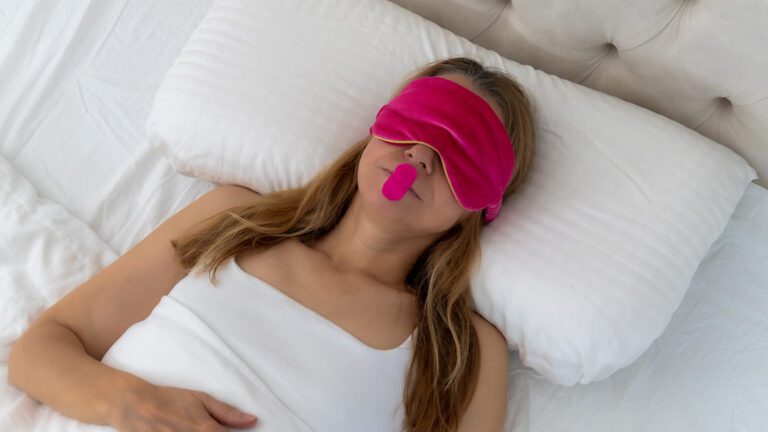
The conversation around mouth tape has exploded across social media and the wellness world.
Many people claim it helps them sleep better, snore less, and wake with more energy. But does it really work—and why would someone tape their mouth shut at night in the first place?
As an airway-focused dentist, I see the real reasons behind this trend daily. While mouth tape can be beneficial for some, it is not always the best long-term solution and isn’t appropriate for everyone. To understand why, we must look at the purpose of nasal breathing and what happens when the mouth becomes the primary airway.
Why People Use Mouth Tape
Humans are biologically designed to breathe through the nose. When the nasal airway is open and the jaws, palate, and tongue function properly, nasal breathing happens naturally—even during sleep. Mouth tape simply reinforces this natural lip seal by helping keep the lips together.
However, for many people, maintaining a closed-mouth posture isn’t automatic. This is often because they struggle to move enough air through the nose, leading their body to rely on mouth breathing instead. Reasons include:
- Nasal resistance from narrow structures or blockages
- Narrow airway spaces due to small jaws or a narrow palate
- Low tongue posture or a tongue-tie that prevents the tongue from resting in the roof of
the mouth - Lip ties that prevent proper lip closure
For these individuals, mouth tape can temporarily encourage nasal breathing—but it doesn’t correct the underlying cause.
The Power of Nasal Breathing
Nasal breathing is essential for healthy sleep and overall wellness. The nose:
- Warms, humidifies, and filters air for optimal oxygen exchange
- Produces nitric oxide, which improves oxygen delivery and blood flow
- Reduces throat tissue collapse, lowering snoring risk
- Prevents dry mouth
- Supports facial growth in children
- Helps decrease sleep fragmentation and improves airflow
Simply put: nasal breathing isn’t just preferred—it’s the way the body was built to function.
When Mouth Breathing Signals a Structural Problem
Chronic mouth breathing is often a sign of underlying anatomical issues. These may include:
- Narrow Upper Jaw or Palate
A palate that is too narrow limits space in the nasal floor and increases resistance. A small jaw also restricts room for the tongue, causing it to fall back into the throat during sleep.
- Low Tongue Posture or Tongue-Tie
The tongue should rest against the palate. When it can’t—due to habit or physical restriction—the airway becomes smaller.
- Poor Facial Growth Patterns in Children
Mouth breathing in childhood can lead to narrow arches, elongated faces, and crowded teeth.
These structural patterns often worsen airway resistance over time.
All of these issues increase the likelihood of snoring, disrupted breathing, and even early obstructive sleep apnea.
Beyond Mouth Tape: Long-Term Structural Solutions
While mouth tape can be a helpful short-term tool, it should not become a lifelong crutch. In an airway-focused practice, the goal is to correct the underlying structural issues so nasal breathing can occur naturally.
- Palatal or Midface Expansion
Treatments such as TAD-assisted expansion (including MARPE) widen the palate, reduce nasal resistance, expand the airway, and create more space for the tongue.
- Growth-Guided Orthodontics for Children
Early evaluation and intervention support healthy jaw development, improved airflow, and long-term breathing function.
- Tethered Oral Tissue Treatment & Myofunctional Therapy
Addressing tongue-tie, lip-tie, and oral muscle dysfunction helps restore proper tongue posture and lip seal.
- ENT Care
For many patients, evaluating nasal blockages such as enlarged turbinates, nasal valve collapse, or adenoid hypertrophy is essential.
Ultimately, the goal is to restore natural nasal breathing—not force it with tape.
Should You Try Mouth Tape?
For most healthy individuals, mouth tape may be a safe, short-term experiment. But if you or your child depends on mouth tape to keep the lips sealed, or if you have symptoms like snoring, fatigue, or narrow jaws, it’s important to ask why.
When to Seek Evaluation First
If you experience gasping, loud snoring, or observed breathing pauses, you should be evaluated for sleep apnea before experimenting with mouth tape. Sleep apnea varies in severity and always requires proper diagnosis.
If you or your child already has sleep apnea, mouth tape may be unsafe without medical guidance.
Airway-focused dentistry, combined with collaboration among medical specialists, helps patients sleep, breathe, and function better with long-lasting solutions.
Want to Learn More?
Dr. Billie Adams and the team at Peak Family Dentistry specialize in airway-focused dentistry, pediatric expansion, and MARPE treatments for teens and adults—helping patients breathe, sleep, and live better…naturally.
Parent Tip Box: Early Airway Red Flags
- Any snoring
- Restless or sweaty sleep
- Day or night mouth breathing
- Narrow smile or crowded teeth
- Chronic congestion or allergies
- ADHD-like behavior or daytime fatigue
- Bedwetting past expected age
Adult Tip Box: Signs You May Mouth Breathe at Night
- Teeth grinding or clenching
- Snoring (even mild)
- Morning dry mouth
- Nighttime congestion
Any content, resident submissions, guest columns, advertisements, and advertorials are not necessarily endorsed by or represent the views of Best Version Media LLC (BVM) or any municipality, homeowners associations, businesses, or organizations that this publication serves. BVM is not responsible for the reliability, suitability, or timeliness of any content submitted, inclusive of materials generated or composed through artificial intelligence (AI). All content submitted is done so at the sole discretion of the submitting party.