Roth Conversions: A Smart Strategy for Tax-Free Retirement
Retirement planning is about more than just accumulating wealth—it’s about preserving what you’ve built and minimizing the tax burden that can erode your nest egg. Smart tax planning before and during retirement can make a significant difference in how much income you actually get to keep and enjoy.
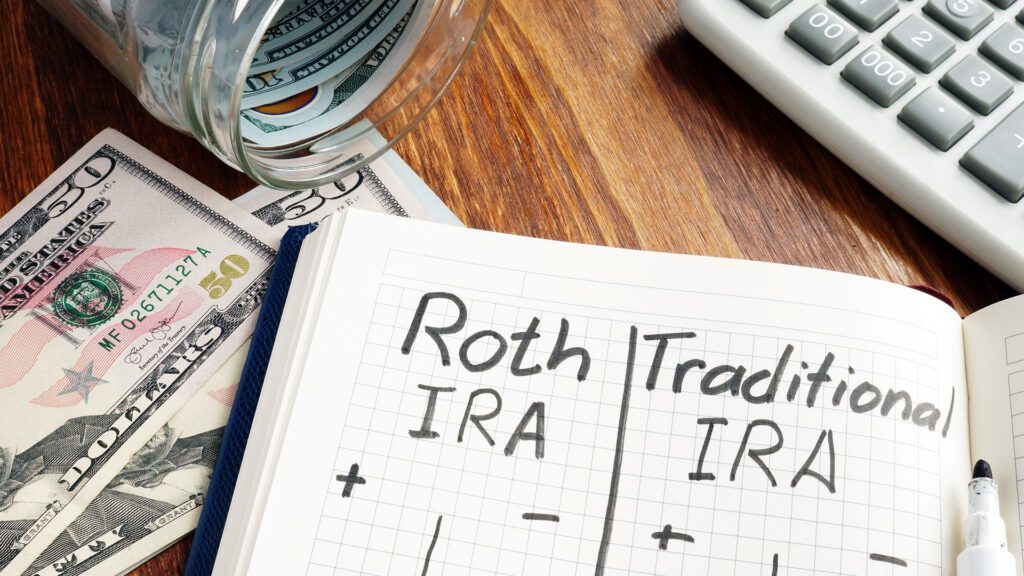
One powerful strategy worth considering is the Roth IRA, which offers tax-free growth and distributions in retirement. For 2026, individuals can contribute directly to a Roth IRA if their modified adjusted gross income is below $153,000 (single filers) or $242,000 (married filing jointly). If your income exceeds these limits, don’t assume a Roth is off the table. A backdoor Roth conversion allows you to contribute to a traditional IRA and then convert it to a Roth, providing the same long-term benefits regardless of your income level.
For 2026, the maximum contribution amount is $7,500 with a $1,100 catchup for those 50 and older. If you didn’t make a contribution in 2025, do not worry – it’s not too late! You have until April 15, 2026 to make your 2025 contribution – $7,000 contribution maximum with a $1,000 catchup if you are over 50!
But why should you consider a Roth conversion in the first place? The answer lies in strategic tax planning. When you convert traditional IRA or 401(k) funds to a Roth, you pay taxes now on the converted amount, but all future growth and withdrawals become completely tax-free. This can be especially beneficial if you expect to be in a similar or higher tax bracket in retirement, or if current tax rates are historically favorable. Additionally, Roth IRAs have no required minimum distributions during your lifetime, giving you greater flexibility in managing your retirement income.
Perhaps one of the most valuable benefits is the ability to leave a tax-free legacy to your heirs. While beneficiaries of traditional IRAs face income taxes on distributions, inherited Roth IRAs can be passed on completely tax-free, allowing your wealth to benefit future generations without the burden of additional taxation.
The decision to pursue a Roth conversion isn’t one-size-fits-all and requires careful analysis of your individual tax situation, current and future income, and estate planning goals. The IRS does not take kindly to mistakes in this area, which is why working with a trusted financial and tax professional is essential to ensure the strategy is executed properly.
We have found that many people have done an excellent job saving for retirement, but not as good of a job planning for retirement. Most people we work with never even considered that taxes could be their greatest liability in retirement. If you are interested in a Retirement Tax Assessment – whether you are saving for retirement, planning your retirement, or already retired and want to minimize tax impact on your beneficiaries – contact us today.
Disclosure: Investment advisory services are offered through Elevated Performance Investment Group, LLC; a Registered Investment Advisor. Elevated Performance Investment Group, LLC; Elevated Financial & Tax Services LLC; and Elevated Financial & Tax, LLC are affiliated companies.