Teaching Your Child the Right Way to Brush
February is Children’s Dental Health Month, the perfect time to build brushing habits that last a lifetime. While brushing seems simple, teaching kids how to brush—and helping them feel comfortable doing it—can take patience, creativity, and a little know-how. The good news? With the right approach, brushing can become a calm, confident part of your child’s daily routine.
Start With the Right Tools
For toddlers through elementary-age kids, a manual toothbrush is a great place to begin. Choose one with a small head, soft bristles, and a handle your child can grip easily. Toothpaste matters, too: use a smear (rice-sized amount) of fluoride toothpaste for children under three, and a pea-sized amount for ages three and up. Parents should help and supervise brushing until at least age seven or eight to ensure good technique and safety.
Make Brushing Feel Safe (Especially for Sensory Sensitivities)
For some children, brushing can feel overwhelming—the taste, texture, or sensation may trigger resistance. If your child has sensory sensitivities:
- Let them explore the toothbrush first—touch it, hold it, even “brush” a stuffed animal.
- Try brushing in front of a mirror so they can see what’s happening.
- Use calm language and predictable steps: “Top teeth first, then bottoms.”
- If toothpaste flavor is an issue, test a few mild options until you find one they tolerate.
Creating a sense of control and predictability helps brushing feel less intimidating and more empowering.
Slow It Down and Show Them How
Many kids brush too fast, missing key areas along the gumline and back teeth. Aim for two full minutes, twice a day. A simple trick is to divide the mouth into four sections and brush each for about 30 seconds. Songs, timers, or brushing apps can help slow things down and make the time pass more enjoyably.
When teaching technique, demonstrate gentle, circular motions and remind your child that brushing shouldn’t hurt. If they complain of discomfort, check that the pressure is light and the bristles are soft.
When They Refuse to Brush
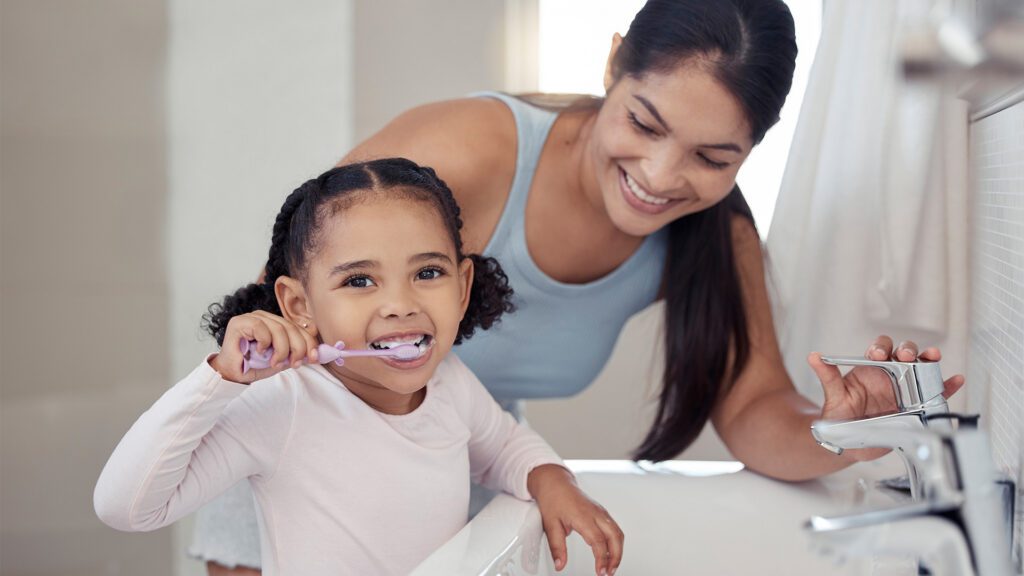
Refusal is common, especially at the end of a long day. Try turning brushing into a shared routine—brush with your child rather than instructing from the sidelines. Offering choices (“Do you want to brush first or second?”) can also reduce power struggles. Praise effort, not perfection, and keep the mood positive.
A Habit That Grows With Them
Learning to brush well is a skill that develops over time. Consistency, patience, and encouragement go a long way in building confidence and healthy habits.
If you’d like extra guidance, your child’s dental team can demonstrate age-appropriate brushing techniques and help tailor tips to your child’s needs. At Treehouse Children’s Dentistry, we’re always happy to partner with parents to help little smiles grow strong—one gentle brush at a time.