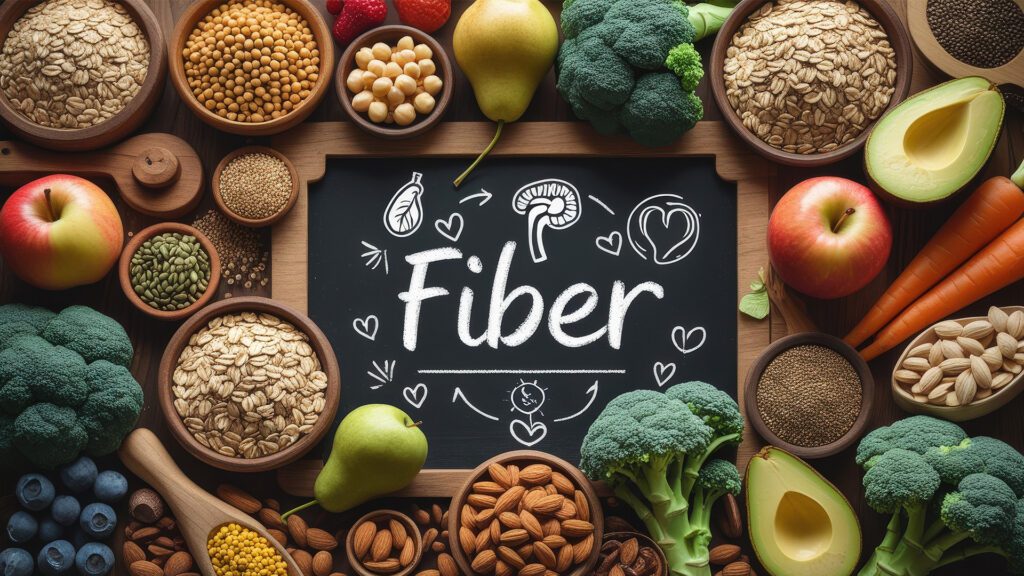
What Is Fiber and Why Is It Important?
Dietary fiber is the non digestible carbohydrate in plants. It is helpful for reducing blood cholesterol concentrations and regularity of digestion. Fiber binds to cholesterol molecules in the small intestine, preventing from entering the bloodstream and traveling to other parts of the body. Cholesterol exists in the body through stool.
Adequate intake for total fiber per day for men is 38g and for women is 25g. This is based on the amount to protect against coronary heart disease. However as little as 5% of the American population is meeting this amount.
Including fiber with meals can help with weight loss and weight maintenance by regulating intake. There’s two main things that affect intake; satiety and satiation.
Satiety is the feeling of fullness after eating. This affects the length of time between eating next and how much we eat at the next meal. Satiation is the satisfaction of appetite during eating and causes one to stop eating. This helps control the amount of energy intake at each meal and snack.
Fiber rich foods require more chewing, which increases. When you increase the fiber you displace calorie dense foods. High Fiber foods have lower energy density than high fat or low fiber foods. It’s also more satisfying to see more volume of food on your plate.
Prebiotic fibers are types of fiber that humans cannot digest, but your gut bacteria can. These types of fiber provide nutrients to the bacteria that support healthy digestion and immune function.
Eating balanced amounts of both probiotics and prebiotics can help ensure that you have the right balance of these bacteria to keep your gut microbiota healthy. If you are not eating fiber regularly, you may feel stomach discomfort initially as a result of the increase in saliva and gastric juices to remove the fiber from the food source, resulting in expansion of the stomach. Your healthy gut bacteria turn prebiotic fiber into a short-chain fatty acid called butyrate which can cause gas. If you haven’t given your gut bacteria this food source in a while it may feel more apparent.
If you are currently eating a very low fiber diet, increase the amount of fiber in your diet slowly and drink plenty of water to minimize GI upset. When you incorporate adequate fiber in your diet regularly, your digestion will also regulate.
Simple Tips to Incorporate More Fiber
- Swap the juice for the whole fruit
- Try a new grain salad – quinoa, farro, barley, bulgur
- Mix in plant based pastas (made with chickpea, lentil, peas)
- Look for bread products with whole wheat or whole grain as the first 1-3 ingredients.
- Sprinkle chia seeds or ground flax seeds on oatmeal, yogurt, toast and smoothies.
- Mix in oat flour with baking (put oats right in the food processor)
- Aim for 3-5g of fiber in a serving of a grain product
- Focus on adding color to meals (from fruits and veggies)
For more information on working with Jennie, blog posts and client testimonials, visit her website at www.jenniedore.com