Why Pilates-Based Physical Therapy Is a Smart Approach to Lower Back Pain
Lower back pain has a way of creeping into everyday life. It shows up in the morning when you get out of bed, during long meetings, or when you start avoiding activities you once enjoyed. For many people, it becomes something they quietly live with.
It’s also incredibly common. An estimated 60 to 80 percent of adults will experience lower back pain at some point in their lifetime. And for many, the challenge isn’t just finding relief, it’s finding an approach that actually lasts.
Laura, a Montclair resident, knows this well.
“After several years of trial and error with different providers, Pilates-based physical therapy was the only approach that truly addressed the root cause of my back pain. The Pilates framework helped pinpoint my muscle imbalances and retrain proper movement and form.”
Her experience points to an important truth. Lower back pain is rarely about one isolated injury. More often, it’s our repetitive habits: how we move, how we sit, and how our bodies compensate over time. Muscles fall out of balance. Core support weakens. The spine ends up doing more work than it should.
Pilates-based physical therapy takes a fundamentally different approach. Rather than focusing only on where it hurts, a licensed physical therapist looks at how the whole body is moving. Treatment begins with a thorough evaluation and continues with an individualized plan tailored to each patient’s needs.
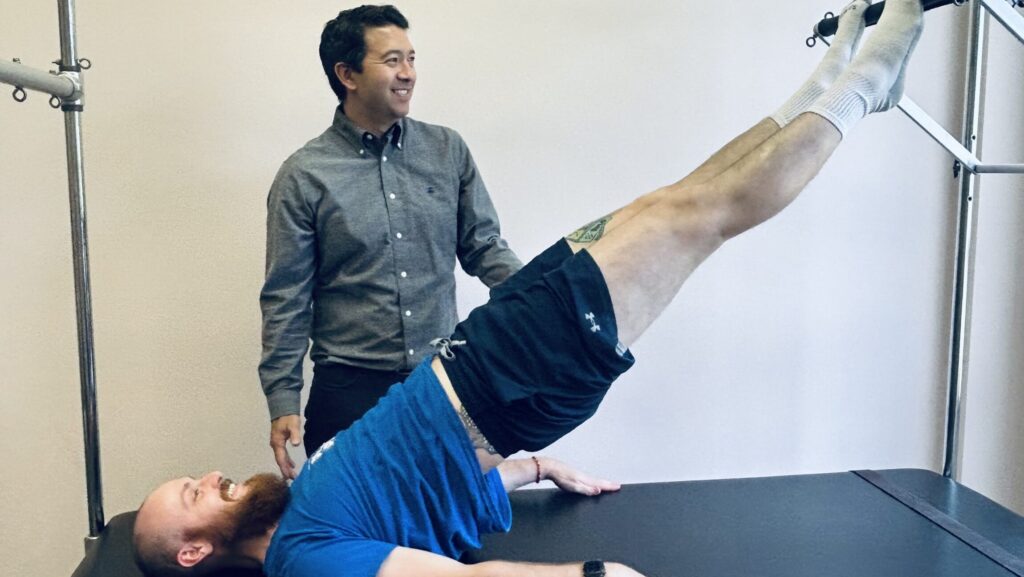
Sessions often use Pilates equipment such as the reformer, along with mat-based exercises, to guide controlled, low-impact movement. The emphasis is on quality over quantity. Movements are precise, intentional, and designed to retrain the body rather than push through pain.
One of the cornerstones of this approach is deep core activation. The muscles that stabilize the spine are often overlooked, yet they play a major role in protecting the lower back. When they aren’t doing their job, everyday movements like sitting, lifting, or walking can place excess strain on the spine.
Posture and movement awareness are also key. Patients learn how subtle adjustments can reduce stress and improve efficiency. Over time, these changes start to carry into daily life, helping people move with more ease and confidence.
Laura also noted the impact of individualized care.
“Each session was one-on-one, which felt like a real luxury. Having the full attention of an expert made a huge difference in my progress and confidence in movement.”
Beyond pain relief, Pilates-based physical therapy gives patients something lasting: a better understanding of their own bodies and how to care for them. That knowledge can be just as powerful as the exercises themselves.
For those dealing with lower back pain and looking for a thoughtful, personalized solution, Pilates-based physical therapy offers a path forward, one built on movement, awareness, and long-term change.