Top 5 Reasons Why Annual Exams Matter
Most people schedule yearly physicals or dental cleanings, but skin checks are often overlooked. The truth is, your skin is your body’s largest organ, and it can reveal important signs about your overall health. Skin cancer is one of the most common cancers, yet it is also one of the most treatable when detected early. An annual skin exam allows a trained dermatologist to identify suspicious moles, spots, or growths before they become serious concerns.
Here’s why making that appointment every year is one of the smartest things you can do for your long-term health:
- Skin Cancer Is the Most Common Cancer
Skin cancer affects 1 in 5 Americans in their lifetime, making it the most commonly diagnosed cancer in the U.S. While many cases are treatable when caught early, some forms—especially melanoma—can spread quickly and become life-threatening.
- Skin Cancer Doesn’t Always Look Obvious
Skin cancer doesn’t always show up as a dark mole. It might look like a pink patch, a small sore that doesn’t heal, or a subtle change in an existing spot. Many people miss these early warning signs. Dermatologists are trained to detect suspicious lesions even before they cause symptoms or become dangerous.
- You Can’t See Everything on Your Own
Even if you’re diligent about checking your skin, it’s nearly impossible to thoroughly examine areas like your scalp, back, or behind your ears. A professional exam ensures no spot is overlooked.
- Early Detection = Less Invasive Treatment
Catching skin cancers early means simpler treatments, smaller scars, and a lower chance of the cancer spreading. In the case of melanoma, early diagnosis dramatically increases survival rates.
- It’s Not Just About Cancer
During a skin exam, dermatologists also check for other skin conditions—such as psoriasis, eczema, atypical moles, or signs of sun damage—that can be treated or managed more effectively when caught early.
What to Expect During a Full-Body Skin Exam:
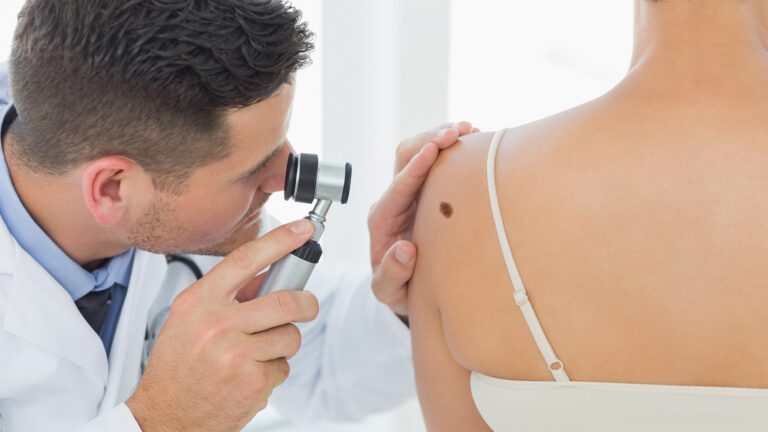
A typical skin exam takes about 10 to 20 minutes. You’ll be asked to undress to your comfort level (a gown will be provided), and the dermatologist will examine your skin from head to toe, possibly using a dermatoscope—a handheld tool that magnifies the skin.
If anything suspicious is found, your doctor may recommend a biopsy or schedule a follow-up visit. If nothing is found, you get peace of mind—and that’s valuable in itself.
The Bottom Line:
Even if you’re not at high risk, yearly skin exams are a smart, proactive way to protect your health. And if you do have risk factors such as a history of sunburns, tanning bed use, fair skin, numerous moles, or a family history of skin cancer, these exams become even more important.
Don’t wait for something to look “wrong.” Make your skin part of your annual health checklist. Schedule your exam with Kouba Dermatology today and stay ahead of potential concerns – your skin will thank you.
Any content, resident submissions, guest columns, advertisements, and advertorials are not necessarily endorsed by or represent the views of Best Version Media LLC (BVM) or any municipality, homeowners associations, businesses, or organizations that this publication serves. BVM is not responsible for the reliability, suitability, or timeliness of any content submitted, inclusive of materials generated or composed through artificial intelligence (AI). All content submitted is done so at the sole discretion of the submitting party.