There’s this idea that design is about making things look good.
Picking the right sofa. The right rug. The right color.
But what if I told you… it’s not really about that at all?
What if your home is actually a reflection of how you think, how you make decisions, how you process emotion—and how much you trust yourself?
That’s where design gets interesting. That’s where it stops being surface level and starts becoming something you feel.
This is where neuroaesthetics comes in—the study of how our environments affect our brain, our nervous system, and ultimately how we experience our lives. Because the truth is, your home is not just something you see… it’s something your body responds to.
And most people don’t realize they’re designing from a pattern.
Not a style. A pattern.
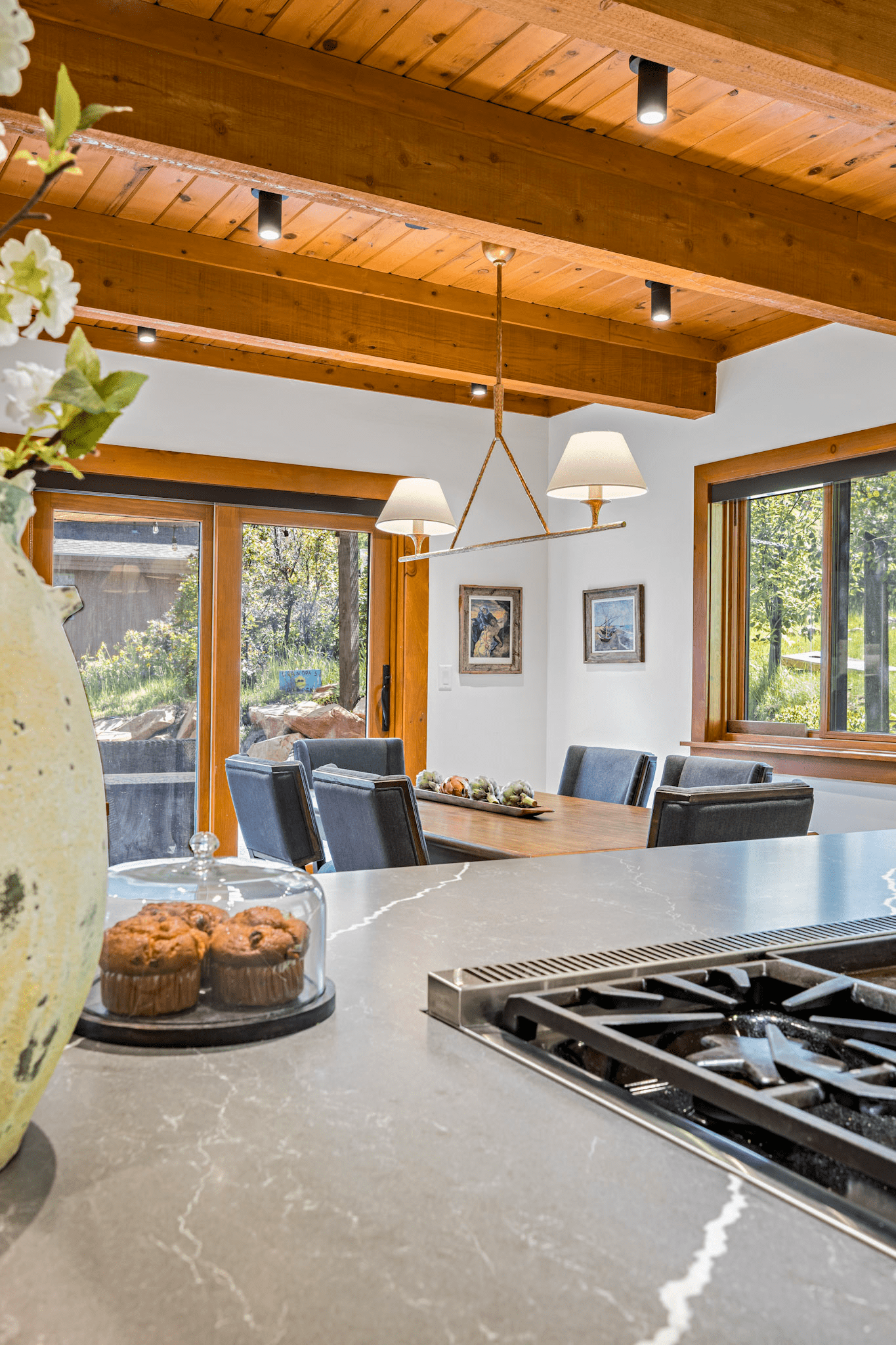
(Photography by Brian Medeiros)
The Three Design Personalities
Over the years, I’ve started to notice that people tend to fall into one of three patterns when it comes to their home. And none of them are actually about design—they’re about behavior.
Before you start labeling any of these as good or bad—pause.
None of these patterns are wrong.
They’re simply awareness points.
We all move in and out of them depending on the season we’re in, how we’re feeling, and what we’re navigating in life.
The goal isn’t to judge it.
It’s to notice it.
Because once you see your pattern, you can start to shift it.
The Bulldozer
You know this one. Maybe you are this one.
This is the person who fills a space quickly. Seasonal decor rotates before you’ve even processed the last one. There’s always something new, something swapped, something added.
It feels productive. It feels like progress.
But underneath it?
It’s urgency.
It’s reacting instead of choosing.
It’s filling space so you don’t have to sit with the question: what do I actually want this to feel like?
They’re not designing.
They’re responding.
The Paralyzed Perfectionist
This one is quieter, but just as common.
They see everything. They like everything. They save everything. And then… they do nothing.
Years go by. The space stays the same. And every day, there’s a quiet reminder: this isn’t quite right.
But the fear of getting it wrong is louder than the desire to move forward.
So they wait.
For clarity. For certainty. For the “perfect” decision.
But perfection doesn’t create movement.
Trust does.
They’re not stuck on design.
They’re stuck on permission.
The Aligned Collaborator
This is where things start to shift.
This person has a sense of what they like. Maybe they can’t fully articulate it, but they feel it. They understand that good design isn’t about copying—it’s about refining.
They’re not looking for someone to take over.
They’re looking for someone to help them see more clearly.
They invest with intention. They edit. They pause. They choose.
And the result?
A space that doesn’t scream for attention.
It just feels… right.
They’re not outsourcing design.
They’re expanding it.
So What’s the Point?
The point is this:
Most people think they have a design problem.
But what they really have is a relationship problem—with decision making, with identity, with trust.
Your home reflects that.
Not your budget. Not your access. Not your taste.
Your patterns.
Design isn’t about bulldozing your way to a finished space.
It’s about alignment.
It’s about understanding what actually supports you—how you want to live, how you want to feel, how you want to move through your day—and then building around that.
Design Is a Relationship
The best spaces—just like the best relationships—don’t feel forced.
Life is already full. Kids, work, pets, friends, everything pulling at you all at once.
Your home doesn’t need to add to that.
It should be the place that steadies you.
That softens the noise.
Supportive of the life happening inside it.

(Photography by Brian Medeiros)
A Final Thought
If your home feels overwhelming, it might not be the furniture.
It might be overstimulation.
If your home feels unfinished, it might not be the layout.
It might be hesitation.
And if your home feels good—like you can exhale when you walk in—
that’s not an accident.
That’s alignment.
Because design, when it’s done right, doesn’t feel like effort.
It feels like recognition.
Any content, resident submissions, guest columns, advertisements, and advertorials are not necessarily endorsed by or represent the views of Best Version Media LLC (BVM) or any municipality, homeowners associations, businesses, or organizations that this publication serves. BVM is not responsible for the reliability, suitability, or timeliness of any content submitted, inclusive of materials generated or composed through artificial intelligence (AI). All content submitted is done so at the sole discretion of the submitting party.