
For years, the first question most homeowners asked was: “How much will solar reduce my PG&E bill?”
That’s still a good question. But today, it’s no longer the only one—or even the best one. The better question is: “How much control can I take over my home’s energy future?”
The solar industry has always been a bit of a “solarcoaster,” driven by utility rates, policy, incentives, equipment costs, and the occasional political curveball. But recent years have brought more change than usual. NEM 3.0 reduced the value of exported solar. PG&E rates continue to climb. The 30% Residential Federal Tax Credit expired at the end of 2025. And PG&E has added a fixed Base Services Charge, meaning customers now pay a monthly fee regardless of usage.
The old playbook no longer works.
Under NEM 1 and NEM 2, homeowners could send excess solar to the grid and use credits later—essentially using the grid as a battery.
NEM 3.0 changed that. Exporting power is far less valuable. Today, the real value lies in using as much of your own solar energy as possible.
That’s where batteries come in.
Home energy storage is no longer just backup for outages—it’s central to a modern system. Batteries store excess solar power for use in the evening, when electricity is most expensive, and keep essential systems running during outages—refrigeration, lighting, internet, and more, depending on design.
This is especially relevant in Marin, where many homes have higher energy demands from EV charging, heat pumps, pools, hot tubs, and home offices. A strong solar + storage system isn’t just about panel count—it’s about how and when your home uses energy, and what you want protected.
The expiration of the federal tax credit changed the economics, but not the opportunity. With PG&E rates still high, well-designed solar + storage systems can deliver solid long-term returns—especially when optimized for self-consumption, backup, and future energy needs.
New financial structures are also helping offset the loss of the tax credit. Earthwise Energy, for example, has partnered with a tax equity firm to structure residential projects in a way that can pass through a portion of commercial tax benefits as upfront savings—often recovering 20–25% of the lost credit, depending on the project.
So what’s the updated playbook?
1.) Understand your usage
2.) Design solar around your actual needs
3.) Include the right amount of battery storage
4.) Plan for future electrification now
5.) Work with a knowledgeable local contractor
Solar isn’t going away. The simple version is.
What comes next is smarter, more customized, and focused on control.
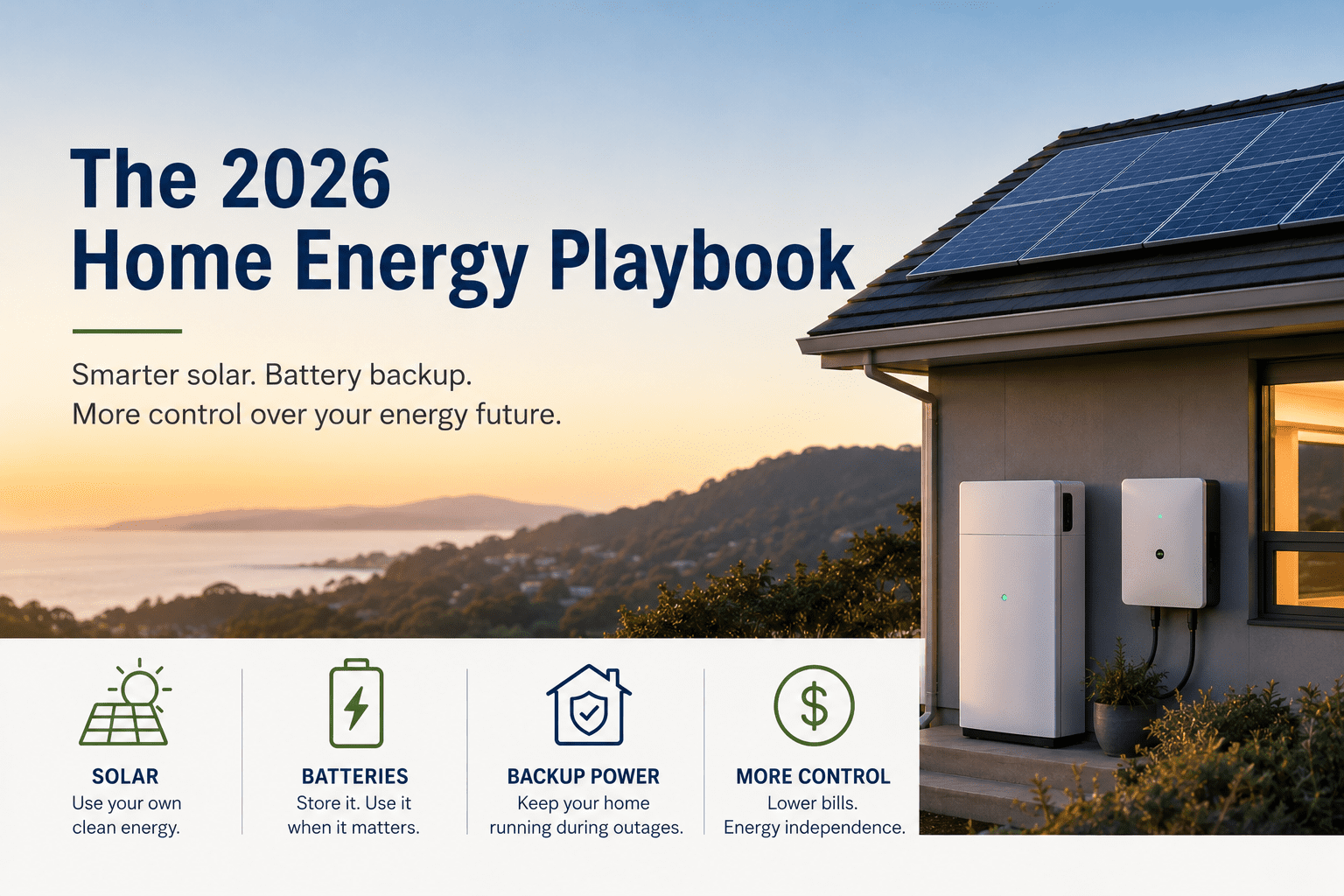
Submitted photo
For more information on Energy Saving Solutions and solar options, contact Jason Hamilton at Earthwise Energy Solutions by calling 800-396-6949 or visiting www.earthwiseenergysolutions.com.
Any content, resident submissions, guest columns, advertisements, and advertorials are not necessarily endorsed by or represent the views of Best Version Media LLC (BVM) or any municipality, homeowners associations, businesses, or organizations that this publication serves. BVM is not responsible for the reliability, suitability, or timeliness of any content submitted, inclusive of materials generated or composed through artificial intelligence (AI). All content submitted is done so at the sole discretion of the submitting party.