Surfers are tough. They’re out in any weather, beating out the old adage of postmen: “Neither snow nor rain nor heat nor gloom of night stays the [surfers] from the [joyous] completion of their rounds.” —Herodotus.
We know how surfers and exercise aficionados hate to be out. Now, there is high-tech equipment in physical therapy to get you back twice as fast as the old-fashioned way, and not those lame, baby exercises that a surfer would laugh at any day.
Surfing is a full-body sport demanding balance, shoulder endurance and shoulder strength. It requires not just core stability but serious core strength and control. It demands a full range of motion in the knees, hips and ankles. You ask not for just mobility, but resilience. It relies on reaction time and muscles firing in perfect harmony.
Physical therapy (PT) isn’t just rehabbing injuries — it can improve your body awareness and movement mastery. The right therapist can assess posture, whole body physics and mechanics, evaluate how joints and muscles handle paddling and popping, and design exercises that prepare for real-wave scenarios. PT strengthens the muscles that fatigue first, stabilizes the joints most prone to injury, and fine-tunes your movement patterns.
Surfing is a physically challenging and dangerous sport, requiring a higher level of care when you do get injured. The right treatments can reduce shoulder pain, lower back strain and knee or ankle flare-ups — common culprits that cut a surf session short.
The type of therapy surfers and athletes should look for contains these elements: 1) manual therapy, 2) advanced technology, and 3) private clinics that allow a doctorate-level therapist to spend more time with you. You want accurate assessment of problems rather than standard protocols and elementary exercises.
Manual therapy comprises hands-on correction of joint mechanics via manipulation and mobilizations, massage and stretching to correct muscle tension imbalances.
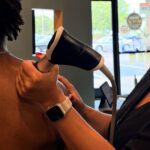
Examples of advanced technology include MLS class IV lasers (not spa-level lasers), shockwave, electrified dry needling, automated ultrasound, iontophoresis and external vagal nerve stimulators.
If you approach the waves by prepping your body with the same strategic mindset you bring to reading a swell chart, you’re setting yourself up for more waves, cleaner pop-ups and longer rides.
Physical therapy is your secret weapon to turn potential wipeouts into smooth, stylish lines down the face of the wave.
This year, surf smarter, not just harder. Your body will thank you.
Any content, resident submissions, guest columns, advertisements, and advertorials are not necessarily endorsed by or represent the views of Best Version Media LLC (BVM) or any municipality, homeowners associations, businesses, or organizations that this publication serves. BVM is not responsible for the reliability, suitability, or timeliness of any content submitted, inclusive of materials generated or composed through artificial intelligence (AI). All content submitted is done so at the sole discretion of the submitting party.