The Wellness Trend Everyone Is Talking About
From celebrity wellness routines to longevity clinics and performance optimization programs, peptides have quickly become one of the most talked about tools in modern health and wellness. Promising benefits ranging from improved recovery and metabolism to healthier skin and enhanced vitality, peptides are generating excitement among healthcare providers and clients alike.
But with all the buzz comes confusion. Are peptides really the breakthrough they’re claimed to be, or are they simply the latest wellness fad?
Let’s separate the facts from the myths.
What Are Peptides?
Peptides are short chains of amino acids (the building blocks of proteins.) Naturally occurring throughout the body, they act as messengers that help regulate countless biological processes including healing, hormone production, immune function, metabolism, and tissue repair.
{Think of peptides as text messages sent between cells, instructing the body to perform specific functions more efficiently.}
Myth #1: Peptides Are Just Another Supplement
Fact: Peptides are not vitamins or supplements.
Unlike traditional supplements that provide nutrients, peptides work by signaling the body to initiate specific responses. Different peptides have different targets, which is why treatment plans should be personalized based on an individual’s goals and health needs.
Myth #2: All Peptides Do the Same Thing
Fact: Different peptides serve different purposes.
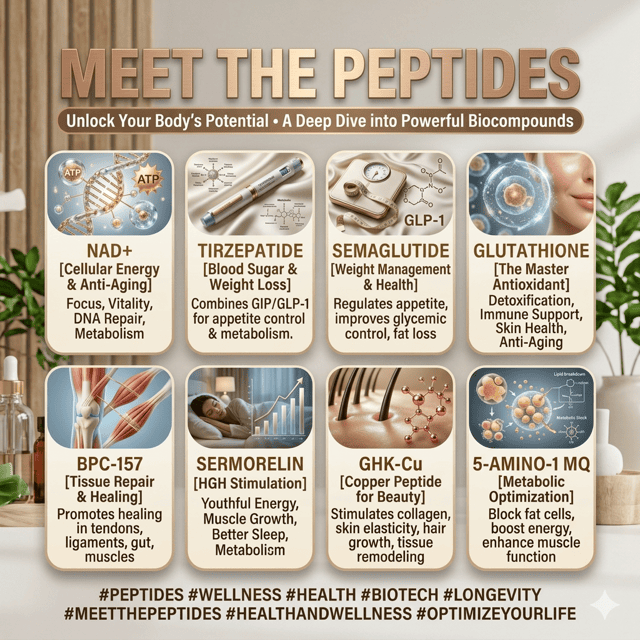
Some peptides focus on recovery and tissue repair, while others support metabolic health, skin rejuvenation, cognitive function, or healthy aging. The effectiveness of a peptide depends on selecting the right therapy for the desired outcome.
Myth #3: Peptides Are Only for Athletes and Bodybuilders
Fact: Peptides are being used by a wide range of individuals.
While athletes often use certain peptides to support recovery and performance, many people seek peptide therapy for entirely different reasons, including:
- Healthy aging
- Skin and hair support
- Weight management
- Improved recovery
- Energy optimization
- Immune health
- Longevity-focused wellness
Submitted photo
The Potential Benefits of Peptide Therapy
Recovery and Healing
Certain peptides are being studied for their ability to support tissue repair, recovery from exercise, and overall healing processes. This has made peptide therapy increasingly popular among active individuals and those looking to maintain mobility and physical wellness.
Healthy Aging and Skin Support
Many people are turning to peptides as part of their anti-aging routines. Some peptides may support collagen production, skin elasticity, hydration, and overall skin appearance.
Metabolic Health
Specific peptides are commonly incorporated into weight management and metabolic wellness programs. These therapies may help support appetite regulation, blood sugar balance, and body composition goals when combined with healthy lifestyle habits.
Immune Function
Emerging research suggests certain peptides may play a role in supporting immune system function and reducing inflammation, helping the body maintain balance and resilience.
Cognitive Wellness
Some peptides are being explored for their potential impact on focus, mental clarity, sleep quality, and overall cognitive performance.
Myth #4: If a Little Is Good, More Must Be Better
Fact: More is not always better.
One of the biggest misconceptions surrounding peptide therapy is that increasing dosage leads to better results. In reality, appropriate dosing, proper sourcing, and medical oversight are essential for both safety and effectiveness.
Peptides are most successful when they are part of a personalized treatment plan guided by a qualified healthcare professional.
Myth #5: Peptides Are a Magic Solution
Fact: Peptides work best as part of a comprehensive wellness strategy.
While peptide therapy can be a valuable tool, it is not a substitute for healthy nutrition, regular exercise, quality sleep, stress management, and preventive healthcare.
The best outcomes occur when peptides complement an overall wellness plan rather than replace healthy habits.
The Bottom Line
Peptides are not magic—and they’re certainly not a shortcut. What they are is an exciting and rapidly evolving area of wellness and longevity medicine that may help support the body’s natural processes when used appropriately.
As research continues to grow, peptides are becoming an increasingly important conversation in personalized healthcare. The key is understanding that successful peptide therapy requires quality products, individualized protocols, realistic expectations, and professional guidance.
The hype may be real—but so is the science behind many of these innovative therapies.
Any content, resident submissions, guest columns, advertisements, and advertorials are not necessarily endorsed by or represent the views of Best Version Media LLC (BVM) or any municipality, homeowners associations, businesses, or organizations that this publication serves. BVM is not responsible for the reliability, suitability, or timeliness of any content submitted, inclusive of materials generated or composed through artificial intelligence (AI). All content submitted is done so at the sole discretion of the submitting party.