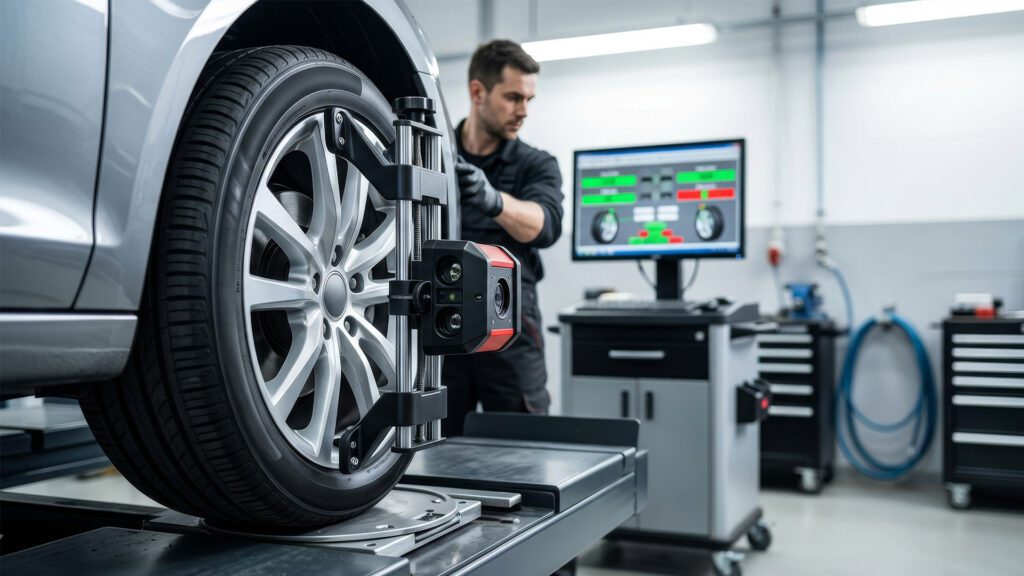
One of the most overlooked maintenance services for your vehicle is a quality wheel alignment. Whether you’re installing a new set of tires or trying to correct a vehicle that pulls to one side or wears tires unevenly, a proper alignment is essential to your vehicle’s performance, safety, and longevity.
Choosing the right repair shop is just as important as deciding to have the alignment performed. Unfortunately, not all automotive repair shops are created equal. Some technicians simply haven’t received the training needed to perform alignments correctly, while others may not even realize they’re making mistakes.
A proper alignment involves much more than centering the steering wheel. Every angle of the suspension and steering system must be measured and adjusted according to the manufacturer’s specifications. When these adjustments are not made correctly, the results can include poor handling, premature tire wear, reduced fuel economy, and unnecessary wear on suspension components.
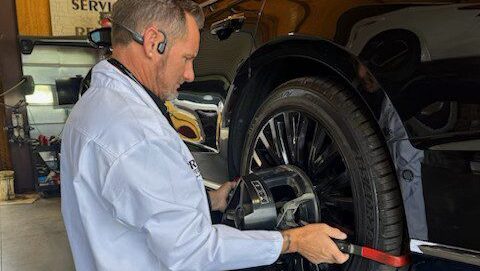
Submitted photo
Believe it or not, the condition of the shop itself can tell you a lot. A clean, organized alignment bay often reflects a shop that takes pride in its work and properly maintains its equipment. Alignment machines rely on sensitive cameras, targets, sensors, and moving components that must remain clean, calibrated, and in good working order. Dirt, damage, or neglected maintenance can affect the accuracy of the readings.
Equally important is the technician operating the equipment. The alignment targets must be installed correctly, the vehicle must be prepared properly, and the technician must understand how to interpret the alignment data. If any part of the process is skipped or performed incorrectly, the alignment results will be inaccurate.
Unfortunately, there are cases where shops manipulate alignment specifications simply to produce an “all green” printout for the customer. While the report may look impressive, it doesn’t always mean the vehicle was aligned correctly. A quality alignment should focus on how the vehicle drives and whether every measurement meets the manufacturer’s specifications—not just whether the printout looks good.
Today’s vehicles are also far more advanced than those built just a few years ago. Many are equipped with electric power steering, forward-facing radar systems, lane departure cameras, adaptive cruise control, and other Advanced Driver Assistance Systems (ADAS). After certain suspension repairs or even a standard alignment, many of these systems require a Steering Angle Sensor calibration or other manufacturer-specified recalibrations.
This is where experience and modern equipment become critical. Not every alignment machine or scan tool is capable of recognizing these additional procedures. If the required calibrations are skipped, your vehicle may still pull, steering assist may not function properly, or safety systems may not operate as the manufacturer intended.
We’ve recently had several customers bring us vehicles that continued pulling after having alignments performed elsewhere. In many cases, the alignment angles were close, but the necessary steering angle calibration had never been completed. Once the vehicle was properly calibrated, the steering and handling issues were corrected.
As vehicle technology continues to evolve, a wheel alignment is no longer just a simple adjustment. Modernka vehicles came equipped with increasingly sophisticated ADAS technology that depends on precise steering and suspension geometry. Proper alignment has become the foundation for many of these safety systems to function correctly.
While the cost of a professional alignment may be higher than it was years ago, you’re paying for far more than someone adjusting a few suspension components. You’re investing in specialized equipment, ongoing technician training, manufacturer-specific software, and procedures that help ensure your vehicle performs safely and as designed.
The bottom line is simple: not everyone who offers alignments performs them to the same standard. Choosing a qualified repair facility can save you money by extending tire life, preventing premature suspension wear and ensuring your vehicle’s advanced safety systems operate correctly.
As the Car Doctor, my advice is simple: ask questions before trusting someone with your vehicle. Find out whether the shop maintains its alignment equipment, invests in technician training, and has the capability to perform all manufacturer-required calibrations. Your vehicle—and everyone riding in it—deserves nothing less.
Any content, resident submissions, guest columns, advertisements, and advertorials are not necessarily endorsed by or represent the views of Best Version Media LLC (BVM) or any municipality, homeowners associations, businesses, or organizations that this publication serves. BVM is not responsible for the reliability, suitability, or timeliness of any content submitted, inclusive of materials generated or composed through artificial intelligence (AI). All content submitted is done so at the sole discretion of the submitting party.