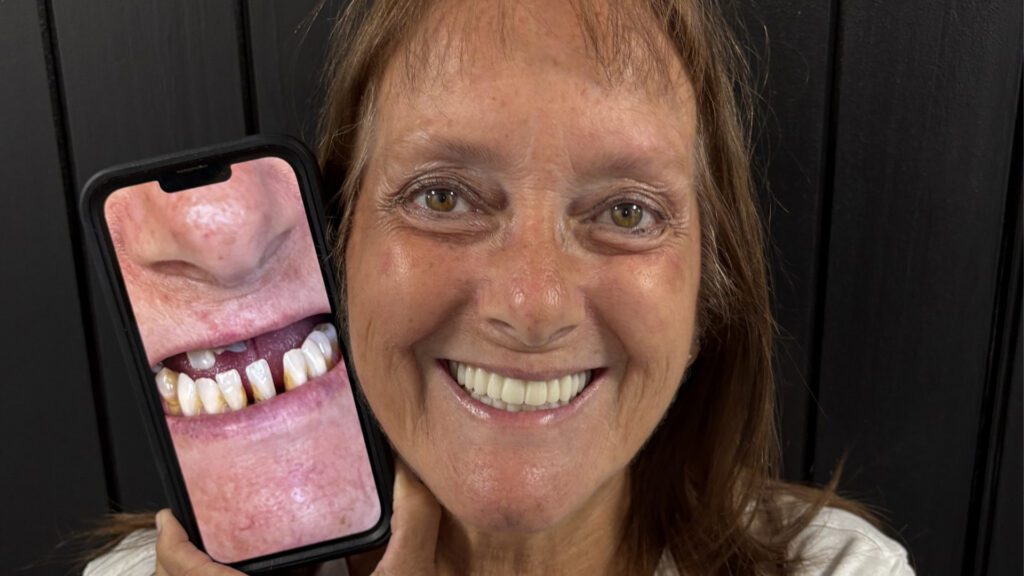
When patients lose teeth, one of the most common questions I hear is, “What is the best way to replace them?” The answer depends on several factors, including the number of missing teeth, bone quality, overall health, and budget. However, in many situations, dental implants offer advantages that traditional bridges and removable dentures simply cannot match.
Dental Implants vs. Bridges
A traditional bridge replaces a missing tooth by using the neighboring teeth as support. While bridges can be an excellent treatment option, they require healthy adjacent teeth to be permanently reshaped. This means removing natural tooth structure from teeth that may otherwise be perfectly healthy.
A dental implant, on the other hand, replaces the missing tooth without involving neighboring teeth. The implant functions as an artificial tooth root, helping preserve the jawbone and supporting a crown that looks and functions like a natural tooth. Because implants stand on their own, they often provide a more conservative and longer-lasting solution.
Dental Implants vs. Dentures
Dentures have restored smiles for generations and remain a viable option for many patients. However, traditional dentures rest on the gums and do not prevent the bone loss that naturally occurs after teeth are removed. Over time, this bone loss can cause dentures to loosen, requiring relines, adjustments, or replacement.
Implants help stimulate the jawbone much like natural tooth roots, slowing or preventing this process. Patients with implant-supported teeth typically experience improved chewing ability, greater confidence, and less concern about movement while speaking or eating.
Dental Implants vs. All-on-X
All-on-X is actually a type of implant treatment used when a patient is missing most or all of their teeth. Rather than replacing each tooth individually, a full arch of teeth is supported by a strategic number of implants.
When possible, saving healthy natural teeth is usually preferable to removing them and replacing everything with a full-arch prosthesis. However, for patients with extensive decay, severe gum disease, failing dental work, or multiple missing teeth, All-on-X can provide a life-changing solution that restores both function and appearance.
For patients frustrated with loose dentures, sore spots, and the daily inconvenience of adhesives, All-on-X can be a dramatic improvement in quality of life. By anchoring a full set of teeth to dental implants, patients often regain the confidence to eat, speak, laugh, and socialize without worrying about their teeth moving or coming loose.
In other words, the choice is not always “implants versus All-on-X.” All-on-X is often the best implant solution when an entire arch of teeth needs replacement.
The Bottom Line
Dental implants have become the gold standard for replacing missing teeth because they look, feel, and function more like natural teeth than any other option available today. They help preserve bone, protect neighboring teeth, improve chewing ability, and provide long-term stability.
That said, every patient is different. Bridges, dentures, and full-arch implant solutions all have important roles in modern dentistry. The best treatment is the one that fits your specific oral health needs, goals, and lifestyle.
The most important step is to have a thorough evaluation with a dentist experienced in all forms of tooth replacement so you can make an informed decision about your long-term oral health.
While there are many ways to replace missing teeth, dental implants are the closest thing modern dentistry has to getting your natural teeth back.
Matthew Agnini, DDS
With over two decades of implant experience and thousands of implant restorations completed, Dr. Agnini focuses on dental implants, full-arch reconstruction, and complex implant cases in Central Florida.
Any content, resident submissions, guest columns, advertisements, and advertorials are not necessarily endorsed by or represent the views of Best Version Media LLC (BVM) or any municipality, homeowners associations, businesses, or organizations that this publication serves. BVM is not responsible for the reliability, suitability, or timeliness of any content submitted, inclusive of materials generated or composed through artificial intelligence (AI). All content submitted is done so at the sole discretion of the submitting party.