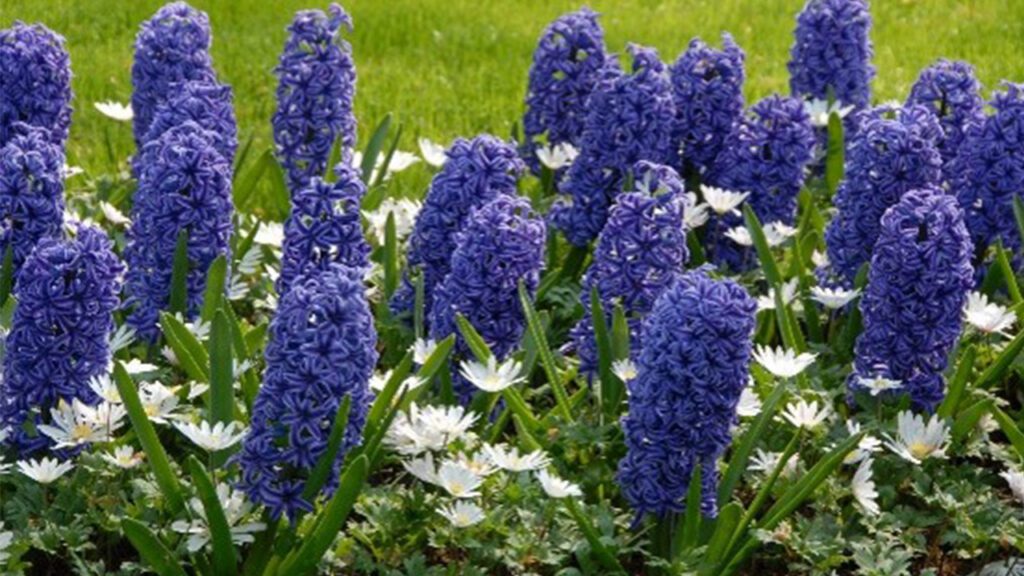
Do you love tulips, daffodils and fragrant hyacinths? If so, fall is the perfect time to plant a little promise of spring in your garden.
Spring-flowering bulbs are remarkably forgiving and easy to grow. Plant them in loose, well-drained soil and, ideally, in a location that receives plenty of sunlight. You can plant bulbs until the ground freezes solid, but the sooner they are in the ground, the better established they will be before winter arrives.
Tulips: A Rainbow of Spring
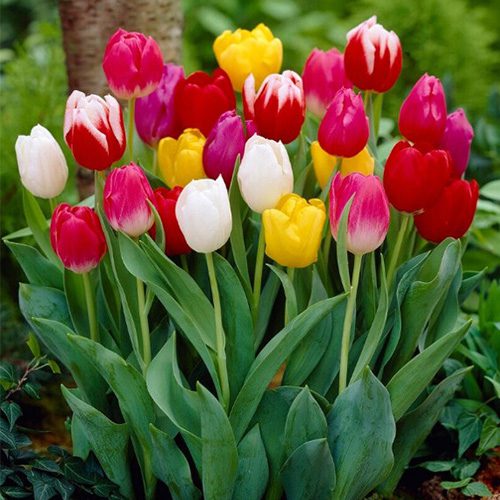
Tulips are among my favorite spring flowers because they can provide color from early through late spring, depending on the varieties you choose. Their brilliant colors, however, can also make them tempting treats for deer and rabbits. If browsing is a problem in your garden, liquid or granular animal repellents can help discourage wildlife from feeding on the foliage.
Many modern tulips are best treated as annuals because their flowers may become less impressive in subsequent years. That doesn’t stop me from planting plenty of them. Their beauty is worth it!
And don’t be afraid to cut your tulips. I love snapping the stems and bringing armloads of flowers indoors to share with friends. Giving flowers is one of the best “things” I get to do. I often make two bouquets: one for you and one for you to give to someone who needs a smile.
Daffodils: Reliable Spring Performers
Daffodils are some of the most dependable bulbs in the garden. Unlike tulips, they are generally avoided by deer, rabbits and squirrels because of naturally occurring compounds that make the foliage and bulbs unappealing to many animals.
Daffodils can also naturalize, returning year after year with very little additional maintenance. I have bulbs that have rewarded me with flowers for several decades.
One important tip when enjoying cut daffodils: remove the flowers after they bloom, but allow the foliage to remain until it naturally yellows and dies back. The leaves are busy replenishing the bulb for next year’s flowers.
Daffodils and Daylilies: My “DnD” Combination
One of my favorite and proven plant combinations is interplanting daffodils with daylilies. I call it “DnD” — Daffodils and Daylilies — and it is a dynamite combination.
The daffodils emerge first, providing welcome early-spring color. As their foliage begins to fade, the daylily foliage emerges and helps hide the browning daffodil leaves. Later, the daylilies take center stage with their summer flowers.
It is a simple combination that provides beauty through multiple seasons.
A River of Blue
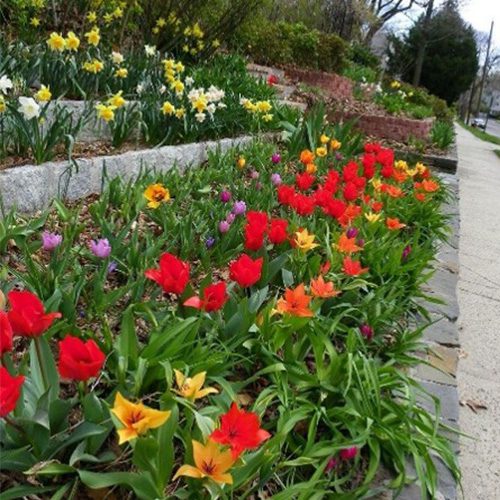
Fragrant blue grape hyacinths, or Muscari, are another favorite of mine. At Keukenhof Gardens in Holland, thousands of these little bulbs are planted in masses, creating the impression of a river of blue. The effect, especially when surrounded by colorful tulips, is spectacular.
Grape hyacinths are excellent naturalizers and can return year after year. Their grassy foliage can also reappear in late summer, which gives me another reason to plant them.
I like to tuck a few grape hyacinths among my daffodils. When the blue foliage appears again, it serves as a little garden marker, reminding me exactly where my daffodils are planted. When I want to add more bulbs, I simply look for those grape hyacinths and plant between them.
Don’t Worry About Perfect Planting
Bulbs are wonderfully forgiving. If you accidentally dig one up while working in the garden, simply replant it. If a bulb is damaged or cut in half by a shovel, however, it is best discarded.
When planting, position bulbs with the pointed end facing upward. But don’t panic if a few end up on their sides or even upside down. Bulbs have an amazing ability to orient themselves as they grow.
For the most dramatic display, plant bulbs in groups or masses rather than in straight rows. In large garden beds, I like to layer the planting by combining larger bulbs such as alliums, hyacinths and daffodils, followed by tulips, grape hyacinths and crocus.
Once the bulbs are planted, gently firm the soil and water thoroughly.
Add Pansies for Fall and Spring Color
For an especially fun and colorful display, consider interplanting pansies with your fall-planted bulbs.
Pansies are cool-season plants that can provide cheerful color in the fall. With adequate moisture, they can continue to perform through winter and reward you with another colorful display in spring. They can tolerate light frost and often perk right back up when the sun returns.
Pansies are technically biennials, although gardeners often grow them as annuals. They don’t particularly enjoy summer heat, and plants can become stretched and leggy as temperatures rise. You can plant them in fall or add fresh plants in spring.
And here’s a fun bonus: pansy flowers are edible and can add a colorful finishing touch to a dinner plate. Just be sure they have been grown without pesticides or other chemicals not intended for edible plants.
Plant a Little Spring Happiness
There is something magical about planting bulbs in the fall. As the garden goes dormant and winter settles in, those little bulbs are quietly waiting underground. Then, almost as if by surprise, spring arrives and the garden begins to awaken with color.
So this fall, plant a few tulips, daffodils, grape hyacinths, crocus or other spring-flowering bulbs. Plant generously, plant in masses, and plant some to share.
Because come spring, you’ll have more than flowers—you’ll have an opportunity to give someone a smile.
Architerra Inc | www.architerrainc.com | 847-949-6576
Any content, resident submissions, guest columns, advertisements, and advertorials are not necessarily endorsed by or represent the views of Best Version Media LLC (BVM) or any municipality, homeowners associations, businesses, or organizations that this publication serves. BVM is not responsible for the reliability, suitability, or timeliness of any content submitted, inclusive of materials generated or composed through artificial intelligence (AI). All content submitted is done so at the sole discretion of the submitting party.