I’m often asked what the relationship is between hearing loss and Parkinson’s disease, or hearing loss and Alzheimer’s disease. Neurodegenerative diseases (NDs), such as Parkinson’s, Lewy Body Dementia, and Alzheimer’s are devastating for the individual and their loved ones, largely because they are progressive and (currently) irreversible. They are all caused by the buildup of abnormal proteins in the brain. They build up in and around nerve cells, causing impaired neural communication/coordination, cellular inflammation/stress and eventual cell death. Like so many other devastating health problems, the best and brightest are hard at work trying to unlock the secrets of NDs, including a brilliant friend of ours who runs the UCSF Alzheimer’s Disease Research Center.
So what is the relationship between hearing loss and NDs? Because the vast majority of hearing loss is nerve-related, you would be forgiven for thinking that NDs can cause hearing loss. While it’s true most hearing loss is due to nerve damage, it’s damage to the peripheral auditory nervous system, specifically the sensory cells of the inner ear where sounds are coded into electrical activity, not to the cortical areas of the brain that process those electrical signals.
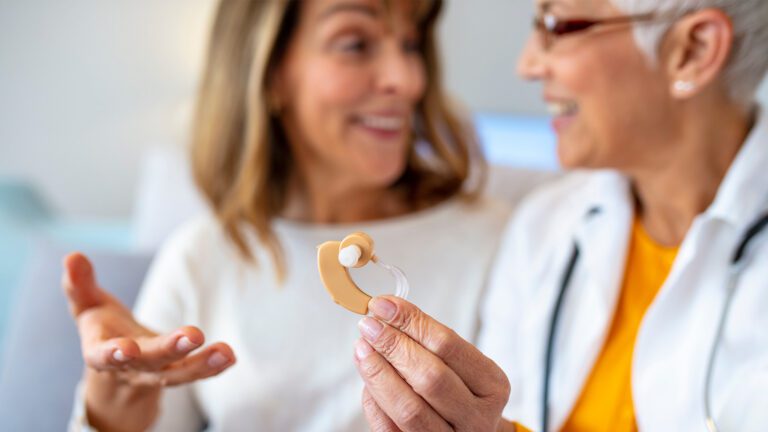
Amplification, therefore, can be very effective for addressing peripheral hearing loss in the absence of NDs because the areas of the brain that process or interpret sound are healthy. The signal from the ear may be distorted, but our amazing brains can typically compensate, allowing us to effectively communicate.
But what about the other direction? Can hearing loss contribute to NDs? The research seems to suggest that it can. Now, that doesn’t necessarily mean that you’ll get dementia if you have hearing loss (or you won’t if you don’t). But the odds certainly increase with untreated hearing loss. And it appears they increase significantly. Imaging studies show that hearing loss contributes to brain tissue shrinkage, especially in areas critical for language, learning and memory. Though not fully understood, nerve cells want to innervate (supply nerves to organs). When they don’t get that stimulation, it stresses the cells expecting that signal, leading to damage and eventual death. The damage manifests in the form of misfolded proteins that clump together and gum up communication between neurons.
While not a panacea, hearing aids and Assistive Listening Devices (ALDs) have been shown to be one of the best things we can do to reduce the associated risks and long term trajectory of hearing loss. The treatment aspects come from the psychosocial quality of life improvement and ease of listening, reducing cognitive load and cellular stress over time. The human brain has evolved to process specific things in specific areas. The more we can keep those areas active doing those very specific things, the healthier we’ll be.
But we need to be careful not to lose sight of that fact. Even though we know hearing loss is significantly associated with NDs, and that early and consistent intervention with hearing aids helps on many levels, I found a recent (2025) study from Finland indicating that we could be missing the forest for the trees. Surprisingly, this study found that because of the outward similarities between the early symptoms of hearing loss and cognitive decline, being diagnosed with Alzheimer’s disease resulted in not being “adequately referred for hearing assessment.” The system was myopic, not recognizing the importance or contribution of hearing health, with the study noting “hearing problems may go undetected and untreated.”
Good hearing health is recognized as a significant factor in maintaining our long-term brain and overall health. That’s why it’s critical to take care of your hearing health. It’s why I write these articles. I hope this helps explain a little more why.
Please continue to show that you love your community by supporting our local businesses and remembering the humanity of those around you.
Any content, resident submissions, guest columns, advertisements, and advertorials are not necessarily endorsed by or represent the views of Best Version Media LLC (BVM) or any municipality, homeowners associations, businesses, or organizations that this publication serves. BVM is not responsible for the reliability, suitability, or timeliness of any content submitted, inclusive of materials generated or composed through artificial intelligence (AI). All content submitted is done so at the sole discretion of the submitting party.