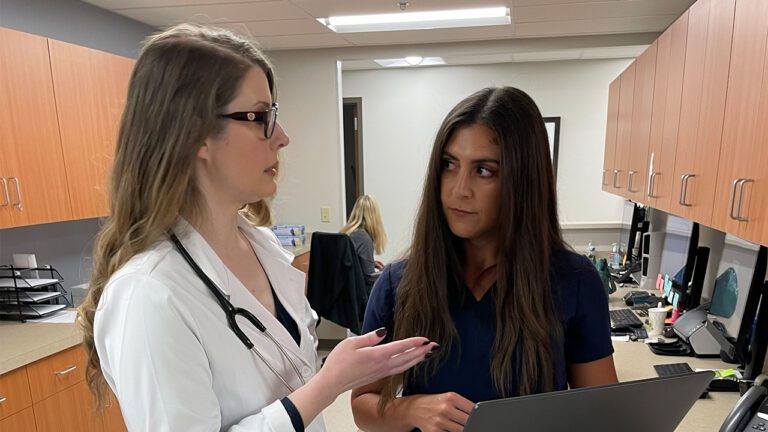
As a mom of four and a pediatric hospitalist, one of the most common things I hear from parents at the start of a new school year is, “What can I do to keep my child healthy?” The truth: a little preparation goes a long way. Here are some of my top tips for a healthy, safe school year — plus guidance on when to call your pediatrician and when to head straight to the emergency room.
Start the year with a well visit and the right vaccines. If your child hasn’t had a back-to-school physical yet, now is the time. Well visits aren’t just a formality; they’re an opportunity to catch issues early, update immunizations and make sure your child is ready to hit the ground running. Don’t forget the flu shot: the ideal window is September or October, since it takes about two weeks to build full immunity. Getting it before flu season peaks could mean the difference between a healthy autumn and a miserable one.
Wash those hands. I know it sounds simple, but handwashing is still the single most effective way to prevent the spread of illness. Teach your child to wash with soap and water for at least 20 seconds, especially before eating and after using the restroom. Remind your kids not to share water bottles, utensils or lip balm. Hand sanitizer is fine in a pinch, but it’s not a substitute for real soap and water.
Sleep is not optional. Summer schedules often mean later bedtimes, so start shifting bedtimes a little earlier at least a week before school begins. Elementary-age children need about nine to 12 hours of sleep each night, while teenagers need eight to 10. Adequate sleep supports both learning and a healthy immune system.
Know when to keep a sick child home. If your child has a fever over 100.4 degrees, vomiting, diarrhea or symptoms such as significant fatigue or uncontrollable coughing that make it difficult to participate in school, keep them home. They should be fever-free for 24 hours without fever-reducing medication before returning.
Play hard, stay smart. Fall sports bring a higher risk of concussion, especially in contact sports like football, soccer and volleyball. Watch for headache, light sensitivity or feeling “foggy” after a blow to the head, and remove your child from play immediately. Because children are especially vulnerable to second impact syndrome — a rare but serious complication that can result in severe and potentially life-threatening neurological damage — they should be evaluated by a healthcare provider and medically cleared before returning to sports or activities. When in doubt, let your child sit out for a few days.
ER or pediatrician? Here’s how to decide. Your pediatrician can manage most illnesses and minor injuries. Seek emergency care if your child has:
- Difficulty breathing
- Signs of severe dehydration (very little urine, dry mouth, no tears or inability to keep fluids down)
- Severe allergic reactions (anaphylaxis is defined as having two or more of the following symptoms after exposure to an allergen: trouble breathing, swelling of the lips, tongue, or throat, widespread hives with breathing difficulty or repeated vomiting). A child should also come to the ER if they are given an EpiPen.
- Head injuries with concerning symptoms
- First-time seizure, seizure lasting more than five minutes, repeated seizures or difficulty breathing
- Broken bones or serious injuries
- Severe or worsening abdominal pain, especially with vomiting, fever or difficulty walking
- Changes in mental status
- High fever in young infants (Any infant younger than two months with a temperature of 100.4 degrees or higher should be evaluated immediately)
- Older children with fever who are difficult to wake, confused or have trouble breathing also need prompt evaluation.
When in doubt, trust your instincts. If something doesn’t feel right, seek medical care. The emergency department and dedicated inpatient unit at Monroe Carell Jr. Children’s Hospital Vanderbilt at Williamson Medical Center are staffed 24/7 by board-certified pediatric physicians specially trained to care for children. Learn more at WilliamsonHealth.org/pediatrics.
Any content, resident submissions, guest columns, advertisements, and advertorials are not necessarily endorsed by or represent the views of Best Version Media LLC (BVM) or any municipality, homeowners associations, businesses, or organizations that this publication serves. BVM is not responsible for the reliability, suitability, or timeliness of any content submitted, inclusive of materials generated or composed through artificial intelligence (AI). All content submitted is done so at the sole discretion of the submitting party.