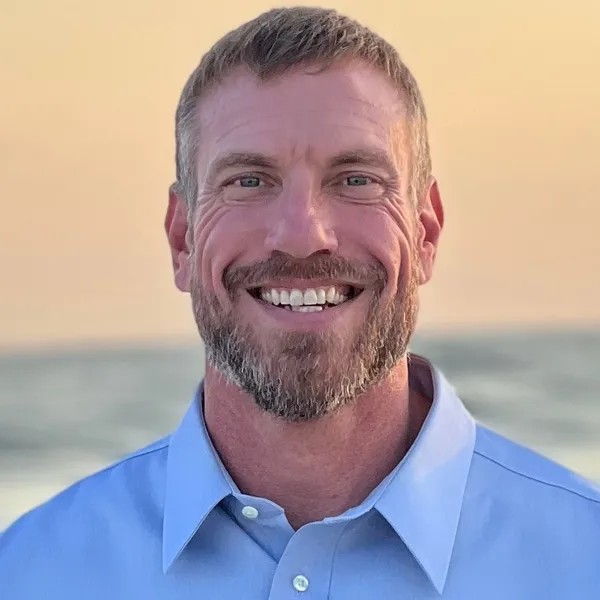
Parents often hear that their child should see an orthodontist by age seven, but many aren’t sure what that really means—or whether braces or expanders are necessary that early. There are mixed messages circulating in our community and Emerald Isle Living asked Dr. Robert Sanborn, board-certified orthodontist and founder of Sanborn Orthodontics in Morehead City, to clarify what parents can expect.
Why age seven?
According to Dr. Sanborn, age seven is an ideal time for an initial orthodontic evaluation, not because treatment usually begins then, but because it gives orthodontists a valuable snapshot of a child’s developing teeth and jaw structure.
“At this stage, children have a mix of baby and permanent teeth, and their jaws are still growing,” he explains. “It’s the perfect time to identify early bite issues, functional habits, airway concerns, or growth patterns that may need attention later. Most children don’t need treatment yet—but we want to keep a close eye on things so that when treatment is needed, the timing is optimal.”
Do most children need braces this early?
Dr. Sanborn says no—most do not.
“For many children, the healthiest, most efficient time to begin orthodontic treatment is between 10-12 years old, once more permanent teeth are present,” he says. “Research has shown limited benefit to a Phase I and Phase II approach. Early braces often unnecessarily increases overall cost and length of time in braces for a patient, neither of which are ideal for families.Orthodontics is highly dependent on growth. Starting too early can extend the total time in treatment without improving the final outcome.”
Why timing matters
Dr. Sanborn compares orthodontic timing to planting a garden.
“You don’t plant tomatoes in January. Even with the best tools and intentions, you won’t get the results you’re hoping for until the season is right,” he notes. “Orthodontics is very similar. There is a window of time when treatment works with a child’s natural growth, not against it. When we match treatment to that window, we achieve a more stable and efficient result.”
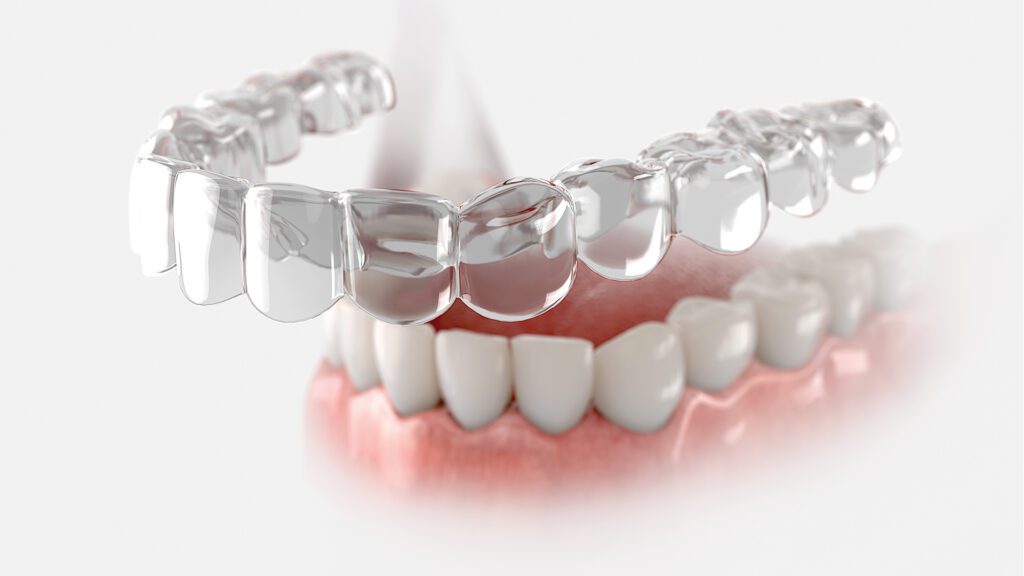
Advances in orthodontic technology have also changed how and when treatment is needed. Dr. Sanborn’s practice uses the Damon Ultima System, a modern braces system designed to gently and efficiently create space and improve arch form during comprehensive treatment. Dr. Sanborn shares that, “The ability to expand arch widths and create space in an adolescent allows us to monitor natural primary tooth exfoliation and not intervene with serial extractions or palatal expanders, except for in very specific situations.”
When early treatment is beneficial
Although most children don’t need phase-1 treatment, Dr. Sanborn emphasizes that early intervention is very important in certain situations. These include significant crossbites, jaw shifts, airway or habit issues, severe protrusion of front teeth with trauma risk, or cases where a child is experiencing self-consciousness or social difficulty due to dental appearance.
“In those cases, early care can make a meaningful difference,” he says. “The key is not to treat early because of age alone, but because it provides a clear, lasting benefit for that child.”
How parents can stay informed
To help families navigate growth and development without pressure or uncertainty, Sanborn Orthodontics offers a complimentary observation program for children ages 7–12 called the Guppy Grins Club. Participants are seen periodically to monitor eruption patterns, bite changes, and overall development.
“This allows us to begin treatment at exactly the right time—not too early, and never too late,” Dr. Sanborn says. “Parents appreciate having clear guidance as their child grows.”
The bottom line for families
“Every child’s smile has its own path,” Dr. Sanborn says. “Our role is to guide that path thoughtfully, using the most up-to-date research and technology. With consistent monitoring and well-timed treatment, we can help children achieve healthy, confident smiles that last a lifetime.”
Robert Sanborn, DDS, MPH, MS, is a board-certified orthodontist and the founder of Sanborn Orthodontics in Morehead City. A graduate of the University of North Carolina at Chapel Hill, he holds advanced degrees in public health and orthodontics and has served Carteret County families for more than 16 years. Dr. Sanborn is known for his patient-centered approach, evidence-based treatment planning, and commitment to creating confident, healthy smiles for children, teens, and adults across Coastal Carolina.
Any content, resident submissions, guest columns, advertisements, and advertorials are not necessarily endorsed by or represent the views of Best Version Media LLC (BVM) or any municipality, homeowners associations, businesses, or organizations that this publication serves. BVM is not responsible for the reliability, suitability, or timeliness of any content submitted, inclusive of materials generated or composed through artificial intelligence (AI). All content submitted is done so at the sole discretion of the submitting party.