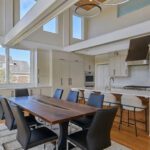
When most people hear the phrase “open concept,” they immediately picture a sledgehammer taking out the wall between a kitchen and a living room. It’s a classic move – and for good reason – it creates a sense of flow and connection. But as a professional architect, I’ve observed a fundamental shift in how homeowners view their property. The yard is no longer just a backdrop to be admired through a window, but a vital, functional extension of the floor plan. Integrating interior spaces with the outdoors is not merely a design trend; it is a strategic enhancement of a home’s footprint that fosters a sense of liberation and connection to the environment.
The primary value of indoor-outdoor living lies in the psychological and physical well-being of the inhabitants. Humans possess an innate desire to connect with nature: a concept known as biophilia. By utilizing floor-to-ceiling glass sliders, folding door systems, or strategically placed sightline windows, we can invite natural light to penetrate deeper into the home. This transition reduces the closed-in feeling of traditional home layouts, lowering cortisol levels and improving circadian rhythms by keeping us in tune with the passage of the day and the changing of seasons.
Beyond wellness, the seamless transition between a kitchen or family room and a patio or deck offers unparalleled functional versatility. In a well-designed home, a mahogany deck or a bluestone terrace acts as a secondary living room. When the threshold is flush -meaning there is no step down to the outside – the eye perceives the two areas as a single, expansive space, adding functional “square footage” to your home.
This extension also creates a middle ground that is perfect for how we actually live and entertain. Think of your yard as a series of outdoor rooms, each with a specific job. A kitchen where the counter extends through a window to become an outdoor bar, or a dining area where a folding glass wall disappears to reveal a poolside lounge. This type of layout makes entertaining feel effortless. Guests can drift back and forth without feeling like they’ve left the heart of the home, making the entire property feel utilized and intentional.
At the end of the day, my goal is to design homes that feel grounded and purposeful. Every square foot of your property is an opportunity, and a house that ignores its surroundings is a missed one. Whether it’s a quiet reading nook under a canopy of trees or a vibrant outdoor kitchen, providing a thoughtful connection between the built environment and the natural world is the best way to make a house feel like a sanctuary. The yard shouldn’t just be something you look at through a window—it should be a room you live in.
Any content, resident submissions, guest columns, advertisements, and advertorials are not necessarily endorsed by or represent the views of Best Version Media LLC (BVM) or any municipality, homeowners associations, businesses, or organizations that this publication serves. BVM is not responsible for the reliability, suitability, or timeliness of any content submitted, inclusive of materials generated or composed through artificial intelligence (AI). All content submitted is done so at the sole discretion of the submitting party.