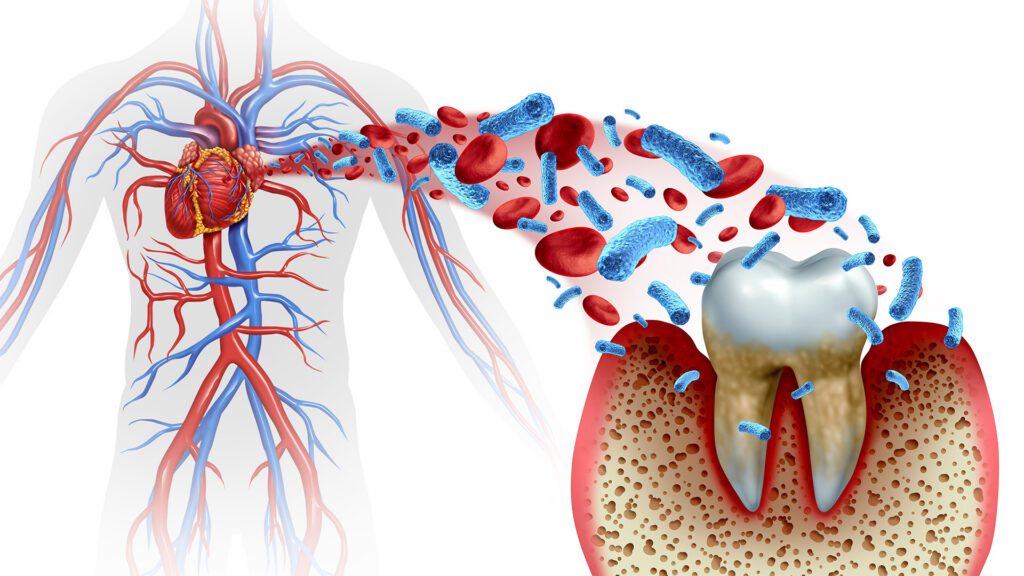
When we think about heart disease, we often focus on cholesterol levels, blood pressure, diet, and exercise. Rarely do we think about our gums. Yet increasing research shows that oral health and heart health may be more closely connected than many people realize.
Gum disease, also known as periodontal disease, is a chronic inflammatory condition caused by bacteria that accumulate below the gumline. In its early stage, called gingivitis, symptoms may include redness, swelling, and bleeding when brushing or flossing. Because it is often painless, many people ignore these warning signs. If untreated, gingivitis can progress to periodontitis — a more serious condition that damages the bone and connective tissues supporting the teeth, potentially leading to tooth loss.
The connection between gum disease and heart disease appears to center around inflammation.
When the gums are infected, harmful bacteria can enter the bloodstream through inflamed gum tissue. Once circulating in the body, these bacteria — along with the body’s inflammatory response — may contribute to the development of atherosclerosis, a condition in which plaque builds up and narrows the arteries. Narrowed arteries increase the risk of heart attack and stroke.
Research has shown that individuals with untreated periodontal disease have a higher risk of cardiovascular disease compared to those with healthy gums. While gum disease does not directly “cause” heart disease, it may contribute to systemic inflammation that affects overall vascular health. The risk is particularly important for people who already have other cardiovascular risk factors such as diabetes, smoking, high blood pressure, or high cholesterol.
The encouraging news is that gum disease is preventable and manageable. Consistent daily brushing and flossing help reduce harmful bacteria. Regular dental visits allow early detection and treatment before the disease progresses. For patients with more advanced periodontal disease, specialized periodontal therapy can significantly reduce infection and inflammation.
At Brier Creek Implants & Periodontics, we view oral health as an essential part of whole-body wellness. Addressing gum disease is not only about preserving your smile — it may also play a role in protecting your overall health.
If you notice bleeding gums, persistent bad breath, gum recession, or loose teeth, do not dismiss these symptoms. Healthy gums support more than a confident smile; they may also support a healthier heart and a healthier life.
Any content, resident submissions, guest columns, advertisements, and advertorials are not necessarily endorsed by or represent the views of Best Version Media LLC (BVM) or any municipality, homeowners associations, businesses, or organizations that this publication serves. BVM is not responsible for the reliability, suitability, or timeliness of any content submitted, inclusive of materials generated or composed through artificial intelligence (AI). All content submitted is done so at the sole discretion of the submitting party.