
Residential projects are often evaluated by what is visible—materials, finishes, and styling. Stone is selected, fixtures are specified, and the expectation is that quality will carry the result. It rarely does.
What determines the outcome of a project is established long before those decisions are made. It is found in the underlying structure of the space: how it is organized, how one moves through it, and how each element relates to the next.
When that structure is unresolved, the project begins to compensate. Materials are asked to correct problems they cannot solve. The result may appear complete, but it rarely feels coherent.
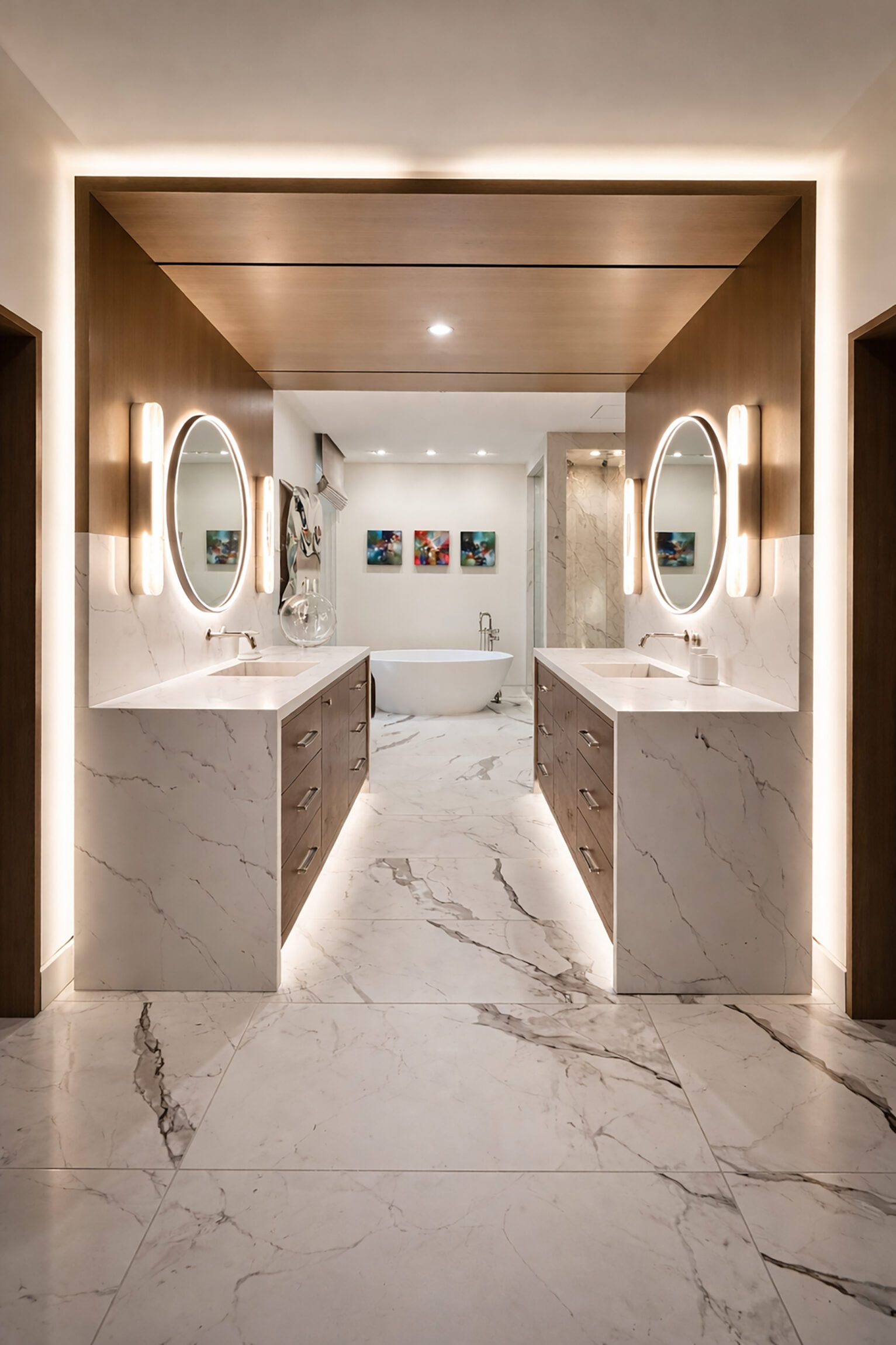
The work begins earlier. Before anything is selected, the space must be understood—not in terms of aesthetic preference, but in terms of sequence and proportion. Where does one enter? What is seen first? How does the eye move? How do adjacent functions relate? These are not abstract questions. They are decisions that define the experience of a home.
In one recent project, the square footage remained unchanged. The existing layout divided the primary bath into two zones: one part that felt like a hallway — the vanities and linen storage in one zone and bathing in another, the circulation was arranged without clear relationship. Nothing about the footprint required expansion. What required resolution was the organization.
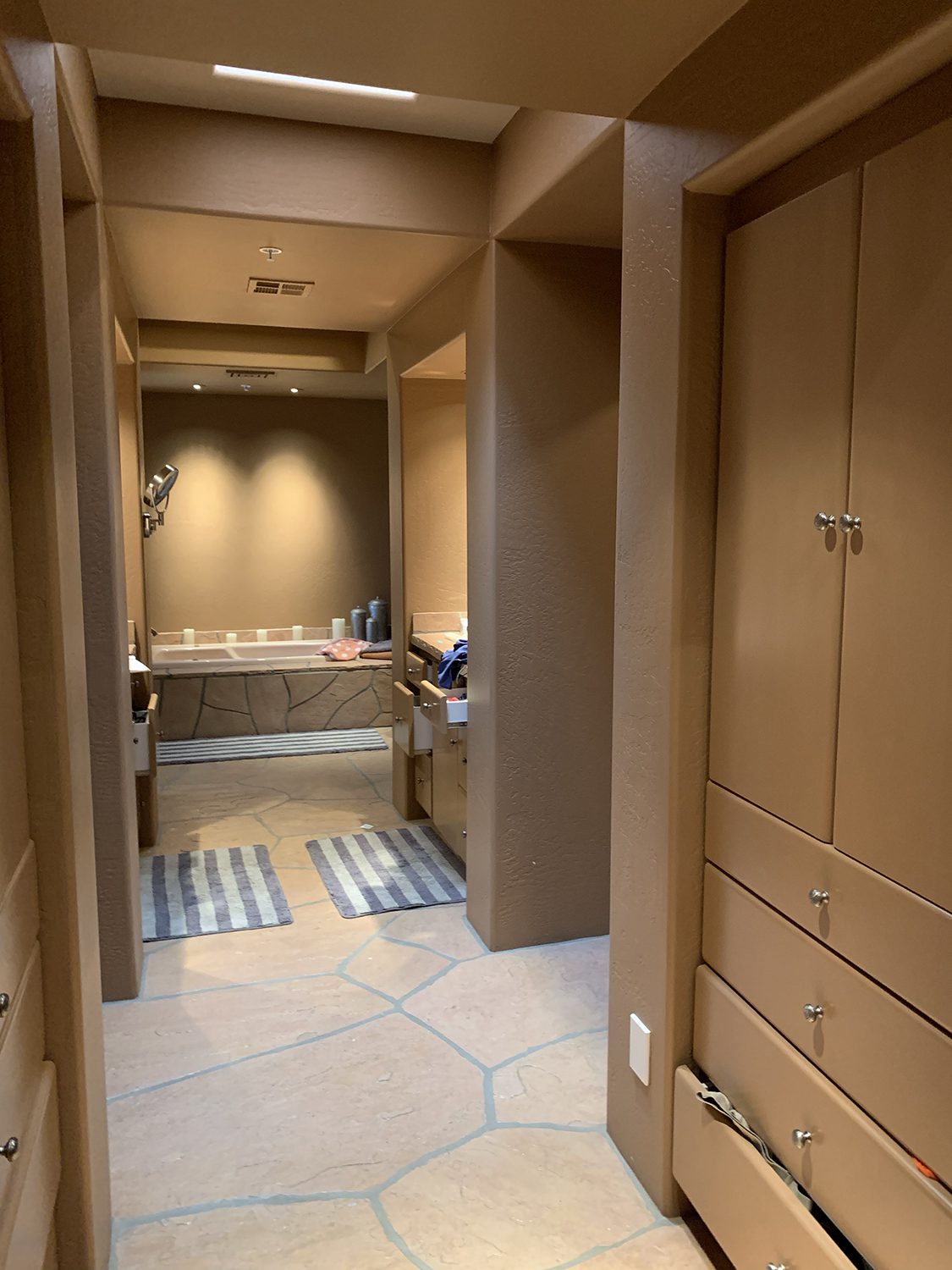
The redesign focused on establishing a clear sequence. The primary axis was expanded by the elimination of the non-structural walls flanking the vanities and the linen storage, allowing the space to read as a continuous volume rather than a series of interruptions. The existing snail shower was replaced by a larger, more functional walk-in shower positioned adjacent to a freestanding tub, eliminating the previous deck-mounted condition. The vanities are contained within a defined architectural volume- designed to compress the experience at the point of entry. This moment creates tension: a more intimate, controlled space that organizes access to his-and-hers closets and linen storage before the room opens fully to the bath beyond. It’s less about cabinetry and more about shaping sequence, proportion, and release.
Only once the plan was resolved were materials introduced.
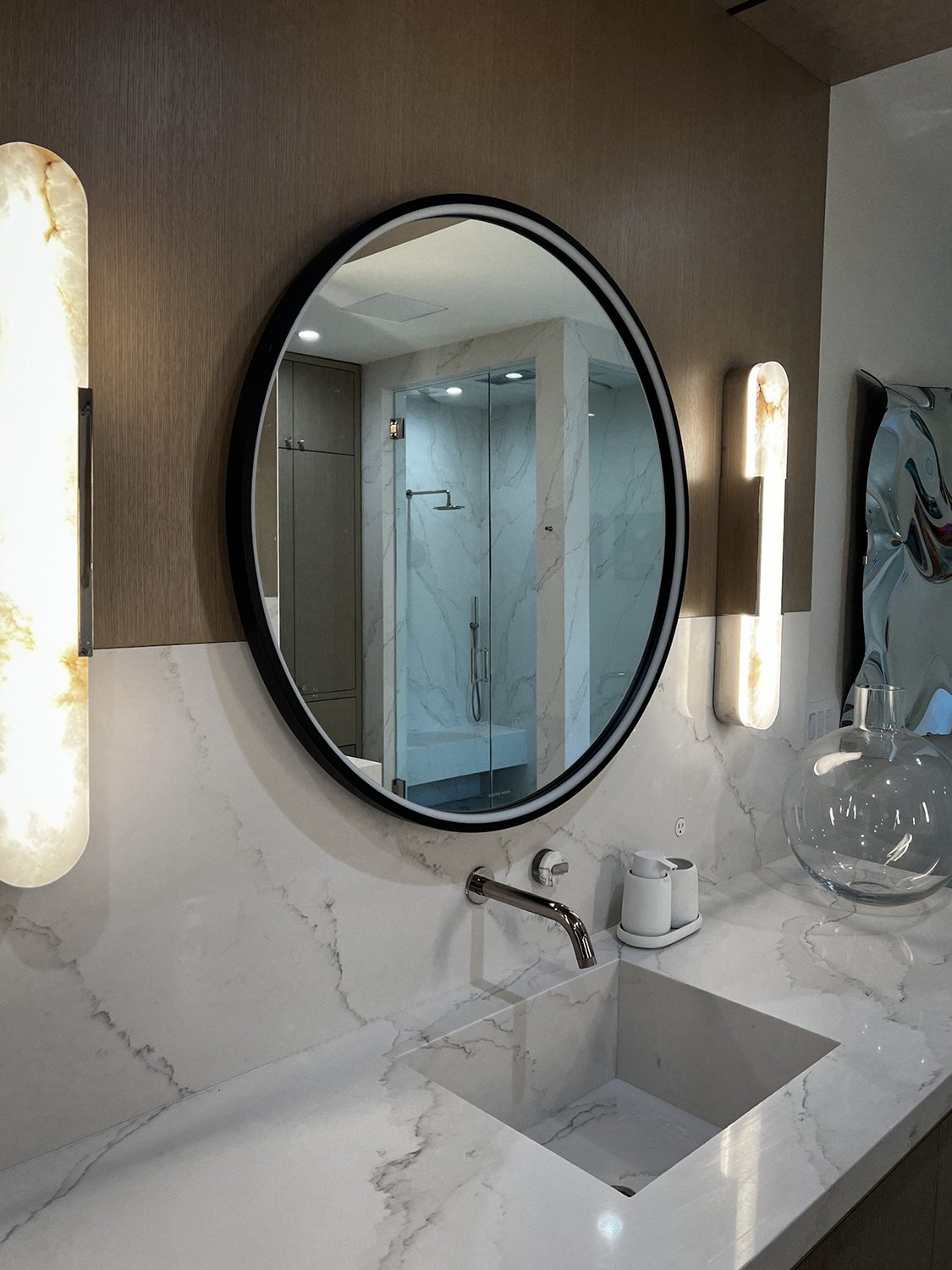
Wood, stone, and light were selected to give permanence to what had already been determined. Their role was not to transform the space, but to make the underlying decisions legible. This distinction is often overlooked. Finishes are visible, and therefore easy to prioritize, but they are also the least capable of correcting a flawed structure.
When projects begin with materials, they tend to rely on visual impact rather than spatial clarity. Over time, that imbalance becomes apparent.
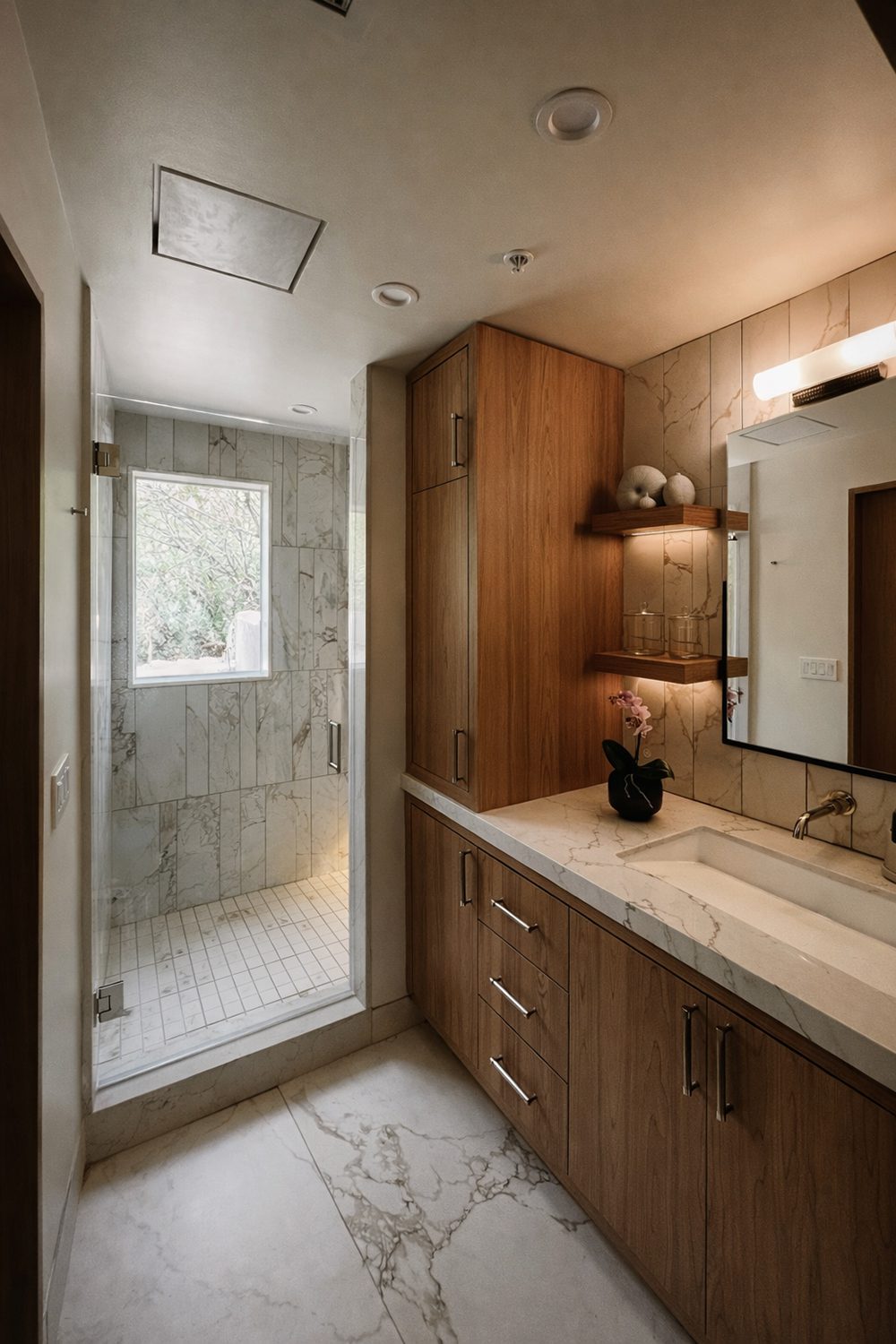
A well-resolved space does not depend on materials to feel complete. It allows them to recede. Whether in a primary suite or a secondary space, the same principles apply. Each decision is made in relation to the whole. Each element is placed with intent. The result is not a style. It is a sense of order.
And it is this order—quiet, deliberate, and often unspoken— that ultimately defines how a home is experienced.
Any content, resident submissions, guest columns, advertisements, and advertorials are not necessarily endorsed by or represent the views of Best Version Media LLC (BVM) or any municipality, homeowners associations, businesses, or organizations that this publication serves. BVM is not responsible for the reliability, suitability, or timeliness of any content submitted, inclusive of materials generated or composed through artificial intelligence (AI). All content submitted is done so at the sole discretion of the submitting party.