Well, we finally made it. You walk outside and, for the first time in months, it actually feels good. Not just “tolerable,” not just “at least it’s not windy,” but genuinely nice. It finally doesn’t hurt to go outside. The sun’s shining, the temperature creeps into the 60s — maybe even the 70s if we’re lucky — and suddenly everything changes.
After a long, cold, snowy winter full of clouds that never seem to go away — making your world look like fifty shades of gray — you feel like you actually deserve this. The sunny days are more than just comfortable; they’re a reward. They’re a reason to breathe deeply, to stretch your legs, and to start thinking about color again. Because, after months of blackish snow piles, browned-out lawns, and sad sticks poking through dirt, we’re desperate for flowers, green leaves, and anything that reminds us the world isn’t just gray anymore. Suddenly, the bleak scene you’ve been calling “landscaping” all winter doesn’t feel like the final word anymore. The yard, the porch, the neighborhood — they’re ready to come back to life, and so are we.
At the garden center, you can feel it instantly. We go from quiet to packed almost overnight. Carts start filling up with flowers, hanging baskets, vegetable plants — everything. After a long winter, everyone’s ready for color again. And honestly, I get it — I’m just one of you — excited for warmer weather, maybe a little too excited, honestly, and already acting like I’m watching a Sabres playoff game in the plaza when it hits 60 degrees. I love this time of year just as much as anyone. But my job here is to be the “expert,” so I’ll try to pull myself back a bit and give you some practical thoughts as you get back into your yard.
Annuals
Let’s start with annuals. They can really be a game changer when mixed into your landscape —an underrated strategy that brings consistent color all summer long and into early fall. Most shrubs, by comparison, have a much shorter peak, often lasting just a few weeks in spring. If you want a good local example, think about the plantings at Wegmans on McKinley Parkway. They do such a nice job with this — layering color in a way that keeps things looking alive and intentional all season long. And let’s be honest, after six months of looking at sticks, snow piles, mud, and not much else, we don’t just want green again — we want color.
Planting in the ground is only one strategy to add color and life to your yard. Containers, urns, and hanging baskets also provide a big part of that “wow factor” people are really after this time of year. In many cases, they’re actually the fastest way to change how your home feels from the street. A couple of well-placed urns by the front steps, a full hanging basket near the entryway, or even a few coordinated pots on the porch can do more in a day than a full weekend of bed planting.
The nice part is that containers give you flexibility. You can move them, swap them, refresh them as the season changes, or adjust colors depending on what you like at the moment. They let you experiment without committing an entire bed to one idea.
Trees, Shrubs, & Perennials
Yes, they don’t flower as long as annuals — but they’re the backbone of any good landscape. Think of them as the structure off of which everything else builds. And let’s be honest, nothing says “welcome spring” in Western New York quite like seeing forsythia lighting up a yard in all their yellow glory, or azaleas starting to open up after a long winter. The key here is to make a plan. Many trees, shrubs, and perennials bloom in spring, but others flower later in the season, such as rose of sharon, or hydrangeas. Planting a variety will give you flowers and color throughout the entire season.
I know we’re talking about flowers, but just a quick detour: it’s a good idea to add evergreen shrubs such as juniper, boxwood, and spruces as well. They add structure and keep things looking alive when all our deciduous plants are bare from November through April.
Tropicals
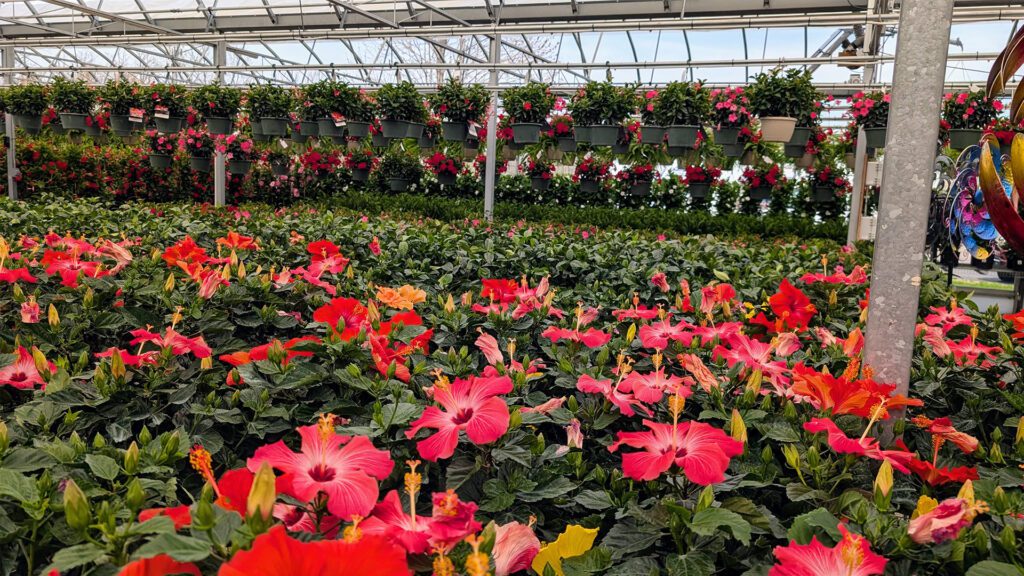
If you really want to kick it up another notch, tropicals such as mandevilla, hibiscus, calla lilies, and bougainvillea are another great way to add a completely different feel to your space. They bring a look you just can’t get from traditional landscape plants — bigger leaves, bolder textures, and that almost “vacation” vibe that makes a patio or pool area feel like an escape instead of just part of the yard. Even one or two well-placed tropicals can completely change the atmosphere. They work especially well in containers, which makes them perfect for patios, decks, and around pools. And the bonus a lot of people don’t think about is what happens at the end of the season.
Many tropicals can be brought indoors and kept as houseplants through the winter. So, instead of starting from scratch every year, you’re actually building on what you already have. It’s a simple way to stretch that “flower time” feeling a little longer — bringing a bit of summer inside when everything outside starts to fade again.
Don’t Forget!
Before you get too far into the season, there are a few simple things that can make a big difference in how everything performs. Fertilizing is one of them. Regular feeding — especially with a fertilizer that includes phosphorus — will help promote bigger, more consistent blooms. There are plenty of options out there: liquid vs. granular, organic vs. synthetic. There’s no single “right” choice, but it helps to understand the difference. Liquid and synthetic fertilizers tend to work quickly, giving plants a fast boost, but they don’t last as long. Organic and granular options release more slowly, feeding plants over a longer period of time.
Watering, of course, is just as important — but one thing people often overlook is how quickly containers and hanging baskets dry out compared to plants in the ground. These may need daily watering, especially as temperatures rise. And if they do dry out, make sure you fully saturate the soil. Once it pulls away from the sides of the pot, water can run straight through without really soaking in.
And then there are weeds — something every gardener deals with. Getting ahead of them early with a weed preventer like Preen, followed by a layer of mulch, can save a lot of time and frustration as the season goes on.
Before long, you’ll step outside one day and realize everything has changed. The trees are full, the nights are warm, and the same yard that looked tired and gray a few weeks ago is now full of life and color. That’s really what this time of year is about — not just planting but watching it all come together. Around here, we wait a long time for it. So, take your time, do it right, and enjoy it while it’s here.
For Inquiries, Call or Text: 716-646-6111 | www.gullosgc.com