Here’s something that frequently gets forgotten about. All of us love to get on and ride our horses — whether it’s to prepare for a dressage class, a hunter jumper class, one of the many Western skills, another discipline entirely, or no discipline at all. We simply love to ride. The discipline or reason for the ride doesn’t matter nearly as much as something else that does matter — true intent. Intent is a powerful word in the equestrian world. It is our intent that lends itself so greatly to leading the horse. It is our projection of intent that establishes us as the alpha, the protector — the one the horse turns to when a precarious circumstance arises.
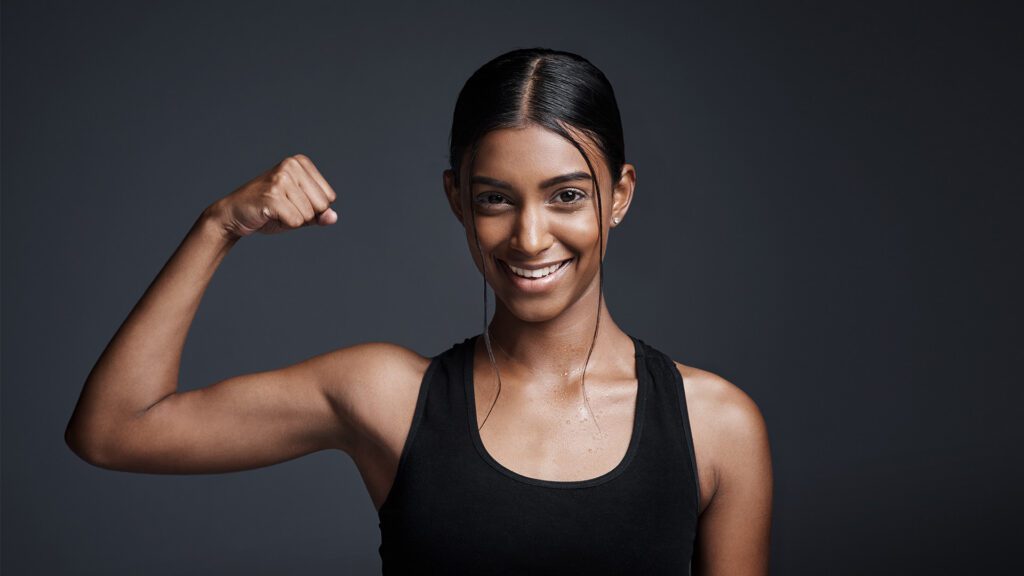
Cross training is a fantastic way to begin developing and bolstering that intent as riders, even before we mount up. From the moment we begin working with our horse — while tacking up, preparing equipment, and doing preliminary groundwork — the horse perceives us both psychologically and physically. These two elements reinforce one another in remarkable ways. I always say, “A fit rider is a safe rider.”
Through my years of experience with challenging situations — groups of riders, multiple horses, or simply one horse and me enjoying a beautiful trail — I’ve seen how deeply horses perceive our physical condition. For example, if we ride for sport and our only physical activity is riding itself, our bodies can develop an imbalance. Our core, seat, and legs grow extremely strong, while the torso and upper body may lag behind. Because riders don’t rely as heavily on the upper body in the saddle, this imbalance can go unnoticed. But the horse notices.
With every movement we make, the horse perceives the subtle differences in our strength, stability, and balance. When our fitness is uneven, it can diminish our psychological dominance — not through force but through the way we move, adjust, and compensate without even realizing it. Horses read these signals effortlessly. When they sense deficiency, it can make our job of providing calm, confident leadership more difficult. And that matters greatly because, as I often say, “Trust is like an avalanche.”
Let’s explore some unique and original ways to work out while you are actually with your horse. Add some dance and acro classes to the mix and you’ve got yourself a wonderfully polished package to present to your magnificent four-legged partner every time you embark on a journey together.
Before I share these ideas, I want to mention that, by far, the most successful form of exercise I have ever used for my equestrian training is aerial acrobatics. Being suspended on moving apparatus — where balance, flexibility, extreme focus, and serious upper-body strength are required — develops exactly the kind of coordination and body awareness riders need.
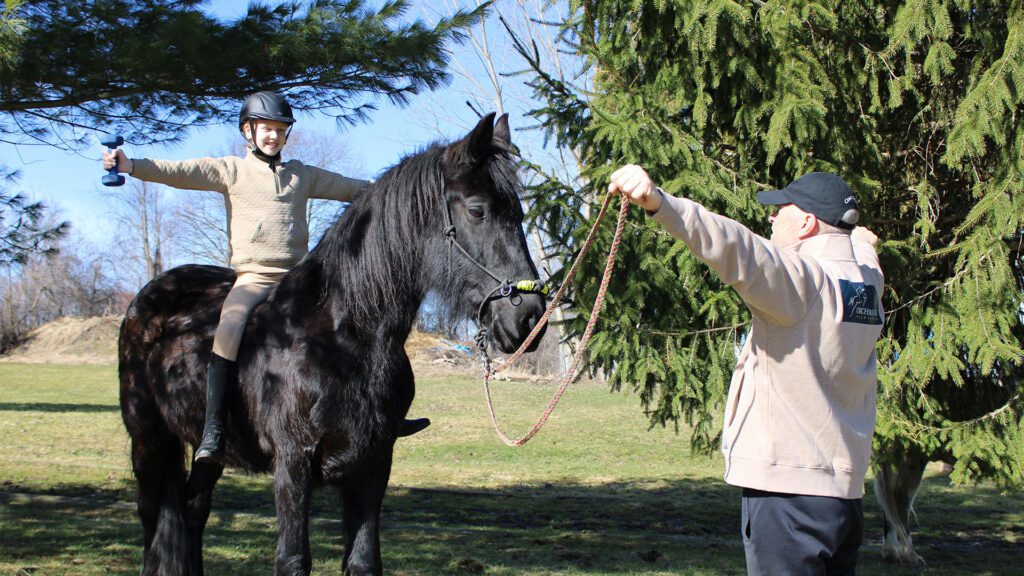
Another one of the most important exercises I’ve developed for my riders is actually very simple and requires only minimal apparatus. I use lightweight dumbbells and resistance bands. They can be used while a rider is mounted on a horse (both bareback and with tack) and while a coach leads the horse in simple patterns. We begin with very basic movements, then gradually progress to more diverse riding patterns, eventually working in a paddock or field with variable terrain.
While the horse is in motion, the rider performs a variety of exercises with the dumbbells:
- Curls
- Presses
- Arnold Presses (Which are Fantastic!)
- Open Wing Extensions
- Forearm Grip Exercises
- Wrist Strength Development
This kind of work builds tremendous stability and coordination in the rider’s upper body while the lower body remains engaged with the horse. Next, find yourself a great dance class, even if it’s only once a week.
If you have a choice, look for instructors who emphasize:
- Strong Stretching Routines
- Body Isolations
- Acro Elements
- Tap Dancing
Tap dancing is a remarkable way to develop a rider’s legs, ankles, heels, and toes. For a skilled tap dancer, the leg motions required in all riding disciplines, even dressage, rarely present a challenge. I’ve been a pipe organist my entire life, and that helped my riding immensely. Playing melodies with both feet —heels, toes, and ankles working independently — gave me extraordinary control of my leg while mounted on a horse. Music, dance, and riding all share the same beautiful truth: “Control of motion creates harmony.”
Take these ideas and experiment with them safely. Work with instructors who can keep your horse comfortable and steady while you explore new forms of movement and training. Done thoughtfully, these exercises can create wonderful motion, greater balance, and a deeper connection with your horse. And — most importantly — you are building a more amazing relationship with your horse, as the quality of your aids, asks, and tells improve while your overall motion consistently becomes more refined and articulate.
May your rides grow in quality for as long as you enjoy this extraordinary sport!
716-667-7669 | www.orchardparkequestrian.com