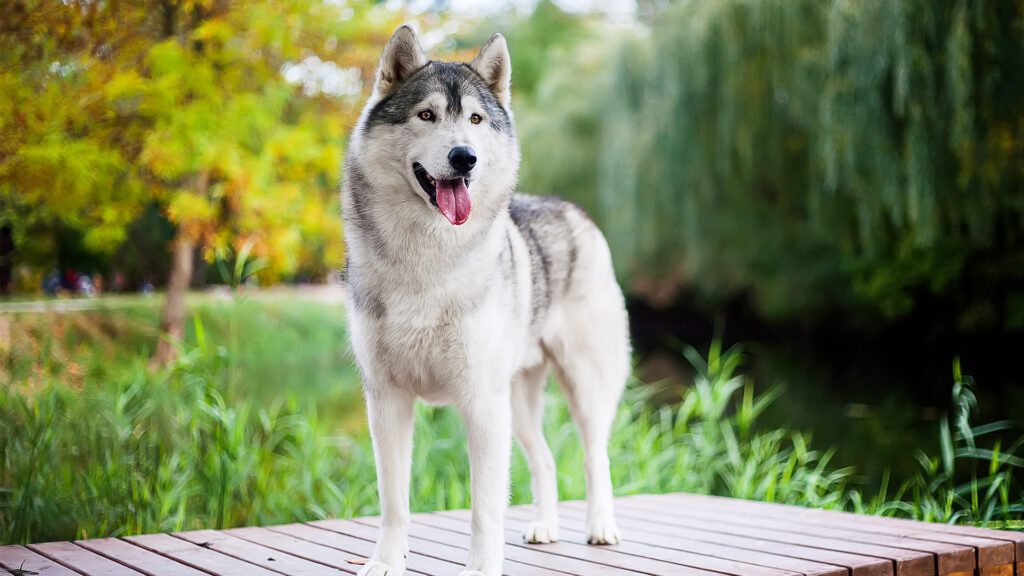
I had the opportunity to interview with Michael Hodanish, owner of Howling Woods Farm, a 501(c)(3) wolf sanctuary in Jackson Township, NJ that rescues and places domestic bred wolves, wolfdog “hybrids” (typically, a genetic combination of wolf with Malamute, Husky, or German Shepherd), and northern breeds. I have always had so much curiosity about the relatives of my canine patients and how they may be similar or different from their ancestor wolf. Wolves lived in every state in the US at one point but populations have been severely decimated by hunting practices and political orders. The following is a summary of his answers to my questions.
Where do your wolves come from?
They are rescues who are taken from situations where someone is trying to keep a wolf as a pet, but realizes that they are not house pets around 6-7 months old. Some of the issues we have seen are that they become more aware of their environment and start to become afraid of normal household items, such as the ceiling fan or will develop separation anxieties. They are not designed to be house pets.
Prior to entering the sanctuary, we spay and neuter them and make sure they are vaccinated against Rabies and Distemper. They also are protected against fleas and ticks on a regular basis.
What is important to know about wolf behavior?
In the wild, a pack of wolves will stay as far away from you as possible- they are more afraid of you than you are of them. Wolves are not dangerous to people; it is much more common to be attacked by a domesticated dog than a wolf. However, they are aggressive toward other wolf packs other than their own. They are pack animals and the alpha male and female are typically the breeding parents and the pack gets larger as the original breeding pair produces more than one litter- they will live in a pack for several generations until the males and females go off to create a new pack of their own. They do bark, sometimes up to two times at most- to alert the pack to a potential threat. They howl for several reasons-if they hear an alarm/siren, if they hear another wolf howl, if they are in mourning, or if we remove one of them from a pack to take them for a walk the others will howl.
What is the life span of a wolf in the wild versus in captivity?
In the wild the biggest threats are starvation and injury, and average life span is 3-5 years old. In the sanctuary we typically see them live between 10-17 years old.
What do they eat in captivity?
They are mostly carnivores – we feed them whole raw chicken and sometimes fresh leftovers from the deer hunters. They will eat all parts of an animal except for the upper and lower jaws, even the hooves.
They take their time with chewing the bones and do not have issues with gastrointestinal obstruction from eating things like this as their stomach acid is strong enough to dissolve it. They also don’t typically eat large chunks of bone at a time unless there is competition.
Can you tell us about wolf “hybrids”?
Technically it is not a hybrid, because they are a mix of two members of the same species- and have varying amounts of wolf DNA versus domesticated dog DNA. They have to have very specific environments in order to thrive. Like a wolf, they are pack animals and do not like to be alone. They need plenty of time outside and space to roam. The breeder must socialize them very young, younger than domesticated dogs, around 3-4 weeks old in order to get them accustomed to people. Each one is different, and the more wolf DNA they have, the more like a wolf they will be and might not be ideal as pets.
Do they eat grass and other dogs poop?
Yes, this is common.
Do they roll in poop and other scents?
They wag their tails, scent mark, raise hackles to communicate, and roll in scents including poop.
Do they dig holes?
Yes, this is very common- sometimes they do this mostly in the summer to get cool and get away from the flies.
Do they have issues with their anal sacs/scooting or allergic skin disease?
No.
Do they howl at the full moon?
They don’t howl at the full moon, however, everything is more illuminated when the moon is full, so they are more active and more likely to howl.
Most common illnesses/cause of death?
Our wolves are examined by a veterinarian at least once a year for a general checkup. Dental issues can happen with age. Cancer is the most common cause of death. Similar to domesticated dogs, they can get osteosarcoma, hemangiosarcoma, histiocytic sarcoma, fibrosarcoma, and other internal cancers. Benign skin lumps (lipomas and cysts) are not uncommon.
How can we help?
The sanctuary is an educational center and for a small contribution you can visit by appointment and even interact with our wolves. We take volunteers as well as contributions, which are tax deductible. Please visit howlingwoods.org for more information.
Disclaimer from the author: The above information is intended to serve as education about wolves- any questions about care/diet for your domesticated dog should be referred to your veterinarian. I personally do not recommend raw meat or animal bones to my patients in general as I have seen problems with this diet in domesticated dogs.