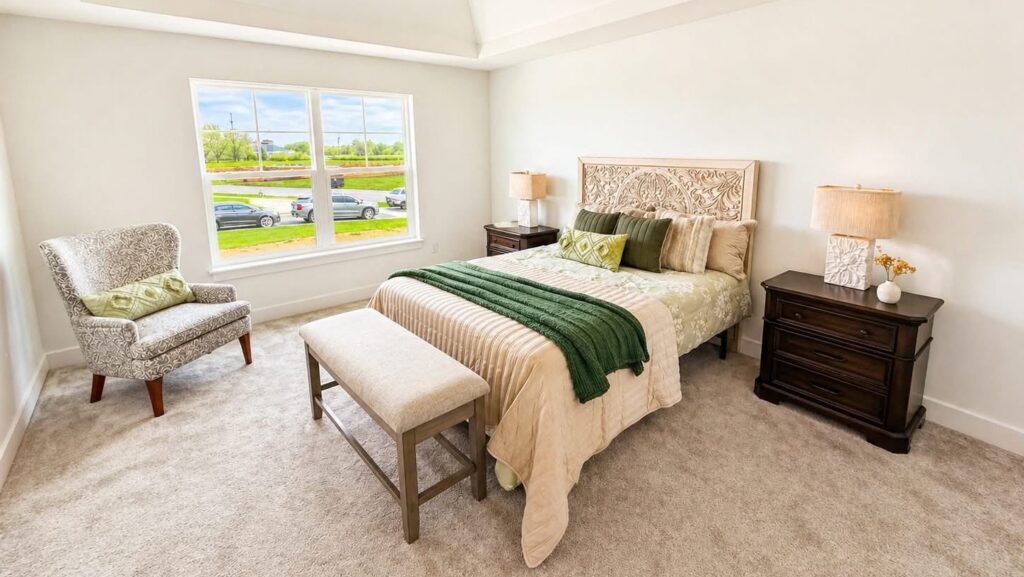
In today’s market, it feels like everything is moving toward faster, cheaper, and more “convenient” solutions. With the rise of AI and digital tools, virtual staging has become increasingly popular. On the surface, it seems like an easy win—add furniture to a photo, make it look pretty, and list the house.
But here’s the truth: real estate isn’t experienced on a screen. It’s experienced in person.
And that’s where real staging will always outperform anything virtual.
1. Buyers Don’t Buy Photos—They Buy Feelings
A buyer may first see a home online, but the decision happens when they walk through the door. Virtual staging creates an expectation… but if that expectation isn’t met in real life, it creates confusion—or worse, disappointment.
Real staging creates an emotional connection that buyers can physically step into. It shows scale, flow, and function in a way no image ever can. When a space feels right, buyers stay longer, engage more, and ultimately make stronger offers.
2. Virtual Staging Can Mislead—Even When It’s Not Intended To
of the biggest issues with virtual staging is that it can unintentionally misrepresent a space. Rooms can appear larger, brighter, or more functional than they actually are.
When buyers walk in and realize the reality doesn’t match the photos, trust is broken. And once trust is gone, so is momentum.
Real staging eliminates that gap. What you see is what you get—and that builds confidence.
3. Empty Homes Don’t Sell—They Sit
An empty home is a missed opportunity. Without furniture, buyers struggle to understand scale, purpose, and layout. They don’t know where their couch goes, how a room functions, or even how big the space truly is.
Virtual staging tries to solve that problem—but only online.
Real staging solves it where it matters most: in the buyer’s experience inside the home.
4. The Cost of Staging vs. The Cost of Price Reductions
Many sellers hesitate at the cost of staging—but what’s often overlooked is the cost of not staging.
A staged home positions itself correctly from day one. An unstaged home often requires price reductions to catch up.
The reality? Staging is almost always less than your first price reduction—and far more effective.
5. AI Can Enhance Marketing—But It Can’t Replace Experience
AI is a powerful tool. It can support marketing, enhance visuals, and streamline processes.
But it cannot replace human intuition, design expertise, or what I call the “space therapy” method—the ability to walk into a home, understand how it feels, and transform it into something buyers connect with instantly.
That’s not artificial. That’s experience.
And after 22 years and over 225 homes staged in a single year (2025) alone, I can tell you—there’s no substitute for it.
The Bottom Line
Virtual staging may get buyers in the door. Real staging is what gets the home sold.
If you want to maximize value, minimize time on market, and create a listing that stands out for the right reasons, there’s still one clear choice: real staging works!
Any content, resident submissions, guest columns, advertisements, and advertorials are not necessarily endorsed by or represent the views of Best Version Media LLC (BVM) or any municipality, homeowners associations, businesses, or organizations that this publication serves. BVM is not responsible for the reliability, suitability, or timeliness of any content submitted, inclusive of materials generated or composed through artificial intelligence (AI). All content submitted is done so at the sole discretion of the submitting party.