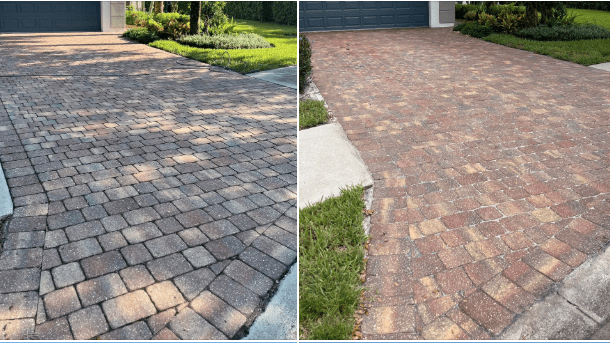
Paver sealing is one of the best things you can do for your driveway, patio, or lanai, but only if it’s done the right way. We see a lot of jobs around Ave Maria and Naples where corners were cut, and the benefits of sealing are completely lost.
Here are three of the biggest mistakes we tend to see:
1. Waiting Too Long to Seal
A lot of homeowners simply wait too long. Sealing pavers enhances and protects the current condition of your pavers, and once they are faded or stained, the results will not be as impressive. Especially in Florida, UV radiation is a powerful factor that fades your pavers over time; sealer works like a sunscreen and protects the pavers from the fading effects of the sun.
Sealing is best when the pavers are still in good shape. It locks in the color and keeps things like oil, dirt, and organic buildup from soaking into the pores. The longer you wait, the harder it is to get that clean and even look back.
2. Not Re-Sanding After Cleaning
A well-done pressure wash is going to remove a good amount of the joint sand from between the pavers. That’s normal, but it has to be replaced. This is especially important before a seal because the sealer reacts with and solidifies the sand, creating a barrier to weeds and preventing it from being washed out by the next rain.
The paver joint sand is what keeps the pavers tight and stable. If it’s not replaced, you’ll start to see shifting, gaps, and weeds coming through. Re-sanding before sealing is a key part of doing the job right. Plenty of companies skip out on this step because it saves time, and homeowners are just not aware it’s necessary.
3. Going With the One-Coat Company
Not all sealing jobs are equal, and going with the cheapest option always comes with its downsides. All it takes is a thin layer of sealer to make the homeowner happy; the problem is three months down the road when the seal is already gone. One of the biggest differences is how many coats are applied.
A quick one-coat job might look fine at first and allow a company to do a job for much cheaper, but it won’t last. Multiple coats give you a more even finish and better protection against fading, moisture, and stains. That’s what actually holds up over time. When done properly, a seal can last multiple years instead of just a few months.
Bottom Line
If the process of cleaning, re-sanding, and properly sealing isn’t done right, you’re not getting the full benefit. Companies will try to cut every corner possible to have the lowest price, but when it comes down to it, cheap options are cheap for a reason. At Pulse Pressure Washing, we don’t claim to be the cheapest. Instead, we charge a reasonable price for the quality job we do at every property, and when it comes down to it, the long-term value is higher this way.
Any content, resident submissions, guest columns, advertisements, and advertorials are not necessarily endorsed by or represent the views of Best Version Media LLC (BVM) or any municipality, homeowners associations, businesses, or organizations that this publication serves. BVM is not responsible for the reliability, suitability, or timeliness of any content submitted, inclusive of materials generated or composed through artificial intelligence (AI). All content submitted is done so at the sole discretion of the submitting party.