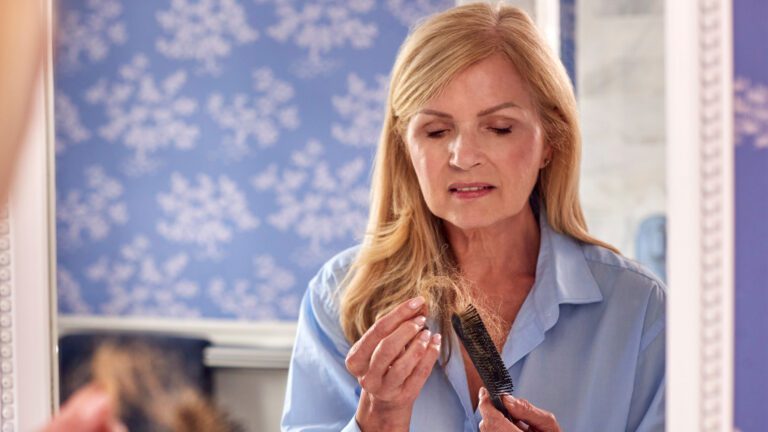
Losing weight or entering menopause can be empowering life changes—but for many women and men, they can also bring an unexpected side effect: noticeable hair loss. While finding extra strands on your brush can be alarming, experts say the causes are often temporary and treatable.
GLP-1 medications such as semaglutide and tirzepatide, prescribed for diabetes and weight management, are not believed to directly cause hair loss. Instead, the rapid weight loss they often produce can place the body under physiological stress. During periods of significant weight reduction, hair follicles may shift into a resting phase, leading to a condition known as telogen effluvium. This type of hair shedding typically appears two to four months after rapid weight loss and often resolves as the body stabilizes and nutritional needs are met.
Nutrient deficiencies may also contribute. Rapid weight loss can reduce intake or absorption of key nutrients needed for healthy hair growth, including protein, iron, zinc, vitamin D, biotin, and certain B vitamins. Healthcare providers often recommend evaluating nutritional status when unexplained hair shedding occurs.
Menopause presents another common trigger. As estrogen levels decline, hair follicles spend less time in the active growth phase. At the same time, the relative increase in androgen activity may cause hair to become finer, thinner, and slower to regrow, particularly around the crown and part line. Men may experience similar thinning as testosterone naturally declines with age and genetics continue to influence male-pattern hair loss.
The good news is that hair loss is often manageable. Eating a balanced, protein-rich diet, correcting vitamin or mineral deficiencies, managing stress, and avoiding excessive heat or harsh chemical treatments can support healthier regrowth. For persistent thinning, dermatologists may recommend treatments such as topical minoxidil, prescription medications when appropriate, or platelet-rich plasma (PRP) therapy. PRP is a minimally invasive procedure in which a small sample of the patient’s blood is processed to concentrate platelets rich in natural growth factors. The concentrated plasma is then injected into the scalp to help stimulate hair follicles and encourage new hair growth. While results vary, PRP has shown promise for some patients with certain types of hair loss and is often used alongside other treatments.
If hair loss is severe, continues for more than six months, or is accompanied by fatigue, weight changes unrelated to treatment, or scalp inflammation, it is important to consult a healthcare professional. Blood tests may identify thyroid disorders, iron deficiency, hormonal imbalances, or other medical conditions that require treatment
Hair loss after weight loss or during menopause can be distressing, but understanding the underlying causes is the first step toward restoring healthy hair—and confidence.
Hair may not seem important to some people, but it’s such a part of our appearance that it becomes part of our identity. Recognizing and deciding to take action may be the most important steps as hair loss can become permanent and many patients don’t realize their hair is thinning until they have lost more than half of their hair. If you’re seeing more hair coming out, start the conversation with your doctor to find out if there are treatment options that are right for you.
Sources
- American Academy of Dermatology. Hair loss: Who gets and causes. https://www.aad.org/public/diseases/hair-loss/causes
- Mayo Clinic. Hair loss (alopecia): Symptoms and causes. https://www.mayoclinic.org/diseases-conditions/hair-loss/symptoms-causes/syc-20372926
- Cleveland Clinic. Telogen Effluvium. https://my.clevelandclinic.org/health/diseases/24486-telogen-effluvium
- Harvard Health Publishing. Treating female pattern hair loss. https://www.health.harvard.edu
- North American Menopause Society. Information on menopause-related hormonal changes affecting hair. https://menopause.org
Any content, resident submissions, guest columns, advertisements, and advertorials are not necessarily endorsed by or represent the views of Best Version Media LLC (BVM) or any municipality, homeowners associations, businesses, or organizations that this publication serves. BVM is not responsible for the reliability, suitability, or timeliness of any content submitted, inclusive of materials generated or composed through artificial intelligence (AI). All content submitted is done so at the sole discretion of the submitting party.