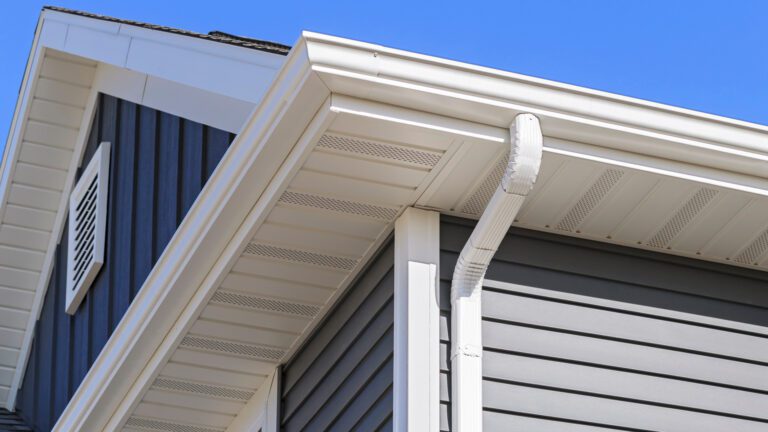
Gutters play a crucial role in protecting your home from severe water damage, but major storms put them to the ultimate test. High winds, heavy hail, falling branches and torrential downpours can severely compromise your gutter system in a matter of minutes. When storms damage your gutters, water is no longer directed away from your home’s foundation, walls and roof – setting you up for structural damage, mold growth and costly repairs.
Whitney Roofing knows that failing to address storm damage to your gutters can lead to catastrophic home repairs down the line. Heavy winds and fallen debris can dent, crack or completely dislodge gutters, causing water to back up onto your roof and leak under shingles and underlayment. Broken or detached gutters cause heavy rainwater to overflow, rotting your siding and stripping fascia boards. When storm runoff spills unchecked along the sides of your home, it pools directly around your foundation, leading to cracks, basement flooding and severe structural instability. Extreme rainfall from a storm can also erode landscape bedding and wash away valuable topsoil in minutes.
It’s essential to recognize the signs of post-storm gutter damage so you can act quickly:
- Separation and Sagging: High winds or heavy debris can cause gutters to pull away from the fascia or sag, leaving fasteners loose or snapped.
- Visible Dents or Cracks: Hail and falling branches can crack vinyl gutters or dent aluminum ones, creating seam leaks and disrupting water flow.
- Overflowing Water: If water cascades over the edges during or immediately after a storm, your downspouts may be blocked by storm debris or the gutter slope may have been knocked out of alignment.
- Foundation Pooling: Water collecting around your foundation or in your basement after a storm is a clear indicator that your downspouts have disconnected or damaged joints are leaking.
Fortunately, quick action after severe weather can keep your home protected. Once the storm passes and it is safe to do so, inspect your gutters for visible dents, loose fasteners and cracks. Clear away heavy storm debris – such as fallen branches, packed leaves and twigs – that block downspouts. Whitney Roofing recommends checking the slope of your gutters after high winds to ensure water still flows freely toward the downspouts.
Investing in gutter guards is also an effective way to prevent storm debris from creating instant clogs during heavy rainfall. Addressing minor storm damage immediately prevents long-term water damage and extends the life of your entire roof and foundation system.
For a post-storm gutter inspection or repair, contact Whitney Roofing at (217) 454-3541, by email at office@whitneyroofinginc.com, or online at https://217roofing.com/.
Any content, resident submissions, guest columns, advertisements, and advertorials are not necessarily endorsed by or represent the views of Best Version Media LLC (BVM) or any municipality, homeowners associations, businesses, or organizations that this publication serves. BVM is not responsible for the reliability, suitability, or timeliness of any content submitted, inclusive of materials generated or composed through artificial intelligence (AI). All content submitted is done so at the sole discretion of the submitting party.