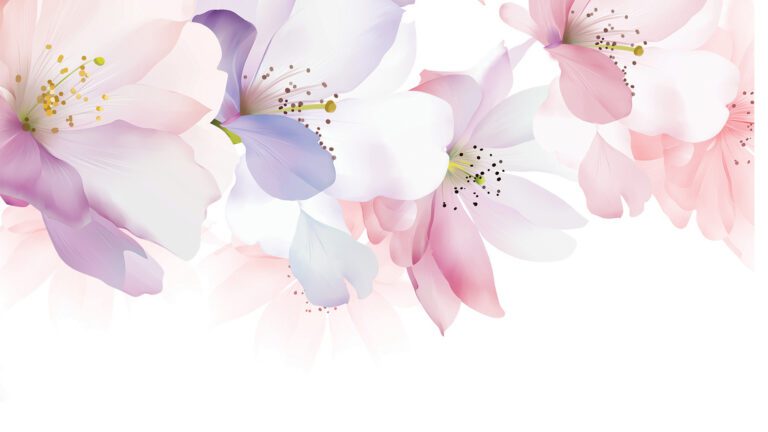
There was a time when a bouquet could say what a letter couldn’t. In the Victorian era, flowers carried meaning the way words do — a sprig of rosemary for remembrance, a yellow carnation for disdain, ivy for fidelity. This coded vocabulary, known as floriography, let people send messages of love, grief, apology, or warning without writing a single sentence. A gift of flowers wasn’t just pretty. It was a conversation.
Here in the Pioneer Valley, that conversation has deep roots. Emily Dickinson, writing just up the road in Amherst, filled her poems and letters with flowers as stand-ins for feeling — daisies for humility, gentians for a quiet, stubborn kind of hope. She kept a herbarium as a young woman, pressing and naming hundreds of specimens, and that same attentiveness shows up later in her verse, where a flower rarely means only itself. Louisa May Alcott, too, reached for this language. In Little Women and elsewhere, flowers mark the small, domestic moments where her characters’ truest feelings live — a bouquet left on a windowsill, a wreath made for a sister. Neither writer was inventing something new. They were speaking a language their readers already understood.
The Flower Almanac series at Bouquets of the Valley is building on that same tradition. Each workshop in the Almanac traces back to a muse whose life is tied to this valley — Emily Dickinson, Louisa May Alcott, Sojourner Truth — and asks what it might mean to pick up their language again. In this way floriography becomes something usable: a way to choose what goes into an arrangement on purpose, so the flowers on your table are saying something true, not just something seasonal.
This tradition will come to life this September, with two trips that take the Almanac’s muses off the pages and into their own gardens. On September 3rd, the Almanac participants will visit the Emily Dickinson Museum in Amherst, walking the grounds she once tended and pressed flowers from herself. On September 30th, the group will travel to Orchard House in Concord, the home where Louisa May Alcott wrote Little Women and where the gardens still echo the domestic world she filled with flowers. Both trips are a chance to see, firsthand, the landscapes that shaped how these women wrote about flowers in the first place
Flower shops have the opportunity to educate consumers and preserve the rich history behind flowers. When people understand the traditional symbolism associated with different flowers, an arrangement becomes more than decoration. It transforms into an intentional form of communication, continuing a tradition that has connected people across generations
Any content, resident submissions, guest columns, advertisements, and advertorials are not necessarily endorsed by or represent the views of Best Version Media LLC (BVM) or any municipality, homeowners associations, businesses, or organizations that this publication serves. BVM is not responsible for the reliability, suitability, or timeliness of any content submitted, inclusive of materials generated or composed through artificial intelligence (AI). All content submitted is done so at the sole discretion of the submitting party.