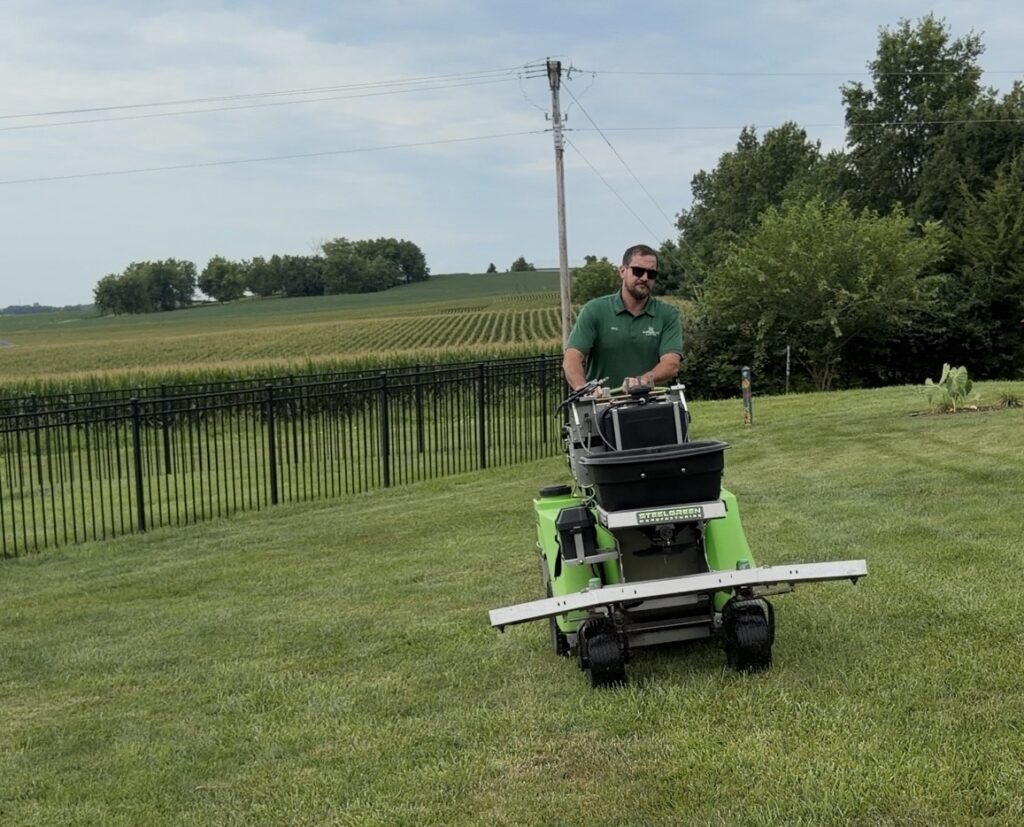
When most homeowners think about lawn season, they picture spring: warmer days, green-up, garden center displays, and weekend projects. It is easy to assume spring is the best time to seed, repair, or rebuild a lawn.
For cool-season grasses such as tall fescue and Kentucky bluegrass—the grasses commonly used throughout Clinton County and surrounding areas—the better answer is often fall.
Why Fall Works So Well
Cool-season turf performs best when air temperatures are roughly 60° to 75°F. As summer heat fades, the air cools, but the soil remains warm. That combination is ideal for seed germination, root development, and recovery from summer stress.
Spring can provide good growing weather, but it also comes with a short deadline. Grass seeded in spring has only a few months to establish before facing July and August heat, humidity, drought pressure, and weed competition. Young turf often enters summer before its root system is mature enough to handle the stress.
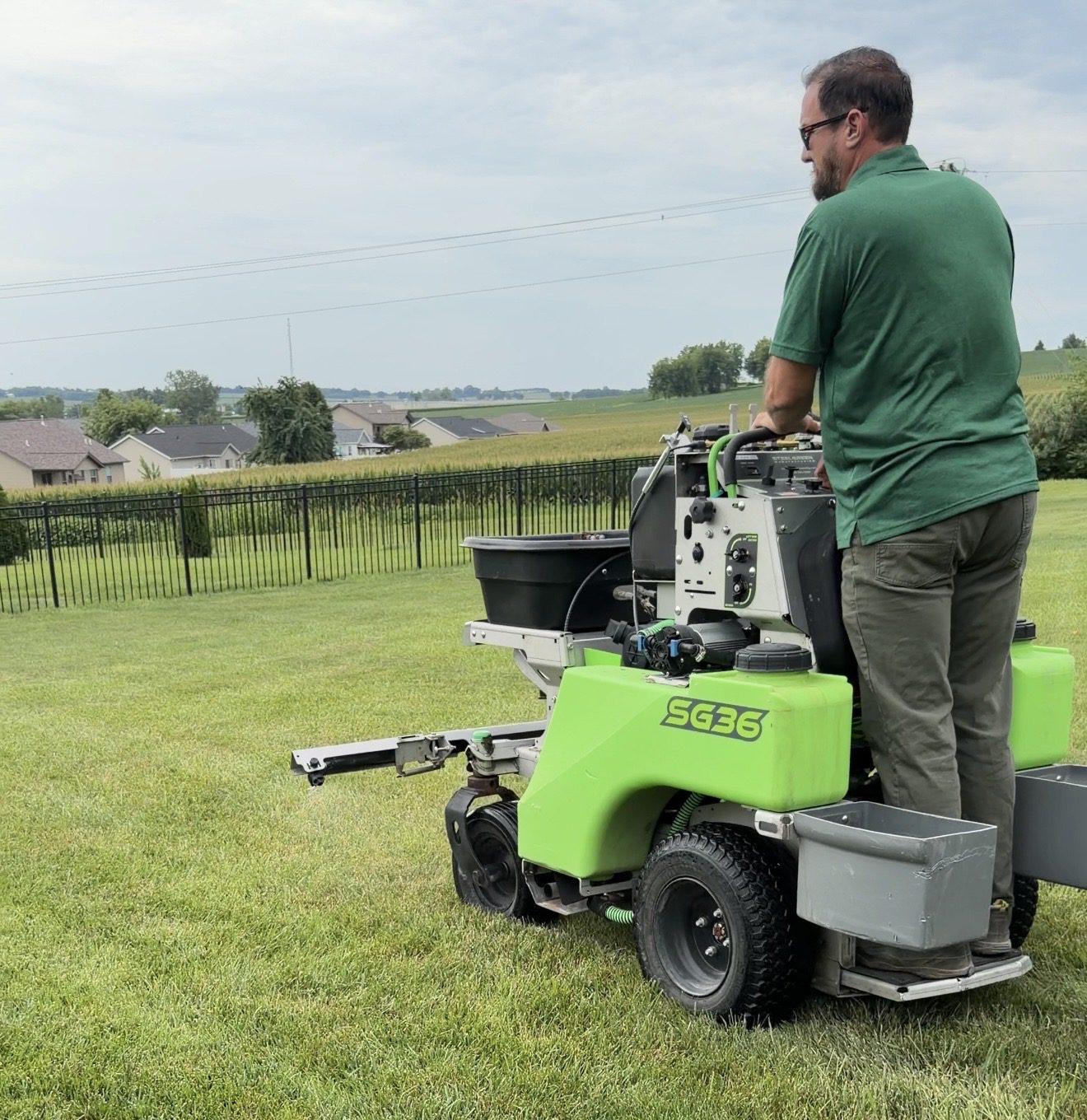
Submitted photo
Roots Keep Working Longer Than You Think
A lawn seeded in early fall gets weeks of strong growing conditions before winter. Even after top growth slows, roots can continue developing if the soil is not frozen. In the Metro East, homeowners may even find themselves mowing into December because cool-season grass continues to grow whenever temperatures and moisture allow.
By spring, fall-seeded turf already has a stronger foundation. Instead of trying to survive its first summer, it is better prepared to thicken, recover, and hold up under stress.
Fall Is the Time to Rebuild
Late summer through early fall is widely recommended by turfgrass experts for seeding, overseeding, and major renovation of cool-season lawns. It is also the best window to repair thinning caused by summer heat, insects, disease, drought, or everyday wear. Overseeding fills bare areas, improves density, and helps create a lawn thick enough to naturally crowd out many weeds. When compost is used to improve the soil profile, it is usually best applied during renovation, when seed, soil contact, and long-term root development are already the focus.
A simple way to think about it is this: spring is for flowers, while fall is for building a lawn. If a lawn is thin, patchy, or struggling to meet expectations, fall renovation often produces stronger long-term results than waiting for spring.
The Bottom Line
As summer heat begins to fade, your lawn is entering one of its most important seasons of the year. Working with that natural growth cycle gives cool-season grass the best chance to develop deeper roots, improve thickness, and prepare for next summer’s challenges.
Spring may be when lawns turn green, but fall is when great lawns are built. This fall, do not think of lawn season as coming to an end. Think of it as the season when your best lawn begins.
Chris Hilmes is the owner of Emerald Edge Lawns and enjoys helping homeowners throughout Clinton County and the Metro East better understand the science behind a healthy lawn. Emerald Edge Lawns provides customized lawn care solutions, including fertilization, weed and insect control, soil improvement, aeration, and overseeding. To learn more or request a quote, call 618-322-1370 or visit emeraldedgelawns.com.
Any content, resident submissions, guest columns, advertisements, and advertorials are not necessarily endorsed by or represent the views of Best Version Media LLC (BVM) or any municipality, homeowners associations, businesses, or organizations that this publication serves. BVM is not responsible for the reliability, suitability, or timeliness of any content submitted, inclusive of materials generated or composed through artificial intelligence (AI). All content submitted is done so at the sole discretion of the submitting party.