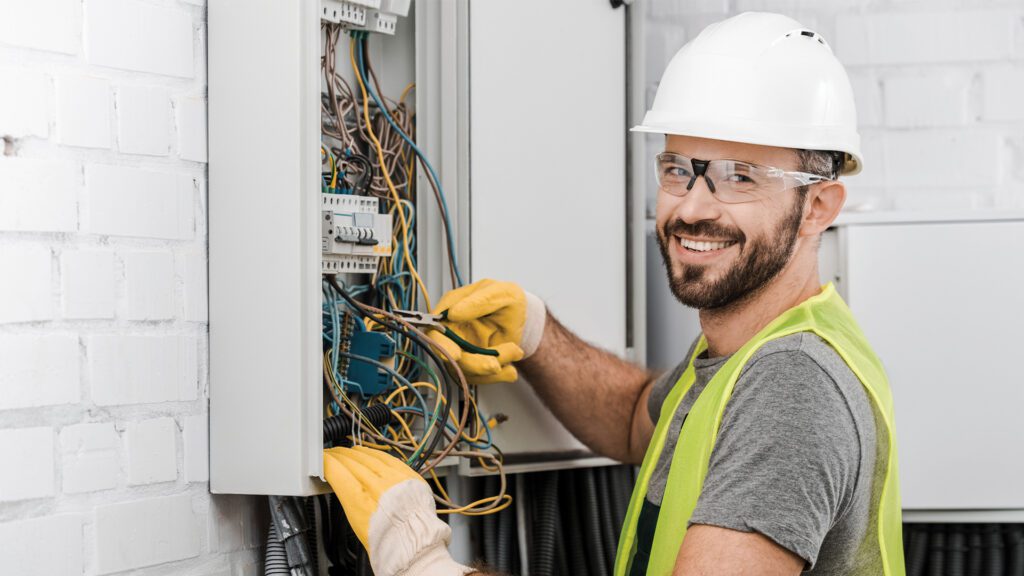
More homeowners are looking at heat pumps as a good option – a way to move away from oil or gas, improve efficiency and add year-round heating and cooling to their homes. On paper, the decision can look pretty straightforward, but someone needs to take a look at the electrical panel.
That’s often when an $18,000 heating and cooling conversation suddenly becomes a much bigger home improvement project.
Here in Westwood and surrounding communities, we work on plenty of homes built in the 1950s, ’60s and ’70s. Many were designed around 100-amp electrical service because the electrical demands of a household were dramatically different then. Today, homeowners are using more electric energy with heat pumps, induction ranges, EV chargers, electric dryers and other equipment that simply wasn’t part of the equation when the house was built.
Just because you are using a lot of electricity doesn’t automatically mean you need a new electrical service. I would strongly recommend you consult with a qualified expert to help you do some homework before you start buying equipment.
One of the most important steps of the process is completing an electrical load calculation. In simple terms, we’re determining how much electricity your home could reasonably demand and whether your existing electrical service can safely support it.
This is a critical step and where it becomes clear to homeowners that you may want to slow down. Don’t fall in love with a heat pump quote until you understand what it will take to make the entire house ready for that heat pump.
If your electrical service needs to increase from 100 amps to 200 amps, for example, the project can involve more than replacing the panel. Depending on the house and utility requirements, there may be service changes, permitting, utility coordination, exterior work or even meter relocation. Those additional costs can turn what looked like an affordable mechanical upgrade into a much larger investment.
Cost isn’t the only consideration. Timing matters, as well.
Utility coordination and electrical upgrades can add significant time to a project. You don’t want to order equipment, make deposits and schedule installation only to discover that another part of the project needs to happen first.
My advice is to look at your house as a system. Before committing to a major electrification project, think about what you want the home to look like five or ten years from now. Are you considering an Electric Vehicle? Will you be converting from gas cooking to induction? What about an addition, which could be anything from finishing the basement to installing a hot tub? Those decisions can affect what makes sense today.
Mass Save continues to offer meaningful incentives for qualifying heat pump installations, including 2026 rebates that vary depending on the type and size of the system. Those incentives can absolutely make electrification more attractive, but a rebate shouldn’t drive the project. The house should.
At High Pace Construction, we believe the best project is the one that’s properly planned before construction begins. So before you ask, “How much is the heat pump?” ask a better question:
“What does my house need to support where I want to take it?”
That answer might save you from a very expensive surprise.
Any content, resident submissions, guest columns, advertisements, and advertorials are not necessarily endorsed by or represent the views of Best Version Media LLC (BVM) or any municipality, homeowners associations, businesses, or organizations that this publication serves. BVM is not responsible for the reliability, suitability, or timeliness of any content submitted, inclusive of materials generated or composed through artificial intelligence (AI). All content submitted is done so at the sole discretion of the submitting party.