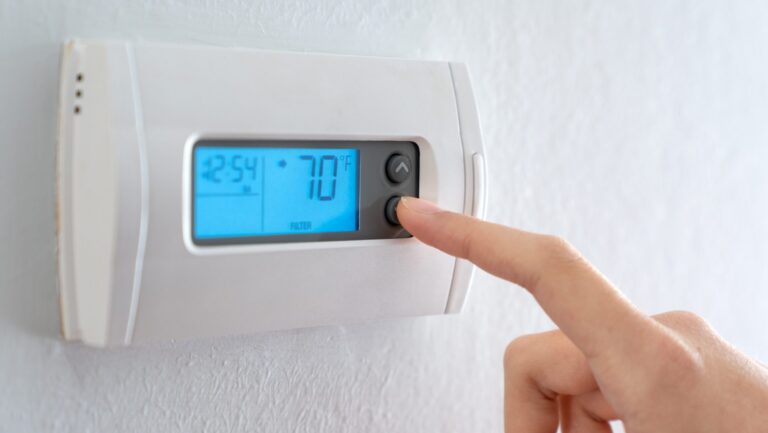
As the seasons change in Central Texas, so does the job of your HVAC system. After months of near constant cooling, October brings cooler mornings, warmer afternoons, and temperatures that can change dramatically from one day to the next. For homeowners, that raises a familiar question: Should you leave your thermostat at one temperature, or adjust it throughout the day?
The answer depends on more than the number displayed on your thermostat. Your home’s insulation, airflow, ductwork, windows, equipment, and daily routine all influence how efficiently your system can maintain that setting.
When your home is empty for several hours, there is generally no reason to maintain exactly the same temperature you prefer when everyone is home. A modest adjustment can reduce the amount of heating or cooling your system needs to provide. The key is avoiding extreme swings and giving your system a reasonable target to maintain when you return.
There is another piece of the thermostat conversation that homeowners often overlook: the thermostat only knows what is happening where it is located. A large home with multiple levels, high ceilings, expansive windows, or rooms that receive significant afternoon sun can have very different temperatures from one area to another. If one bedroom is consistently warmer than the rest of the house, changing the thermostat may not solve the problem.
That is where your home’s behavior can provide useful clues. If the system runs for unusually long periods, struggles to reach the temperature you’ve selected, or certain rooms remain consistently uncomfortable, the thermostat may not be the problem at all. Airflow, ductwork, insulation, equipment sizing, or other components may need attention.
Learning to recognize those patterns can help homeowners make better decisions about their home’s comfort. Your thermostat is more than a temperature control. It can also provide clues about how your home and HVAC system are performing. If your home consistently struggles to maintain a comfortable temperature despite reasonable settings, it may be time to have the system evaluated. Addressing the underlying issue early can help prevent a small problem from becoming a larger one.
Any content, resident submissions, guest columns, advertisements, and advertorials are not necessarily endorsed by or represent the views of Best Version Media LLC (BVM) or any municipality, homeowners associations, businesses, or organizations that this publication serves. BVM is not responsible for the reliability, suitability, or timeliness of any content submitted, inclusive of materials generated or composed through artificial intelligence (AI). All content submitted is done so at the sole discretion of the submitting party.