When something goes wrong on the road, most people’s first instinct is to call for a tow. But in many situations, a full tow isn’t actually necessary. Knowing the difference between when you need roadside assistance versus a tow truck can save time, reduce stress, and help you make a more informed decision in an already frustrating moment.
Roadside assistance is typically the right call when the issue is minor and can be resolved on the spot. Dead batteries are one of the most common examples. If your vehicle won’t start but otherwise has no major mechanical issues, a jump start can often get you back on the road within minutes. The same goes for a flat tire, as long as you have a usable spare, or if you’ve simply run out of fuel and need enough to reach the nearest station. Lockouts are another situation where roadside assistance makes sense—these are inconvenient, but they don’t require moving the vehicle.
A tow becomes necessary when the problem prevents the vehicle from operating safely or at all. If your engine has failed, your transmission is slipping, or your car has been involved in an accident, it’s no longer just about getting moving again—it’s about preventing further damage or risk. The same applies if your vehicle is overheating, leaking fluids, or making unusual noises that signal a deeper mechanical issue. In those cases, attempting to drive even a short distance can make the situation worse.
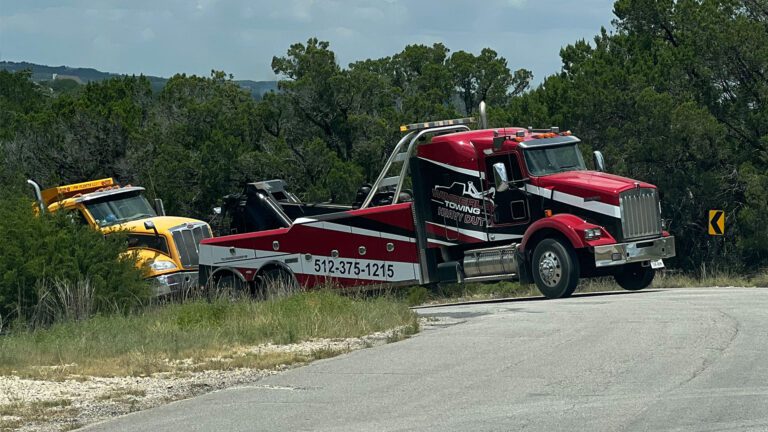
Location also plays a role in the decision. In rural areas like the Texas Hill Country, vehicles often end up off-road, in ditches, or stuck in mud after heavy rain. These situations may look minor at first, but they usually require specialized equipment to recover the vehicle safely. That’s not something roadside assistance alone can handle.
One of the most important things to keep in mind is safety. If you’re stopped on a narrow road, a blind curve, or a high-speed highway, your priority should always be getting yourself out of harm’s way. Even if the issue seems minor, the environment around you may justify a tow simply to avoid unnecessary risk.
In the end, the goal isn’t just to get your vehicle moving again—it’s to handle the situation in a way that protects both you and your vehicle. Understanding the difference between roadside assistance and towing helps you make that call with confidence, instead of guesswork, when it matters most.
Any content, resident submissions, guest columns, advertisements, and advertorials are not necessarily endorsed by or represent the views of Best Version Media LLC (BVM) or any municipality, homeowners associations, businesses, or organizations that this publication serves. BVM is not responsible for the reliability, suitability, or timeliness of any content submitted, inclusive of materials generated or composed through artificial intelligence (AI). All content submitted is done so at the sole discretion of the submitting party.