October is one of the few months that is fortunate to have two captivating birthstones: opal and tourmaline. Though remarkably different in appearance, both are celebrated for their extraordinary colors.
Opals have been treasured for thousands of years, with some of the earliest known examples discovered in what is now Slovakia. The name opal likely comes from the ancient Greek opállios, meaning “to see a change,” a reference to the gemstone’s shifting colors.
Today, Australia is the world’s most famous source of opal and produces the majority of the world’s precious opals. Most opals are not faceted but instead are cut into rounded or free-form cabochons that showcase their natural play-of-color, created when tiny silica structures interact with light. Opals come in a variety of base colors, most commonly white, black, orange, and pink with many displaying flashes of color such as blue, green, yellow, and orange.
Opal prices vary widely depending on color, pattern, brightness, size, and quality. Common opals are affordable, while exceptional black opals can be worth thousands of dollars per carat. Because opals are softer and more delicate than many other gemstones, they require a little extra care. Try to protect them from impacts that could cause chips; and keep them away from heat and acidic substances which can damage the stone. To clean opal jewelry, gently wipe it with a soft, dry cloth. When you are not wearing your opal jewelry, store it separately in a soft pouch or lined box.
Tourmaline is found around the world, with Brazil being one of the leading sources renowned for its exceptional variety of colors. Nigeria has also produced tourmaline in unusual colors and sizes. Other important sources include Afghanistan, Pakistan, Kenya, Tanzania, Madagascar and Mozambique.
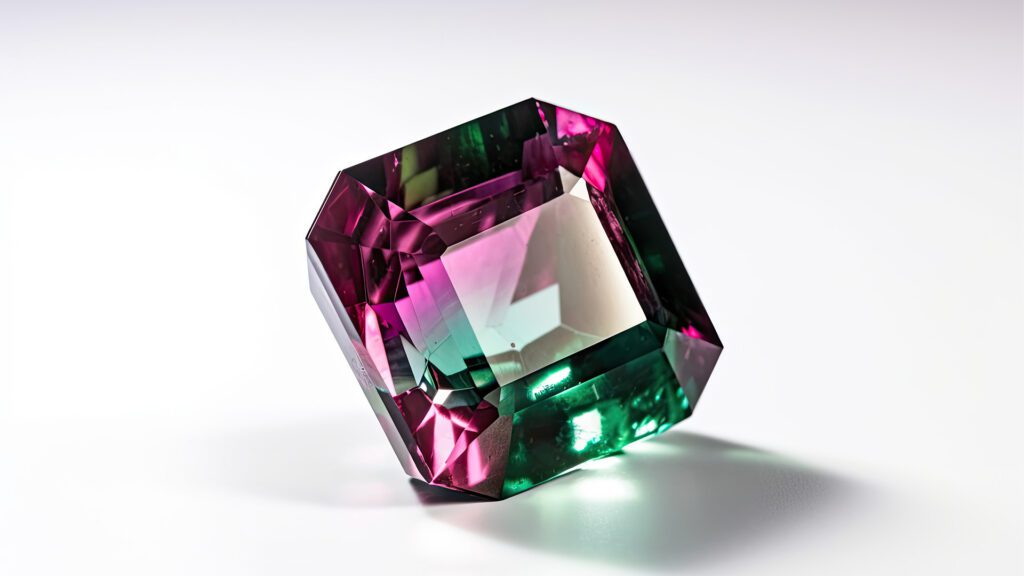
Tourmaline is one of the most colorful gemstones, occurring in shades of pink, red, green, blue, yellow, brown, and black. Some crystals display several colors at once, creating striking combinations such as watermelon tourmaline, with its pink center and green outer layer. Rare Paraíba tourmaline is especially prized for its vivid electric blue-green color. Most tourmaline is untreated, although some Paraíba tourmaline may be heated or irradiated to enhance its color.
Tourmaline prices vary widely depending on color, clarity, size, and origin. Common colors are generally affordable, while rare varieties such as Paraíba tourmalines can be considerably more expensive. It is an excellent option for daily wear as it has a hardness of 7-7.5 on the Moh’s Hardness Scale. Tourmalines can be cleaned with warm water, mild dish soap, and a soft brush, then dried with a soft cloth.
Stop by Kingston Fine Jewelry to view an extensive selection of both opal and tourmaline jewelry. Visit us at KingstonFineJewelry.com or call (845) 336-5455.
We would like to thank the American Gem Trade Association for serving as a valuable resource for this article.
Any content, resident submissions, guest columns, advertisements, and advertorials are not necessarily endorsed by or represent the views of Best Version Media LLC (BVM) or any municipality, homeowners associations, businesses, or organizations that this publication serves. BVM is not responsible for the reliability, suitability, or timeliness of any content submitted, inclusive of materials generated or composed through artificial intelligence (AI). All content submitted is done so at the sole discretion of the submitting party.