Autumn is right around the corner — with winter looming & our gardens overflowing with abundance, how can we make the most of our harvests? How can we squeeze every last bloom out of our gardens? What can we do to prepare for spring? Let’s highlight a few projects to help us carry that autumn energy into the cold months, & make spring even more beautiful.
Harvesting & Drying Herbs:
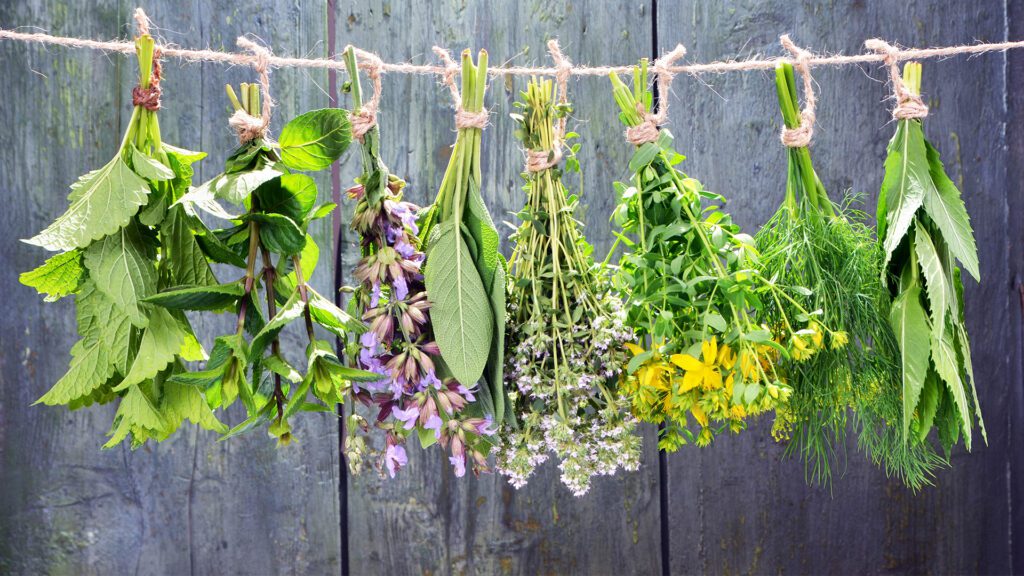
Once your herbs are ready for harvest, gently reap them in the morning when it’s cool and before the sun first hits. Give them a rinse for any stowaways or dirt. Harvested herbs can be laid flat on a screen, or in baskets with lots of air flow — they can also be hung. Use rubber bands rather than string, so as the stalks dry & shrink, the bands will shrink with them and hold them securely. Store dried herbs in airtight jars & out of the light to keep them fresh.
Canning & Preserving:
Many crops can be preserved for winter noshing. Canning is a great way to preserve your garden’s bounty! Pickling crispy veggies like cucumbers, carrots, onions, & green beans adds a real kick to meals. Making fresh sauces & salsas carries a taste of summer into the gray of winter. Jams, jellies, & marmalade really wake up the taste buds when you’re craving something sweet and fruity; so get canning, & be creative!
Fall Planting:
Fast-maturing fall plants can provide some last-minute greens and vegetables like arugula, lettuce, spinach, turnips, beets, & radishes. They still have time to produce in the fall before the ground begins to freeze. Most years feel the first frost around October 14, give or take.
Planting certain plants in the fall will bring a spring harvest. Consider planting garlic, shallots, onions, kale, carrots, fall bulbs, milkweed, & poppies! Fall bulbs include crocus, snowdrop, tulips, iris, daffodils, grape hyacinth, & more. These plants are frost-tolerant & hardy, which allows them to overwinter. (Some bulbs, like dahlias, overwinter better inside.)
Amending Your Soil:
Over the growing season, your soil loses nutrients; so it’s important to add nutrients back in. Adding compost, manure, or other organic matter to your soil after your fall crops are harvested will vastly improve your next growing season’s yield. In some regions, you can plant a cover crop like clover or rye to prevent soil erosion & replace nutrients. Buckwheat & oats can also add nitrogen to the soil. These can be mulched into the soil come spring to help fortify your plot for the year to come.
Let’s get the most out of our gardens and help them thrive season after season!
Michelle Conley has been an indispensable part of Houst Hardware in the heart of Woodstock, NY since 2002. She is a trusted source of hardware knowledge and know-how for the community as well as a treasured friend.
Any content, resident submissions, guest columns, advertisements, and advertorials are not necessarily endorsed by or represent the views of Best Version Media LLC (BVM) or any municipality, homeowners associations, businesses, or organizations that this publication serves. BVM is not responsible for the reliability, suitability, or timeliness of any content submitted, inclusive of materials generated or composed through artificial intelligence (AI). All content submitted is done so at the sole discretion of the submitting party.