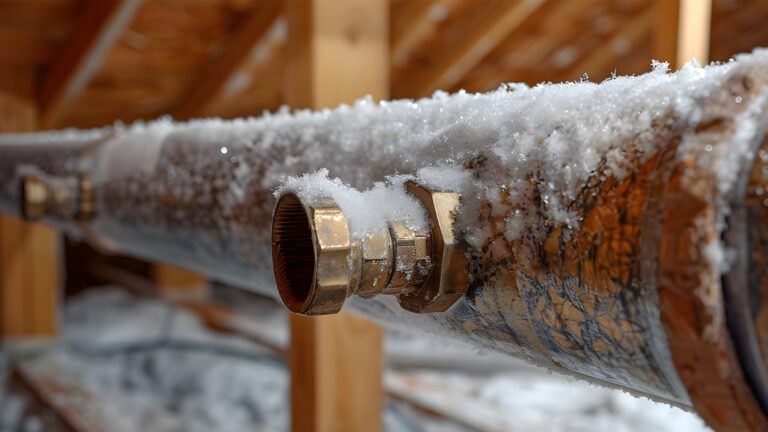
When winter arrives, your main focus is staying warm. But when temperatures drop below freezing, your home’s pipes can be at serious risk.
A frozen pipe may seem like a minor inconvenience. The real danger comes when the ice begins to thaw. As water freezes, it expands and can put tremendous pressure on the pipe. A pipe can split or burst, potentially releasing hundreds of gallons of water into your home once the ice begins to thaw.
The good news? A few simple steps can help protect your plumbing throughout the winter.
- Disconnect Your Outdoor Hoses
Disconnect your hoses from outdoor hose bibs before the first hard freeze and follow the manufacturer’s recommendations for winterizing them.
- Insulate Exposed Pipes
If you have pipes running through an unheated area, pipe insulation can provide an additional layer of protection. Foam pipe insulation is inexpensive and relatively easy to install on accessible pipes. Pay particular attention to pipes located near exterior walls or areas where cold air can enter. Insulation doesn’t guarantee that a pipe won’t freeze, but it can help reduce the risk.
- Don’t Turn Your Heat Down Too Far
If you’re leaving your home during a winter trip, don’t shut the heat off completely. Maintain a consistent indoor temperature to help protect your plumbing, particularly during extended periods of freezing weather. If you’re going to be away for an extended period, consider having someone check on your home regularly.
- Open Cabinet Doors During Extreme Cold
During periods of particularly cold weather, opening cabinet doors beneath sinks can allow warmer household air to circulate around plumbing. This can be especially helpful for sinks located along exterior walls. Just remember to remove household cleaners or other chemicals from cabinets if young children or pets could access them.
- Know Where Your Main Water Shutoff Is
This may be the most important thing you can do before winter—and it doesn’t cost anything. Find your main water shut-off valve and make sure you know how to turn it off.
If a pipe bursts, shutting off the water quickly can help limit the amount of damage while you wait for a plumber. Don’t wait until water is pouring through the ceiling to figure out where the shutoff is located.
If you’re unsure where your main shutoff is or it is difficult to operate, November is a good time to address it.
What If I Suspect a Frozen Pipe?
If a faucet produces only a small trickle—or no water at all—during freezing weather, you may have a frozen pipe.
Don’t use an open flame, torch or other high-temperature device to try to thaw it. Doing so can create a serious fire hazard and potentially damage your plumbing.
If you can safely identify the frozen section, you may be able to gradually warm the area using a safe heat source, such as a hair dryer. Keep the faucet open while the pipe thaws so water can flow as the ice melts.
If you cannot locate the frozen section, suspect a pipe has already cracked, or you’re uncomfortable addressing the problem yourself, contact a licensed plumbing professional.
Don’t Wait for the First Freeze
The best time to think about frozen pipes is before you have one. Take a few minutes this November to walk around your home, identify vulnerable plumbing, disconnect outdoor hoses, check exposed pipes, and locate your main water shutoff.
A little preparation now can help you avoid an inconvenient—and potentially expensive—plumbing emergency when winter is at its coldest.
Your plumbing may be out of sight, but it shouldn’t be out of mind when winter arrives.
Any content, resident submissions, guest columns, advertisements, and advertorials are not necessarily endorsed by or represent the views of Best Version Media LLC (BVM) or any municipality, homeowners associations, businesses, or organizations that this publication serves. BVM is not responsible for the reliability, suitability, or timeliness of any content submitted, inclusive of materials generated or composed through artificial intelligence (AI). All content submitted is done so at the sole discretion of the submitting party.