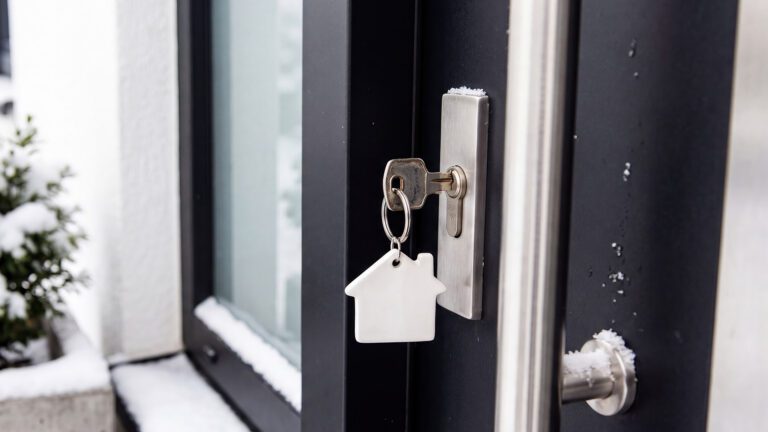
As temperatures begin to drop across New England, homeowners are usually thinking about heating systems, frozen pipes, fireplaces, and getting the house ready for another winter. But there is one part of the home that rarely makes the seasonal checklist: the locks on your doors. Cold weather can affect locks and door hardware more than many homeowners realize.
Locks are made up of small moving components that need to work together smoothly. As temperatures change, metal can contract slightly, while moisture that finds its way inside a lock can freeze. You may notice a key becoming harder to turn, a deadbolt that suddenly feels stiff, or a door that needs an extra push before it will lock properly.
Sometimes, the lock itself is not actually the problem. Seasonal temperature and humidity changes can cause doors and frames to shift slightly. When that happens, a deadbolt may no longer line up correctly with the strike plate. If you find yourself lifting, pulling, or pushing the door just to turn the lock, that is worth paying attention to. Forcing the key may eventually damage the lock or even cause the key to break inside it.
November is a good time to notice these small warning signs before colder weather arrives.
Start by checking the exterior doors you use most often. Does the key turn smoothly? Does the deadbolt extend without resistance? Is any hardware loose? If you have a door that is rarely used, such as a side or basement entrance, check that one too. Problems can go unnoticed when a lock is not part of your everyday routine.
Electronic locks and keypads deserve some seasonal attention as well. Cold temperatures can affect battery performance, so homeowners should know when batteries were last replaced and understand how their particular lock provides backup access if the battery dies. Waiting until you are standing outside on a freezing evening is not the ideal time to figure that out.
It can also be tempting to solve a stubborn lock with a quick fix. However, household oils or forcing a key can sometimes make the problem worse. A lock that repeatedly sticks or resists normal use may be telling you that something needs adjustment, cleaning, repair, or replacement.
Home security does not always require a major upgrade. Often, it starts with noticing the little things before they become bigger problems.
As winter approaches, add your locks and doors to the same home maintenance checklist as your furnace, gutters, and pipes. A few minutes of attention now can help make sure that when the coldest days arrive, your home remains secure and your locks continue doing exactly what they are supposed to do.
Any content, resident submissions, guest columns, advertisements, and advertorials are not necessarily endorsed by or represent the views of Best Version Media LLC (BVM) or any municipality, homeowners associations, businesses, or organizations that this publication serves. BVM is not responsible for the reliability, suitability, or timeliness of any content submitted, inclusive of materials generated or composed through artificial intelligence (AI). All content submitted is done so at the sole discretion of the submitting party.