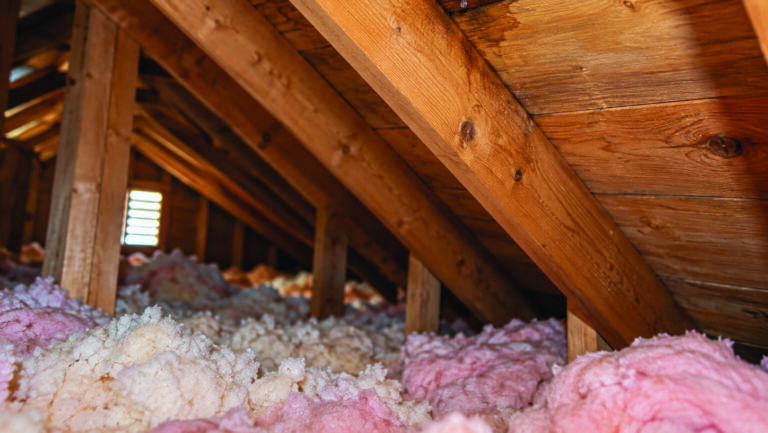
Imagine finding a silverfish in your attic. You remove it, only to spot another a few days later. There’s no dripping ceiling, no water stain, and no obvious explanation. But a closer inspection reveals something easily overlooked: a small patch of damp roof decking caused by a slow leak.
The insects didn’t cause the leak. But their presence offered a reason to investigate. Silverfish favor sheltered, humid environments, and the University of Georgia Cooperative Extension notes that they sometimes inhabit attics. Their appearance doesn’t necessarily indicate water damage, but repeated sightings in one location may warrant a closer look.
Here’s what makes moisture such a powerful pest attractant: water can change an environment even when you can’t see it.
A slow leak, condensation around a pipe, or damp insulation can create a microclimate, a small area where humidity differs significantly from the surrounding environment. To us, that moisture may seem insignificant. To certain insects, it can make the difference between a favorable hiding place and an unsuitable one.
The science behind this is fascinating. Because small insects have a relatively large surface area compared with their volume, they can be particularly vulnerable to losing water to their surroundings. Although their waxy outer covering helps prevent dehydration, many species still rely on humid, protected environments to conserve moisture.
In other words, a barely noticeable change in humidity can dramatically influence where certain insects survive and congregate. And moisture doesn’t just provide humidity. It can encourage the growth of molds, fungi, and microorganisms that become food sources for other tiny pests.
Springtails, for example, are strongly associated with damp environments and often feed on fungi. Booklice commonly thrive in humid spaces. Drain flies develop in the wet organic material inside drains, while mosquitoes require water for their immature stages. Different insects, different behaviors but a recurring theme: moisture can help create conditions that sustain pest activity.
So when insects repeatedly appear in the same location, look beyond the insects themselves. Check beneath sinks for slow leaks, inspect attic and crawlspace moisture, and examine clogged gutters, downspouts, condensation lines, and areas near the foundation that remain damp.
Not every insect sighting indicates a hidden moisture problem. But repeated activity in one area deserves a better question than, “What can I spray on it?”
Sometimes the pest isn’t just the problem.
Sometimes it’s the clue.
Any content, resident submissions, guest columns, advertisements, and advertorials are not necessarily endorsed by or represent the views of Best Version Media LLC (BVM) or any municipality, homeowners associations, businesses, or organizations that this publication serves. BVM is not responsible for the reliability, suitability, or timeliness of any content submitted, inclusive of materials generated or composed through artificial intelligence (AI). All content submitted is done so at the sole discretion of the submitting party.