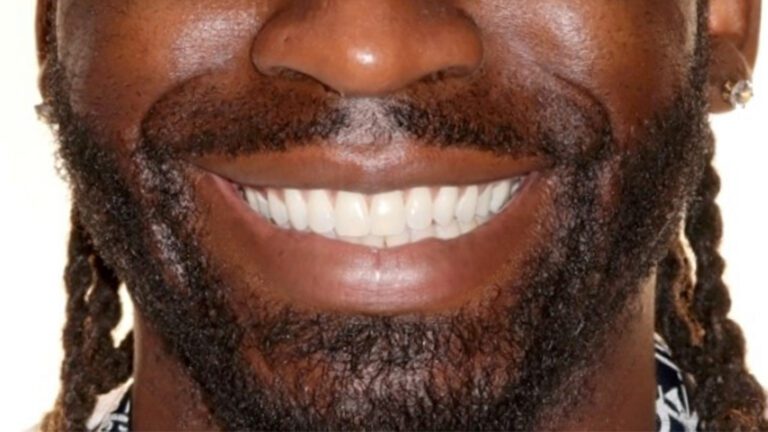
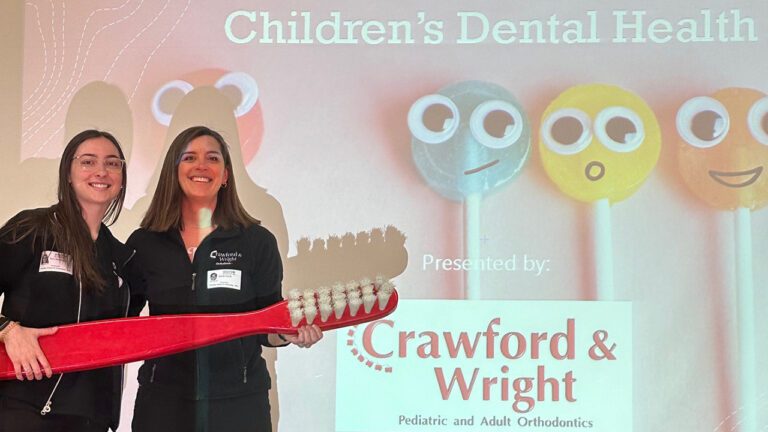
The American Dental Association recognizes February as National Children’s Dental Health month. The goal is to bring awareness to the importance of oral hygiene for kids and mobilize dental offices to educate in the community. Dental disease, or decay and cavities, is the number one disease in children and results in thousands of missed days from school every year across the country. The good news is that cavities are completely preventable!
Oral hygiene education starts at home with parents being the primary educators of how to brush and floss. Children model behavior, so if they watch mom and dad brush their teeth every night, the child will want to do the same. The earlier a child has exposure to a toothbrush the better. Even if a baby only has one tooth, he or she can suck on or gnaw on a toothbrush. This helps them become familiar with how the bristles feel in the mouth. As soon as a tooth erupts, it needs to be brushed; usually a parent needs to do this for their child.
There is a common misconception that baby teeth don’t need to be brushed or flossed as much because they are going to fall out anyway. The error in this thinking is that those primary (baby) teeth should stay in a child’s mouth until almost 12 years old. Front teeth start to shed as early as age 6, however if they become decayed and need extraction earlier than normal, the child can lose space for future teeth and have trouble chewing, and speech can be affected as well.
Visiting the dentist should be an easy and enjoyable experience for kids. Going to a pediatric dentist at the age of one is a good rule of thumb. This helps a child become comfortable with lying back and having a dentist look in their mouth. Usually these are very simple appointments where the child can often lie in their parent’s lap while the dentist counts and polishes the baby teeth. Seeing a dentist regularly is crucial for catching decay early and preventing future cavities.
Sugar consumption, acidic drinks, fruits, and snacks contribute to high rates of decay. Sweet treats and soda should be limited as much as possible because cavity causing bacteria thrive in an acidic environment. Enamel cannot be regrown, so once it decalcifies and turns to a cavity it will never repair itself. The only “fix” is a filling or extraction.
Fluoride is a naturally occurring mineral that helps mineralize and strengthen the enamel, which helps ward off decay. The CDC touts fluoride supplementation in drinking water to be the number one most effective public health interventions in the 20th century. Despite the negative press lately, fluoride in toothpaste and regulated in drinking water is safe and extremely beneficial. Prevention is the best medicine! Remember to brush after every meal, floss every night, be a good example for the kids in your life, and as always, keep smiling.
For more information on fluoride or children’s dental health, visit www.ADA.org.
Any content, resident submissions, guest columns, advertisements, and advertorials are not necessarily endorsed by or represent the views of Best Version Media LLC (BVM) or any municipality, homeowners associations, businesses, or organizations that this publication serves. BVM is not responsible for the reliability, suitability, or timeliness of any content submitted, inclusive of materials generated or composed through artificial intelligence (AI). All content submitted is done so at the sole discretion of the submitting party.