Hand Truths: Busting the Biggest Myths About Hand and Elbow Injuries
You don’t need to be an athlete, a typist, or even clumsy to end up with hand or elbow pain. From “tennis elbow” to “it can’t be broken if I can move it,” myths about upper extremity injuries are everywhere — and they can delay proper care. Orthopedic hand surgeon Dr. Mark Ciaglia, DO clears the air on four of the most common misconceptions he sees in his practice.
Myth #1: You Have to Play Tennis or Golf to Get “Tennis” or “Golfer’s” Elbow
“You don’t have to swing a racket or club to get tennis or golfer’s elbow — you just have to use your arms a lot.”
Despite their sporty names, tennis elbow (lateral epicondylitis) and golfer’s elbow (medial epicondylitis) have little to do with country clubs. These conditions are actually overuse injuries, caused by small tears or inflammation in the tendons that attach to the elbow.
You can develop tennis elbow from lifting grocery bags, using a screwdriver, typing with poor wrist posture, or even picking up a child repeatedly. Similarly, golfer’s elbow often affects painters, gardeners, and manual laborers who grip or lift objects throughout the day.
It’s not the sport — it’s the repetitive stress. Left untreated, these conditions can become chronic and limit your ability to lift, twist, or grip. Early treatment with rest, therapy, bracing, or targeted injections can ease symptoms and prevent long-term damage.
Myth #2: A Fracture Isn’t as Bad as a Break
“A fracture is a break — they’re just two words for the same thing.”
Few medical terms cause more confusion than “fracture.” Some patients breathe a sigh of relief when they hear it, believing it’s less serious than a broken bone. The truth? Every fracture is a break. The difference lies only in the type of break:
- Hairline or stress fracture: a small crack that might not show obvious deformity.
- Non-displaced fracture: the bone cracks but stays aligned.
- Displaced or comminuted fracture: the bone shifts or shatters into several pieces.
Even a “small fracture” can cause long-term stiffness or weakness if left untreated. Bones in the hand and wrist are especially delicate, and improper healing can affect grip strength and dexterity. So if you’re told you “only” have a fracture, don’t shrug it off. It’s still broken — and deserves proper immobilization, evaluation, and follow-up.
Myth #3: Carpal Tunnel Syndrome Only Happens to People Who Type All Day
“Typing is one cause of carpal tunnel syndrome — but far from the only one.”
When patients complain of numbness or tingling in the fingers, the first thing they often say is, “But I don’t even type that much!” That’s because carpal tunnel syndrome has been unfairly linked to office work. The reality: this nerve compression condition can affect anyone, from construction workers to musicians to new parents. It occurs when the median nerve — which passes through a narrow tunnel in the wrist — becomes pinched or inflamed.
Common causes and contributors include:
- Anatomical differences (naturally smaller carpal tunnels)
- Fluid retention from pregnancy or hormonal changes
- Medical conditions like diabetes or thyroid disease
- Repetitive gripping, vibration exposure, or heavy tool use
- Previous wrist injuries
Symptoms typically include numbness, tingling, or a “pins and needles” feeling in the thumb, index, and middle fingers — often worse at night. Early intervention with splinting, therapy, or medication can relieve symptoms, but untreated cases may lead to permanent nerve damage or muscle loss at the base of the thumb. Bottom line: you don’t need a desk job to get carpal tunnel syndrome — you just need a median nerve under too much pressure.
Myth #4: If You Can Move It, It’s Not Broken
“Movement doesn’t rule out a fracture — it just means some parts of the hand are still working.”
This is one of the most dangerous assumptions people make after an injury. Many patients think, “It can’t be broken — I can still bend it.” But movement doesn’t guarantee the bone is intact.
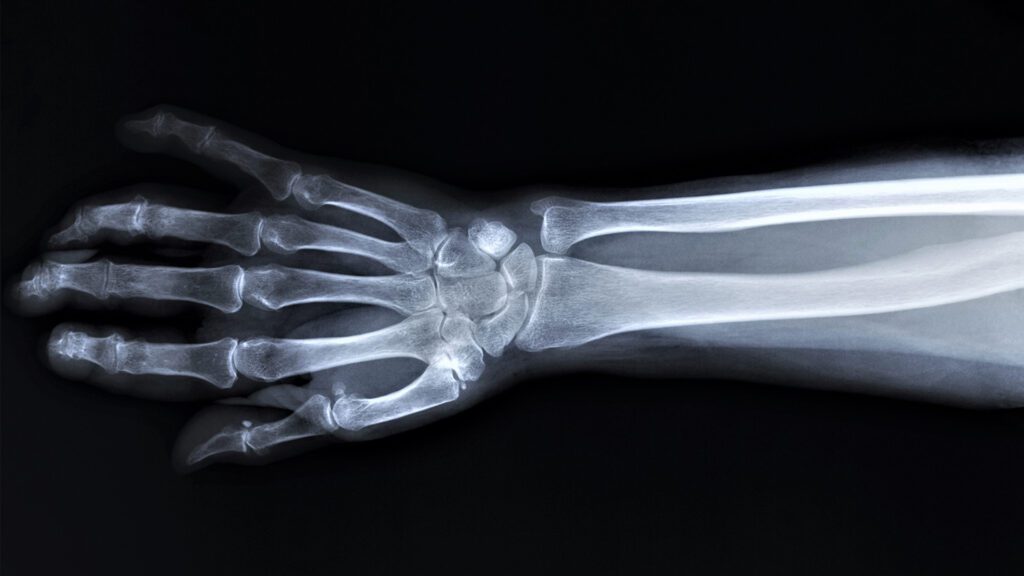
The hand is an intricate network of 27 bones, connected by ligaments and tendons that can still move even when a bone is fractured. Depending on where the break occurs, motion may remain possible despite a serious injury.
Examples include:
- Nondisplaced finger fractures: small cracks that still allow normal bending.
- Metacarpal (hand bone) fractures: can still permit grip, but with pain or swelling.
- Avulsion fractures: tiny pieces of bone pulled off by tendons — often overlooked.
Even a subtle fracture can lead to crooked healing, stiffness, or arthritis if not properly treated. Persistent pain, bruising, or swelling after a fall or impact warrants an X-ray evaluation — even if your hand “still works.” When in doubt, get it checked out with an x-ray, because a delay in treatment can have serious consequences on the healing and outcome.
Protecting the Most Important Tools You Have
“Your hands and elbows are complex, powerful, and irreplaceable — don’t let myths keep you from getting them checked.” Your hands and elbows are vital to nearly every daily activity — from buttoning a shirt to holding a loved one’s hand. Misconceptions about what’s “serious” or “normal” can lead people to delay care, risking long-term dysfunction.
Let’s recap the truths:
- You can get tennis or golfer’s elbow without playing sports.
- Fracture = broken bone, every single time.
- Carpal tunnel syndrome affects far more than just typists.
- You can move a broken finger — but that doesn’t mean it’s okay.
When in doubt, don’t self-diagnose. Seek a professional evaluation, ideally from a specialist trained in hand and upper extremity care like Dr. Ciaglia. With early treatment, most of these issues can be managed successfully, restoring comfort and function before permanent damage sets in.
About the Author
Dr. Mark Ciaglia is a board-certified hand surgeon specializing in injuries and conditions of the hand, wrist, and elbow. He is passionate about patient education, minimally invasive techniques, and helping patients regain function and strength in their upper extremities. Go to WCFSpecialSurgery.com for more information.