How to Overcome the Mental Blocks After Injury
Recovering from a physical injury is hard enough, but what often gets overlooked is the mental recovery that comes with it. Fear of reinjury, loss of confidence, anxiety about performance, and even identity challenges can all become obstacles long after your body has healed.
These mental blocks are common and valid, but they don’t have to hold you back forever.
At Tualatin Valley Physical Therapy, we help you navigate both the physical and psychological side of injury recovery. Here’s how to move past your fear and get back to doing what you love with confidence.
What Are Mental Blocks After Injury?
Mental blocks are psychological barriers that make you hesitant, or even afraid, to move, train, or return to activity after injury. Common signs include:
- Fear of reinjury during specific movements
- Avoiding previously painful or challenging activities
- Feeling “fragile” or unsure about your body’s capabilities
- Overthinking or hesitating during workouts or sports
- General anxiety or frustration about recovery progress
According to a 2017 review in the British Journal of Sports Medicine, psychological factors such as fear-avoidance, low confidence, and catastrophizing significantly affect rehabilitation outcomes and return-to-sport rates (Ardern et al., 2017).
Why You Can’t Ignore the Mental Side of Recovery
Even after the physical damage has healed, your brain still remembers the pain or trauma. It builds protective habits, like altered movement patterns or mental hesitation, which can increase your risk of reinjury or stall your progress.
If left unaddressed, these mental blocks can:
- Delay full return to activity or sport
- Limit performance
- Cause compensations or new injuries
- Undermine your motivation to stay active
Recovery isn’t just about muscle and joint strength; it’s about rebuilding trust in your body.
How to Overcome Mental Blocks After Injury
- Acknowledge the Fear
You’re not “being dramatic” or “just weak.” Mental blocks are very real. Start by naming them and recognizing that fear is your brain’s way of protecting you. - Work with a PT Who Gets It
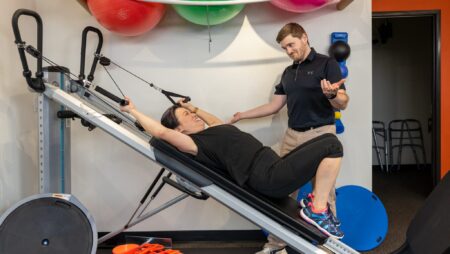
Physical therapists trained in orthopedic rehab understand both the movement patterns and mental components of recovery. We help you move safely and gradually rebuild your confidence one rep at a time. - Use Graded Exposure
Instead of jumping right back into high-level training, we use graded exposure, progressively reintroducing movements in controlled ways to help your brain feel safe again. Studies show this method reduces fear and improves function. - Track Progress Physically & Mentally
Set physical goals (e.g. squatting bodyweight) alongside psychological goals (e.g. performing that squat without hesitation). Small wins build confidence. - Learn to Listen to Your Body, Not Just Your Thoughts
Pain doesn’t always mean danger. We help you interpret what your body is telling you, rather than catastrophizing every ache. - Celebrate Wins, Even Small Ones
Did a workout without fear? Pushed through a movement you’ve been avoiding? That’s progress. The mental recovery journey deserves just as much recognition as the physical side.
You’re Not Alone, We’ve Got You
If fear, anxiety, and/or hesitation keep you from getting back to sport, fitness, or just feeling like yourself again, you’re not broken, and you’re not alone.
At Tualatin Valley Physical Therapy, we help you:
- Understand what’s going on
- Rebuild your trust in movement
- Return to life stronger, both physically and mentally