For the past 25 years, I’ve had the privilege of leading students beyond the walls of our school and into the world itself. While the classroom is where learning begins, travel is often where history truly comes alive. With an average group size of about 22 students who sign up to travel during our May Term or summer opportunities, we share curiosity, reflection, and discovery as we walk through ancient ruins and stand quietly in places where history was made.
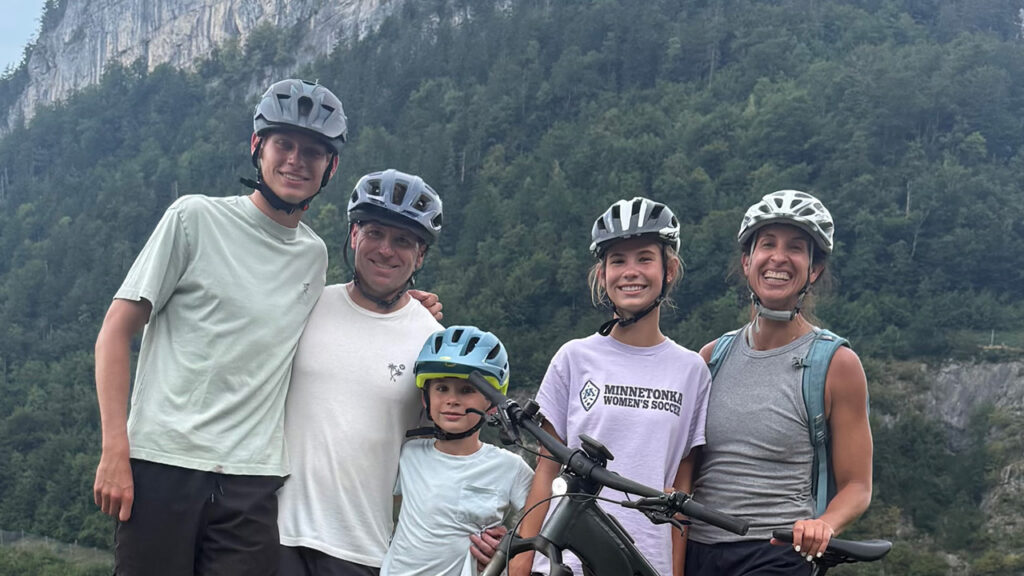
Over the last five years, our journeys have taken us across the World War II Western Front, through Ireland, Scotland, and England, into the mountains of Switzerland, and along the Mediterranean, including unforgettable experiences in Greece. Looking ahead, we are preparing for a trip to Japan in 2027. Each destination offers students something no textbook ever can: the chance to stand in the very places they have studied and to experience history firsthand.
As a social studies teacher, these historical school trips are incredibly valuable because they make learning real and meaningful. Visiting museums, battlefields, and cultural landmarks helps students better understand the events, people, and ideas that shaped our world. More importantly, travel encourages empathy and critical thinking as students begin to see how the past connects to their own lives and the world today. Many of my colleagues from Holy Family’s World Language department regularly lead trips to Italy, France, Spain, and soon, Peru.
The student response is always unforgettable. Many are amazed, saying things like, “This feels more real,” or “I can’t believe I’m actually here.” There is often a visible shift from passive learning to active engagement. Students ask more profound questions, make spontaneous connections to lessons, and experience history not as something distant, but as something tangible and alive.
In many ways, these trips become a classroom with a passport, one that teaches perspective, wonder, and lasting understanding.
Any content, resident submissions, guest columns, advertisements, and advertorials are not necessarily endorsed by or represent the views of Best Version Media LLC (BVM) or any municipality, homeowners associations, businesses, or organizations that this publication serves. BVM is not responsible for the reliability, suitability, or timeliness of any content submitted, inclusive of materials generated or composed through artificial intelligence (AI). All content submitted is done so at the sole discretion of the submitting party.