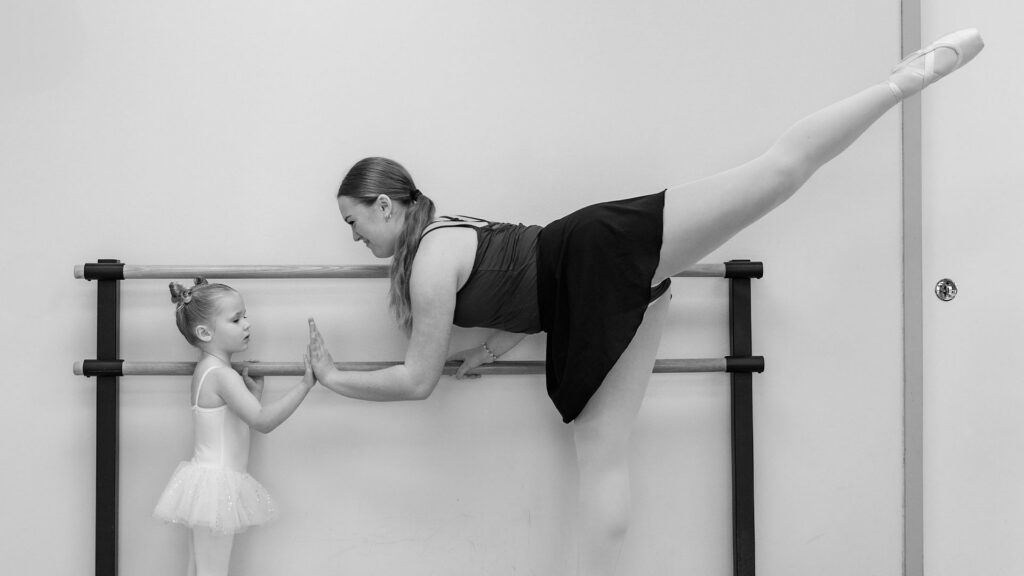
Q: What are the benefits of taking dance?
A: Beyond developing an appreciation for art, dancers of every age are working to develop the following important skills for future success:
- Regulation: Separating from caregivers and managing emotions
- Execution: Listening and then following directions
- Patience & Cooperation: Taking turns and sharing with others
- Problem Solving: Making decisions and critical thinking
- Self-Advocacy & Communication: Learning to express themselves
Q: What is the best way to say goodbye if my child is crying or distressed?
A: While it can be hard, a quick “good-bye” is best. Prolonging the departure can actually increase separation anxiety, teaching the dancer that you won’t leave if they cry. With a swift process, dancers learn to regulate their emotions, and often calm down faster.
Q: My child seems hesitant. How long does it take for them to get used to the class?
A: It is normal for young dancers to need time to adjust; it can take five to eight classes for them to fully acclimate. Songs are strategically placed throughout the class as signals, helping them understand what is coming next. Predictability creates a safe environment, reducing anxiety and stress while building trust in relationships and strengthening their ability to focus.
Q: Why is my child just watching others?
A: Learning is unique to each dancer and involves a mix of doing, thinking, feeling, and watching. Dance offers an interpersonal environment with opportunities for visual, auditory, and kinesthetic learning in every session. Once your dancer is comfortable with the activities they will begin to participate and to feel more confident in their abilities.
Q: Why is consistency in attendance important?
A: Consistency provides the predictable patterns children need to develop important life skills. Regular attendance gives your child the opportunity to successfully regulate their emotions and behaviors (self-regulation) so that they feel more in control, which boosts their belief in their abilities (confidence), ultimately reinforcing the skills of the class as well as facilitating cognitive skill development.
Q: Why is it important for my child to follow the dress code?
A: The dress code ensures dancers feel comfortable and ready to move. The routine of getting dressed helps them prepare mentally for the activity. Additionally, it allows them to easily identify classmates, fostering a community that minimizes distractions and helps build confidence and attention skills.
Any content, resident submissions, guest columns, advertisements, and advertorials are not necessarily endorsed by or represent the views of Best Version Media LLC (BVM) or any municipality, homeowners associations, businesses, or organizations that this publication serves. BVM is not responsible for the reliability, suitability, or timeliness of any content submitted, inclusive of materials generated or composed through artificial intelligence (AI). All content submitted is done so at the sole discretion of the submitting party.