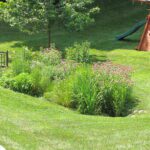
What is a rain garden? A rain garden is a practical way to manage stormwater by filtering out pollutants, reducing runoff and flooding and supporting wildlife. You do this by planting specific plants in areas that that tend to hold water, including retention basins and areas that tend to flood or collect water during storms. Once established, these gardens require less maintenance than traditional gardens and lawns and are beautiful, self-sufficient ecosystems.
Do you have a spot that collects water on your property that’s particularly hard to plant anything in? You might benefit from creating a rain garden. Here are some things to consider when planning.
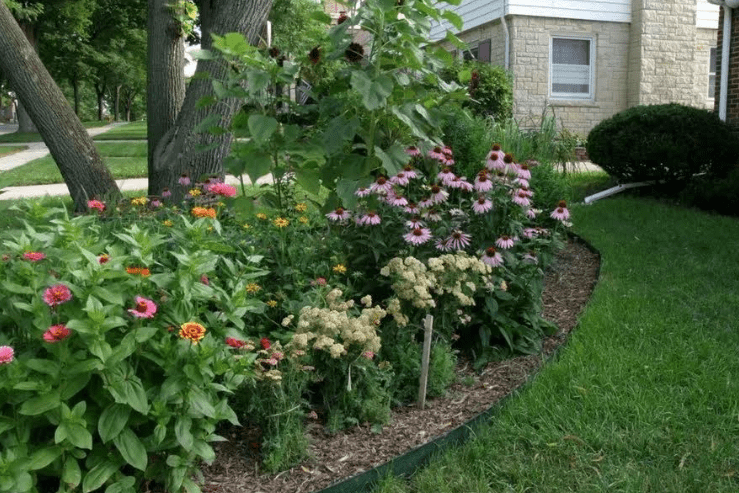
1. Start by choosing the right location. A rain garden should be placed where it can naturally collect runoff, at the bottom of a slope or near a downspout, but at least 10 feet away from your home’s foundation. Observe how water flows across your yard during rain to identify the best spot.
2. Next, test your soil’s drainage. Dig a small hole about 12 inches deep, fill it with water, and see how quickly it drains. Ideally, water should soak in within 24 hours. If drainage is slow, you may need to amend the soil with compost.
3. Design the garden with a shallow basin shape—typically 4–8 inches deep—with gently sloping sides. This allows water to pool temporarily and then soak into the ground. The size depends on the area draining into it, but a common rule is that the garden should be about 20–30% of the drainage area.
Plant selection is key. Choose native plants adapted to both wet and dry conditions, since rain gardens alternate between these extremes. Here are some good examples of plants you can place in the 3 areas of your rain garden.
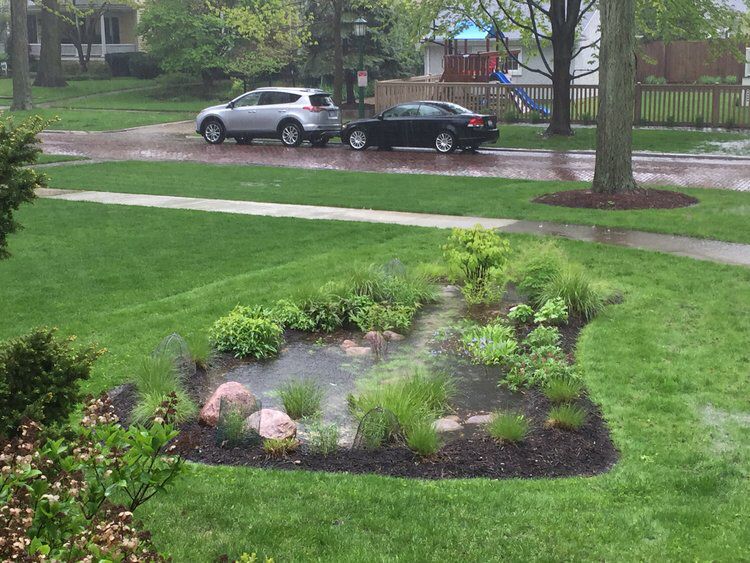
1. The base (enter/deepest Part) can handle temporary flooding.
- Swamp Milkweed
- Cardinal Flower
- Blue Flag Iris
- Rushes and Sedges
- Buttonbush
- Chelone
- Rose Mallow (perennial hibiscus)
2. The slopes (transition area) can handle a lot of water but drains well.
- Purple Coneflower
- Joe Pye Weed
- Liatris
- Red Twig Dogwood
- Phlox
- Virginia Sweetspire (Itea)
- Ligularia
- Winterberry
3. The edge (berm) is highest point that acts as a barrier to catch overflow.
- Black Eyed Susan
- Butterfly Weed
- Switchgrass and Sedge
- Bee Balm
- Chokeberry
- Elderberry
- Hosta and Ferns
- Summersweet (Clethra)
- Arrowwood Viburnum
Finally, mulch the garden with shredded hardwood to retain moisture and prevent erosion and water regularly during the first growing season to help plants establish deep root systems. Once mature, a rain garden requires minimal maintenance and becomes a resilient, eco-friendly feature in your landscape.
For more information on how to build a rain garden, visit the Penn State Extension website https://extension.psu.edu/rain-garden-resources-from-penn-state-extension or visit Achin’ Back Garden Center to check out their selection of beautiful native plants.
Any content, resident submissions, guest columns, advertisements, and advertorials are not necessarily endorsed by or represent the views of Best Version Media LLC (BVM) or any municipality, homeowners associations, businesses, or organizations that this publication serves. BVM is not responsible for the reliability, suitability, or timeliness of any content submitted, inclusive of materials generated or composed through artificial intelligence (AI). All content submitted is done so at the sole discretion of the submitting party.